1
More importantly, real industrial problems seldom t into a specic class: the pure travelling salesman problem rarely comes up in real life because there are typically many salesmen
available to cover the dierent customers, certain customers can only be visited at certain
times of day, also roads are busier at certain times of day so the journey time may vary with
the time of day, and anyway the poor salesmen need some time to rest - they can't usually
complete their circuits before lunchtime! These \side constraints" may belong to another
problem class - such as the class of set covering problems, or scheduling problems.
Industrial problems typically have constraints that belong to dierent problem classes they are in a sense \hybrid". Accordingly it is not only necessary to oer a wide choice of
algorithms for solving such problems, but also the facility to mix and match the algorithms,
i.e. to build hybrid algorithms.
ECLi PSe is designed to support the fast development of specic hybrid algorithms tuned to
the problem at hand. It is not assumed that the rst algorithm implemented by the application
developer is guaranteed to be the best one: rather ECLi PSe provides a platform supporting
experimentation with dierent hybrid algorithms until an appropriate one is found which suits
the particular features of the application.
In the next section we shall explore ECLi PSe as a problem modelling language. We distinguish two kinds of model: the conceptual model, which captures the problem specication,
and the design model, which is tuned for ecient solving on a computer. ECLi PSe is designed
to support both kinds of models, and the mapping between them.
In the following two sections we shall examine the ECLi PSe facilities for handling constraints. In [Wal97] we encountered dierent kinds of constraints - primitive constraints,
propagation constraints and constraint agents. ECLi PSe supports various classes of built-in
constraints, both primitive constraints and propagation constraints. ECLi PSe also allows complex constraints and constraint behaviours to be constructed from the built-in classes, thus
supporting constraint agents.
After constraint handling we return to the second major aspect of problem solving: the
search for solutions.
We will separate this discussion into two subsections. The rst is concerned with constructive search, and the second with repair-based search. Constructive search explores the
consequences of making choices for decision variables one-at-a-time. Each choice reduces the
set of viable choices for the remaining decisions. By contrast repair-based search explores the
consequences, not of making decisions, but of changing them. In this case the new choice is
typically compared with the previous one, in the context of other suggested choices for the
other decision variables. Initially it is not expected that the suggested choices are necessarily
consistent with the constraints. The idea of changing the choices is to reduce the number of
constraint violations until all the constraints are nally satised.
Finally there is a brief section on the ECLi PSe system, its external communication facilities, embeddability, documentation and how to obtain the system.
2 ECLiPSe as a Modelling Language
2.1 Overview of ECLiPSe as a Modelling Language
ECLi PSe is tailored for solving combinatorial problems. Such problems are characterised by a
set of decisions which have to be made (where each decision has a set of alternative choices) and
a set of constraints between the decisions (so a certain choice for one decision may preclude,
or entail, certain choices for other decisions).
In ECLi PSe each decision is modelled by a variable, and each choice by a possible value
for that variable. The constraints are modelled by relations between the variables. As an
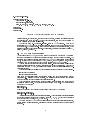
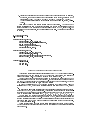
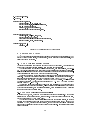
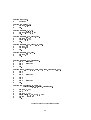
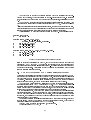
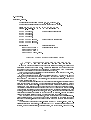
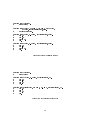
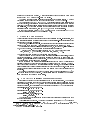
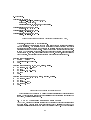
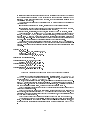
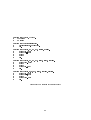
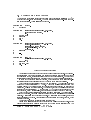
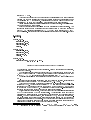
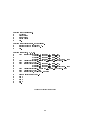
example consider the map colouring program, with four countries to colour.
This program was also used to illustrate constraint logic programming in [Wal97]. ECLi PSe
is a constraint logic programming language, and it uses the same syntax as Prolog. Hopefully
this syntax will already be familiar to many readers. At the same time, we also hope that
any readers who have suered from the limitations of Prolog will not conclude that ECLi PSe
therefore suers from the same limitations!
The problem involves four decisions, one for each country. These are modelled by the
variables A, B , C and D. Countries is just a name for the list of four variables. Each
2