1
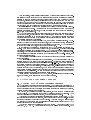
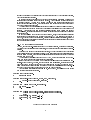
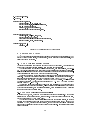
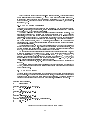
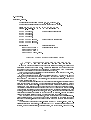
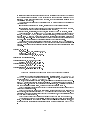
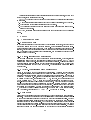
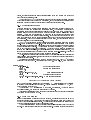
Each ECLi PSe prompt (eg [eclipse 1]:) is followed by a user query (eg lib(structures).).
In the rest of the article, \query N" always refers to the query which is preceded by the prompt
[eclipse N]:.
The programmer enters lib(structures). to which the system responds structures loaded.
I have added a star to the beginning of each line showing a system response.
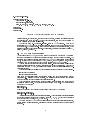
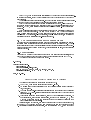
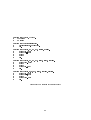
Query 2 denes the attributes for objects in the classes task and time. Query 3 shows how
the user can equate a variable with a structured object (i.e. the variable is instantiated to the
structure). ECLi PSe automatically constructs unknown values (written _) for the unspecied
attributes.
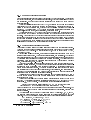
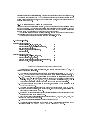
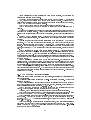
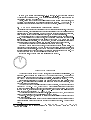
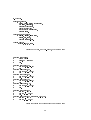
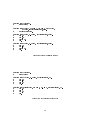
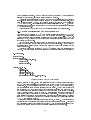
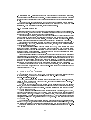
Query 4 illustrates something of the expressive power needed in a constraint programming
language which supports objects. Not only do the objects T 1 and T 2 share an attribute
value - this is a shared subobject - but they also have non-shared subobjects whose attributes
are connected by a constraint. Such a constraint, between distinct objects, is typically not
expressible within the traditional object-oriented framework.
2.3 The Conceptual Model and the Design Model
The main benet of constraint logic programming over other platforms for solving combinatorial problems is in the closeness between the conceptual model and the design model. ECLi PSe
takes full advantage of this by oering facilities to choose dierent annotations of the same conceptual model to achieve design models which, whilst syntactically similar, can have radically
dierent behaviour.
2.3.1 Map Colouring
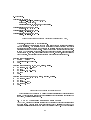
Let us start by mapping the conceptual model for the map colouring example illustrated in
gure 1 into a design model which uses the nite domain constraint handler of ECLi PSe .
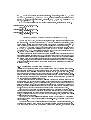
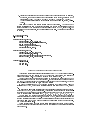
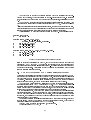
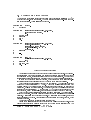
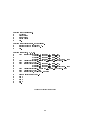
The design model is encoded as shown in gure 4.
:- lib(fd).
coloured(Countries) :Countries=[A,B,C,D],
Countries :: [red,green,blue],
ne(A,B), ne(A,C), ne(A,D), ne(B,C), ne(B,D), ne(C,D),
labeling(Countries).
ne(X,Y) :- X##Y.
Figure 4: A Finite Domain CLP Program for Map Colouring
The design model extends the conceptual model in four ways.
1. The ECLi PSe nite domain library is loaded (using :- lib(fd)).
2. An explicit nite domain is associated with each decision variable (using Countries ::
[red, green, blue]).
3. The nite domain built-in disequality constraint is used to implement the ne constraint
(using ne(X,Y) :- X##Y). ## is a special syntax for disequality used by the nite domain
constraint solver.
4. This program includes a search algorithm, invoked by the goal labeling(Countries). As
we shall see later, this predicate tries choosing, for each of the variables A, B , C and
D in turn, a value from its domain. It succeeds when a combination of values has been
found that satises the constraints.
Naturally this is a toy example, and it is not always so easy to turn a conceptual model,
such as the ECLi PSe program in gure 1, into a design model, such as the program in gure
4. Nevertheless constraint logic programming, and in particular ECLi PSe , have made a lot of
7