1
THE FOUNDATION
OF SCOUR
Sediment is the collection of organic and inorganic
particles that can be moved by water and wind.
In water quality terms, sediment typically refers to
mineral-based matter such as clay, silt, sand and
gravel that are carried into the water from the local
environment. The amount of sediment and distance
that these particles travel is known as the sediment
transport rate.
Sediment transport, and consequently erosion and
deposition, are dependent on water flow. When
water flow increases (whether by volume or velocity),
the forces acting on a riverbed also increase. During
high-flow events, such as floods and snow melt, the
amount of sediment picked up by the higher flow rate
increases, increasing the sediment transport rate and
causing erosion. While sediment transport and deposition are an important part of most aquatic ecosystems,
the constant erosion can pose a risk to man-made
structures.
Scour (riverbed erosion at a structure) is a consequence of excessive sediment transport. When sediment erosion occurs at the base of a bridge pier or
other structure, it can cause safety concerns due to
structural compromises.
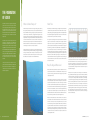
What is Sediment Transport?
Water Flow
Sediment transport is the movement of organic and inorganic particles by
water. In general, as flow speeds increase, so does the potential for sediment
transport. Water flow can be strong enough to suspend particles in the water
column as they move downstream, or simply push them along the bottom
of a waterway. Transported sediment may include mineral matter, chemicals
and pollutants, and organic material. While much of the sediment load will
come from runoff and bank erosion, loose sediment on the bottom of a
streambed can easily be picked up and carried downstream. Due to the turbulent eddies that exist at an underwater structure, this streambed erosion
is more likely to occur at the base of a pier or abutment.
Water flow, also called water discharge, is the single most important element
of sediment transport and streambed erosion. The flow of water is responsible for picking up, moving and depositing sediment in a waterway. Without
flow, sediment might remain suspended or settle out – but it will not move
downstream. Flow is required to initiate the transport.
Sediment transport is not constant. In fact, it is constantly subject to change.
In addition to the changes in sediment load due to geology, geomorphology
and organic elements, sediment transport can be altered by other external factors. The alteration to sediment transport can come from changes in
water flow, water level, weather events and human influence.
The equations describing the relationship of water flow and sediment
transport are both numerous and elaborate. The complexity of sediment
transport rates are due to a large number of unknowns (e.g. bed geometry,
particle size, shape and concentration), as well as multiple forces acting upon
the sediment (e.g. relative inertia, turbulent eddies, velocity fluctuations in
speed and direction). Shear stresses in the boundary layer of a sediment
bed explain how much force is required for water flow to overcome relative
inertia and begin sediment transport (through bedload or suspended load).
When the force of water flow is high enough, scour will occur. Due to the
nature of water flow around a structure, greater forces are present through
horseshoe and wake vortices. These vortices accelerate sediment erosion at
the base of the structure.
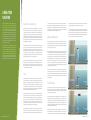
Rain, Flooding and Water Level
While sediment transport (and thus scour) relies on water flow to move a
load downstream, this flow rate is variable. Water flow is affected not only
by the local terrain (e.g. sediment material and slope), but by the amount
of precipitation received.
Rainfall influences water flow by increasing the water level (and thus
volume). Precipitation causes water levels to initially rise, and then return
to previous levels (base flow) over the course of hours or days. The extent
to which a rainstorm will influence sediment transport is dependent on the
amount and size of sediment available. While most periods of precipitation
will not have a noticeable effect, excessive rain and flooding will. Flooding
can cause increased sediment transport as the increased flow rate erode
additional sediment from both the streambed and embankments. In fact,
most of a waterway’s sediment load occurs during flood events.
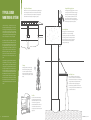
Scour
When sediment transport removes material from a streambed or bank, the
erosion process is called scour. Scour can occur anywhere that there is water
flow and erodible material. Local scour is the engineering term for the isolated removal of sediment at one location, such as the base of underwater
structures, including bridge piers and abutments. This localized erosion can
cause structural failure, as bridges and overwater constructions rely on the
bed sediment for support.
While scour can occur anywhere, it is more likely to occur in alluvial waterways (erodible bed and banks), as opposed to a bedrock-based (nonalluvial)
channel. As water flow is responsible for conducting sediment transport,
scour can occur even during low-flow conditions. However, critical bridge
scour conditions typically occur during periods of high flow, such as during
a flood event. The higher flow rate can pick up more sediment, and turbulence often occurs at the base of a pier as it interrupts and accelerates the
flow. This turbulence in turn will increase the forces acting on a streambed,
suspending additional particles and initiating greater sediment transport.
If too much sediment is removed, the structure can collapse. Scour due to
flood-initiated sediment transport is the most common cause of bridge
failure in the United States.
While some of this sediment load comes from runoff, it is also due to the
elevated water level and flow rate. Elevated water level creates additional
volume in a channel, and increases the hydraulic radius (cross-sectional
area of a waterway). The increased hydraulic radius drives up the flow rate,
regardless of whether or not flow is uniform or non-uniform. Increased flow
will add stress on the bed, making it more likely for water flow to initiate
sediment transport. The higher velocity also increases erosion rates as flow
overcomes the shear stress of sediment. This is why most sediment loss
occurs during flood events.
2
MONI TO RING SCOUR
F ON DR IE ST.COM
3