1
pCO2 CONTROLLER
USER MANUAL
CONTROLLER FOR “MagLev™”
WATER-COOLED CHILLER
for Version – MCTS_A01-SE
Introduction
The MagLev™ chiller is a modular water-cooled chiller system, composed of one or more modules and is
controlled by a master controller, to provide chilled liquid to an external circuit. The modules interconnect
through a common chilled water header system. Each module contains a semi-hermetic compressor with
magnetic levitation technology, stainless steel-brazed plate heat exchangers, and other related control
components. Each MagLev™ chiller system is operated by a microprocessor based controller that monitors
the status of each refrigerant circuit and provides a signal to operate the compressors as required. The system
monitors the leaving chilled water temperature (LCHWT) to determine the need for cooling to the external
circuit.
Module Board
Each module has a module board, which sends information to the master controller regarding the
temperatures, pressures, and activity of the module and is equipped with a semi-graphical LCD with backlight
and six button keypad. The feedback from the module board reports the status of each module back to the
master controller. The module board performs safety checks and alerts the master controller when something
is wrong. Loss of communication with the master controller results in the shutting down of the module when
in Auto mode. The screen at the module board will display information regarding that module and the
compressor installed on that module. The module board communicates with the compressor in that module
via the Modbus Protocol. This information is also passed to the Master Controller over the pLAN
connection. Information, like Actual RPM, Desired RPM, Inverter Temperature, Critical Alarms, High
Pressure, Low Pressure, etc. from the compressor, is available through this connection.
Master Controller
The master controller is equipped with a semi-graphical LCD with backlight and a six button keypad. These
buttons aid the operator in setting SYSTEM VARIABLES, checking fault conditions, monitoring the status of
the chiller system, and monitoring the status of individual modules. The master controller is also the
interface to remote, field-supplied, hardwire connections such as, Remote Start/Stop, flow switch inputs,
customer alarm outputs, and CHILL WATER or LOAD LIMIT reset signals. There is also an optional
communication link for connecting to a Building Automation System (BAS). This connection will allow the
BAS to remotely monitor and control the chiller system. See BAS Interface on page 18.
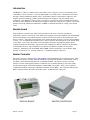
MODULE BOARD
MCTS_A01-SE
MASTER CONTROLLER
Page 2
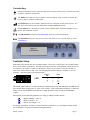
Controller Keys
The UP arrow button is used to go back to the previous category on the screen or to increase the value
of a digit in a numeric variable field.
The DOWN arrow button is used to advance to the next category on the screen or to decrease the
value of a digit in a numeric variable field.
The ENTER button is used to make a selection from any of the menu screens in the program. It is
also used to enter and exit edit mode while in the SYSTEM VARIABLES screens.
The ALARM button is the menu for current system or module faults. When the backlight is red, it
indicates that a fault has occurred.
Prg
The PROGRAM button goes to the MAIN MENU from any screen in the program.
Esc
The ESCAPE button goes to the previous screen or the status screen, if you are at the top of the
MAIN MENU.
MagLev™
by Multistack
Controller Setup
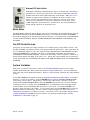
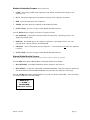
Each board on the network must have a different address. The master controller has a set of 6 DIP switches
used to set the address on the board. The DIP switches are set in binary code addressing, where the first slot
is a value of 1, the second is a value of 2, the third is a value of 4, the forth is a value of 8, the fifth is a
value of 16, and the sixth is a value of 32. The following DIP switch would give an address of 30 to its
controller. (The black square is the switch position.)
= 30
Switches
ON
2
3
4
5
Value
=
=
=
=
2
4
8
16
30
The module boards’ address is set electronically by simultaneously pressing and holding the ALARM and UP
arrow buttons while cycling power on. After a few seconds a screen configuration will appear, to modify the
address, use the UP and DOWN arrow buttons to change the address value, and then press ENTER to
confirm.
The following are the addressing parameters for setting up a MagLev chiller network:
MagLev Modules – 1 thru 8
Master Controller – 30
Remote LCD Display – 32
In setting up the network, the master controller must have an address of 30. The MagLev modules would
start with module 1 and proceed numerically through module 8.
MCTS_A01-SE
Page 3
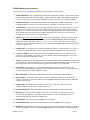
Manual/Off/Auto Switch
Each MagLev module has a Manual/Off/Auto switch. In manual mode, the loading of
the compressor is done by the module board. The control is independent of the other
modules and is based on the LCHW temperature of that module. When auto mode is
selected, the staging of the compressors is handled by the master controller. The
master controller will determine how many compressors need to be on in order to
satisfy the load requirements. Control of the compressors is based on the system
LCHW temperature when in auto mode. Disabled mode (off) selection disables the
module and the compressor is not allowed to run.
Main Menu
The MAIN MENU displays the options the user can access in the program. Press the Prg button to get to the
MAIN MENU and then use the UP and DOWN arrow buttons to scroll through the menu. The ENTER
button allows displaying of the sub-menu that the greater than sign (>) is located beside. The MAIN MENU
contains ON/OFF CONTROL, STATUS, SYSTEM VARIABLES, FAULT REVIEW, LOAD PROFILE, and
SECURITY.
On/Off Control Screen
Upon power up, the initial screen will go through a 12 second delay before giving control to the user. The
ON/OFF CONTROL screen will be the next screen displayed when the timer expires. This screen allows the
user to command the chiller on or off. The display will read ‘CHILLER OFF, PUSH ENTER TO START’.
Pushing the ENTER button, will display a message of ’30 SECONDS TO START!’ and will change to
‘CHILLER ON, PUSH ENTER TO STOP’. After the 30 second delay, the first compressor will turn on, if
needed, and the display will change to the status screen. The last line of the ON/OFF control screen shows
critical system faults such as WAITING FOR CHW FLOW, REMOTE SRART/STOP, and POWER PHASE
MONITOR.
System Variables
Once power is connected to the master controller, the SYSTEM VARIABLES can be accessed. These
variables determine how the chiller system will run and are assigned default values. For most installations,
these values will provide optimum performance. However, special operating conditions may require different
settings.
Use the UP or DOWN arrow buttons to locate the SYSTEM VARIABLES in the MAIN MENU. The greater
than sign (>) is the cursor indicator. Press the ENTER button to enter the SYSTEM VARIABLES MENU.
Chiller Setup, Customer Resets, Temp Readings, Time and Date, BAS Interface, and Factory Setup are
located in the SYSTEM VARIABLES MENU. Press the ENTER button again to enter one of the sub-menus.
To change the value of a variable, press the ENTER button. A blinking block cursor will appear in that
system variables’ value field indicating that the program is in edit mode. Use the UP or DOWN arrow
buttons to change the value of the variable. To save the new setting, press the ENTER button, pressing the
Esc button will not save the change. The cursor will move back to the upper left corner of the screen
indicating that the program is no longer in edit mode. An asterisk (*) next to the variables indicates that the
SYSTEM VARIABLES are locked and cannot be adjusted. For assistance on unlocking the SYSTEM
VARIABLES, see SECURITY on page 16.
MCTS_A01-SE
Page 4
Chiller Setup (System Variables)
The following is a list of SYSTEM VARIABLES for the mechanical cooling modules:
1. UPPER SETPOINT: The designed entering chilled water temperature (ECHW – System sensor) at full
load. The temperature drop across this chiller is based on flow rate. If the design temperature drop (∆T)
is 10°F across the chiller, then the UPPER SETPOINT should be 10°F above the LOWER SETPOINT.
2. LOWER SETPOINT: The desired leaving chilled water temperature (LCHW – System sensor). The
LOWER SETPOINT would be the setpoint the chiller is controlling to if the VSP is set to 0%.
3. VSP SETPOINT: A percentage used to determine the control setpoint. Leaving the VSP at 0% would
keep the control setpoint at the value of the LOWER SETPOINT. Raising the VSP would incorporate a
chilled water reset scheme allowing the control setpoint to change depending on the ECHW Temperature.
As the ECHW temperature approaches the LOWER SETPOINT value, the control setpoint will reset
according to the VSP percentage. See Graph on page 7.
4. OFFSET: This value is not a selectable value; it is built into the program. The offset is figured in the
program by subtracting the LOWER SETPOINT from the UPPER SETPOINT and then dividing the
value by the number of modules. (Max is 3°) ((Upper – Lower) ÷ Modules) This value is used in starting
compressors. The LCHW Temperature has to be at or above the LOWER SETPOINT plus the OFFSET
to bring a compressor on.
5. LOAD LIMIT: A percentage used to limit the maximum system load. If this variable is set to 75% on
a 4 compressor chiller, then only 3 of the 4 compressors would be available to run at any given time.
6. CAPACITY LIMIT: A percentage used to limit the maximum demand sent to a compressor at any
given time. If this variable is set to 70%, then 70% demand is the maximum signal that can be sent to
any of the compressors in the chiller system.
7. T-DIFF (Time Difference): The minimum time in seconds between increases in demand to a compressor
on initial ramp up. This time should be set at or above the loop time of the chiller. The loop time is the
time it takes for the water to make one pass through the entire CHW loop of the building.
8. FAIL INDIC (Failure Indicator): A percentage value which provides for an output signal to the
Customer Alarm Relay whenever compressors of the indicated value have failed. A 0% setting will give
an output signal after any failure within the system.
9. MAN SETPOINT: The desired LCHW temperature of that module when in Manual Mode.
10. MAN OFFSET: A value that, when added to the MAN SETPOINT, defines the point where the
compressor will turn on; and, when subtracted from the MAN SETPOINT, defines the point where the
compressor will turn off.
11. LEAD COMP: Determines which compressor is the first on. The first compressor off is the
compressor that has run the longest in that particular cycle.
12. NUM OF MODULES: This is the number of MagLev modules that are in the chiller system.
13. HP CUTOUT: The point where a high pressure fault occurs based on the high pressure reading
returned from the compressor. This value is measured in psig. Note: Each module also has a
mechanical high pressure switch with a manual reset.
14. FLUSH TIME: The time at which the DDRS-210A is energized.
15. FLUSH DURATION: The time in seconds telling how long the DDRS-210A is energized.
16. INDEXING: INDEXING can either be ON or OFF. If ON, the lead compressor advances by one every
24 hours at midnight. If OFF, the LEAD COMPRESSOR stays the same unless it is changed manually.
MCTS_A01-SE
Page 5
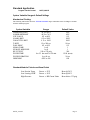
Standard Application
Program Version Format
MCTS_A00-SE
System Variable Ranges & Default Settings
Mechanical Cooling
The following table defines all of the SYSTEM VARIABLE ranges and default values for MagLev modules
with the standard program.
System Variable
UPPER SETPOINT
LOWER SETPOINT
VSP VALUE
LOAD LIMIT
CAPACITY LIMIT
T-DIFF
FAIL INDIC
LEAD COMP.
NUM OF MODULES
HP CUTOUT
FLUSH TIME
FLUSH DURATION
INDEXING
Range
45°F to 80°F
40°F to 70°F
0% to 80%
0% to 100%
0 % to 100%
15 to 200 sec
0% to 90%
1 to 8
1 to 8
190 to 270 psig
0 to 23 hrs and 0 to 59 min
0 to 60 sec
OFF or ON
Default Value
55°F
45°F
0%
100%
100%
90 sec
0%
1
1
200
12:00 (noon)
20 sec
ON
Standard Module Cutouts and Reset Points
Low Suction Temp
Low Leaving CHW
High Pressure
MCTS_A01-SE
Cutout → 25°F
Cutout → 36°F
Cutout → HP Cutout Value
Reset @ 30°F
Reset @ 40°F
Reset below 175 psig
Page 6
Auto Mode
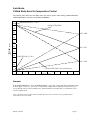
Chilled Water Reset for Temperature Control
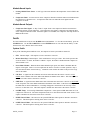
The following chart defines how the chilled water reset scheme operates when utilizing UPPER SETPOINT,
LOWER SETPOINT, and VSP in the SYSTEM VARIABLES.
UPPER SETPOINT = 55.0
55
ECHW SYSTEM TEMP
54
53
VSP = 80%
52
51
T
E
M
P
(°F)
50
VSP = 50%
49
48
LOWER SETPOINT = 45.0
47
VSP = 20%
46
LCHW SYSTEM TEMP (Control Setpoint)
45
90
80
70
60
50
40
30
20
10
0
% OF LOAD
Example:
If the UPPER SETPOINT = 55°F; LOWER SETPOINT = 45°F; VSP = 50%; then the no load point would
be 50°F. ([upper – lower] * vsp ÷ 100 + lower = no load) In this example, if the ECHWT is at or above 55°F (upper
setpoint) then the control setpoint would be 45°F. If the ECHWT is at or below 50°F (no load) then the control
setpoint would be 50°F.
Note: The lower the VSP value selected will result in the most constant Leaving Chilled Water
Temperature from the chiller.
MCTS_A01-SE
Page 7
Mechanical Cooling – Manual Mode
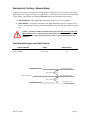
In manual mode operation, each module acts independently, depending on the sensor inputs to that module.
The loading of the compressor is done by its module board. The control is based on the LCHW temperature
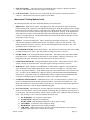
of that module. The following are SYSTEM VARIABLES that are used in manual mode operation:
1. MAN SETPOINT: The LCHW temperature that the compressor will try to maintain.
2. MAN OFFSET: A value that, when added to the MAN SETPOINT, where the compressor will
turn on; and, when subtracted from the MAN SETPOINT, the point where the compressor will turn
off.
Caution: Operation of chiller in manual mode bypasses the flow protection and power
phase monitor safeties. Operation of the chiller in this mode is not recommended for
extended periods. Proper precautions must be made to prevent freezing of the heat
exchangers.
Manual Mode Ranges and Default Settings
System Variable
MAN. SETPOINT
MAN. OFFSET
Range
40°F to 70°F
0°F to 5°F
Default Value
45°F
5°F
LCHW TEMP= 50°F
COMPRESSOR ON
MAN. OFFSET
= 5°F
LCHW TEMP= 45°F
MAN. SETPOINT
MAN. OFFSET
COMPRESSOR OFF
MCTS_A01-SE
= 5°F
LCHW TEMP= 40°F
Page 8
Master Controller Status Screens
System Screens
The main status screen displays information about the chiller system.
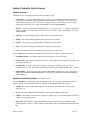
1. CAPACITY: A percentage of the chiller that is operating. It is calculated by adding the demand of
each compressor (0-100%), and then dividing by the total number of compressors. This value will be
displayed in the range of 0-100%. An asterisk (*) displayed next to capacity indicates that it is being
controlled by an external source, either LOAD LIMIT or CHILL WATER RESET.
2. DELAY: A time in seconds between demand increases or compressor starts. A compressor should only
turn on or ramp to a new demand if the delay time counter is at zero. This is determined by the system
variable T-DIFF.
3. FAULTS: A value showing how many current faults are in the chiller system.
4. ECHW: The common Entering Chilled Water temperature to the chiller.
5. LCHW: The common Leaving Chilled Water temperature from the chiller.
6. ECW: The common Entering Condenser Water temperature to the chiller.
7. LCW: The common Leaving Condenser Water temperature from the chiller.
Press the DOWN arrow button once to display the next main status screen with system information.
1. CONTROL SETPT: The LCHW Temperature that the chiller is trying to maintain.
2. LEAD COMP: The compressor shown is the first on. The compressor that has the most run time in the
cycle will be the first off.
3. LOAD LIMIT: A value to limit the max number of compressors available to run expressed in a
percentage from 0 to 100. An asterisk (*) indicates the external LOAD LIMIT RESET signal is enabled.
4. CHW OFFSET: Shows the value of the customer CHW RESET signal from 0 to 10°F. This value is
added to the UPPER and LOWER SETPOINTS. An asterisk (*) indicates the external CHW RESET
signal is enabled.
Module Information Screens (at the master controller)
Press the DOWN arrow button while on the second main status screen to display information for the first
MagLev module. The following information is available for each module in the chiller system:
1. LCHW: The Leaving Chilled Water temperature in the module, measured at the leaving of each
evaporator coil.
2. SUCT: The Suction temperature in the module, located on the compressor suction line.
3. COMP #: This displays the status of the compressor, whether it is on or off, and tells whish compressor
number it is in the chiller system.
4. Status Line: The status line of the module displays general information about the condition of that
particular module. If there is a fault condition in that module, then its condition will be displayed on this
line.
MCTS_A01-SE
Page 9
Press the DOWN arrow button again to display screen #2 for the first module. Information on this screen is
as follows:
1. HP: The High Pressure reading, in psig, based on the discharge pressure in the compressor of that
module.
2. LP: The Low Pressure reading, in psig, based on the discharge pressure in the compressor of that
module.
3. RUN TIME: This displays the total number of hours that the compressor has run. To reset the run
hours, press and hold the ALARM and DOWN arrow buttons simultaneously on the screen of the
module whose hours need to be reset. The SYSTEM VARIABLES must be unlocked to clear
compressor run hours.
More detailed information about each compressor can be accessed by pressing the ENTER button to display
screen #1 for Compressor #1 Info.
1. DEMAND: The demand input to the compressor expressed as a percentage from 0 to 100. The
operating speed is directly related to the demand input.
2. DEMAND TYPE: The type of demand signal that the compressor is currently set up to receive. The
demand signal for the MagLev application should read “MODBUS”.
3. COMPRESSOR STATUS: Provides additional information from the compressor on the current status
of the compressor.
Press the DOWN button to display screen #2 for Compressor #1 Info.
1. ACT RPM: The actual shaft speed of the compressor.
2. DES RPM: The requested shaft speed based on the control logic for each compressor. This value may
be higher than the actual shaft speed.
3. IGV POSITION: The position of the Inlet Guide Vane expressed as a percentage from 0 to 110
(slightly beyond fully open).
Press the DOWN arrow button to display screen #3 for Compressor #1.
1. LINE VOLTAGE: The calculated three phase voltage going into the compressor
2. LINE AMPS: The calculated three phase current that the compressor is drawing from the mains.
3. POWER KW: The power consumption of the compressor measured in KW.
4. INVERTER TEMP: The temperature of the electronics that controls the compressor measured by the
thermistor mounted under the IGBT inverter.
Press the DOWN arrow button to display screen #4 for Compressor #1 – Alarms.
1. NON-CRIT: Active non-critical alarms from the compressor. The non-critical alarms will allow the
compressor to continue operation.
2. CRITICAL: Active critical alarms from the compressor. A critical alarm will not allow the compressor
to operate.
MCTS_A01-SE
Page 10
Module Information Screens (at the module board)
1. LCHW: The Leaving Chilled Water temperature in the module, measured at the leaving of each
evaporator coil.
2. SUCT: The Suction temperature in the module, measured on the compressor suction line.
3. RPM: The actual shaft speed of the compressor.
4. TIMER: This timer shows the countdown of the minimum off timer.
5. STATUS LINE: See item 4 on page 9 under Module Information Screens.
Press the DOWN button to display screen #2 for Compressor #1 Info.
1. IGV POSITION: The position of the Inlet Guide Vane expressed as a percentage from 0 to 110
(slightly beyond fully open).
2. DEMAND: The demand input to the compressor expressed as a percentage from 0 to 100. The
operating speed is directly related to the demand input.
3. CRITICAL: Active critical alarms from the compressor. A critical alarm will not allow the compressor
to operate.
4. STATUS LINE: See item 4 on page 9 under Module Information Screens.
Manual Mode Module Screens
NOTE: These screens are only accessible when the module is in Manual Mode of operation!
Press the PRG button when in Manual Mode to change the manual mode variables.
1. MAN SETPOINT: The LCHW temperature that the compressor will control to.
2. MAN OFFSET: A value that, when added to the MAN SETPOINT, where the compressor will turn on;
and, when subtracted from the MAN SETPOINT, the point where the compressor will turn off.
Press the ALARM button when in Manual Mode to view and reset alarms in that module. The screen below
is a sample of what the screen will look like.
*** MODULE #01 ***
**** ALARM ****
(ALARM HERE)
PRESS ENTER TO RESET
MCTS_A01-SE
Page 11
Inputs and Outputs
Master Controller Inputs
1. Customer Chilled Water Reset Signal or Customer Load Limit Reset Signal: A 0-10Volt, 0-20 mA,
or 4-20 mA, customer supplied, external signal that shifts the UPPER and LOWER SETPOINTS from 0
to 10°F or allows the customer to change the LOAD LIMIT from 0 to 100%.
2. Entering Condenser Water Sensor: A NTC type sensor that measures the temperature of the condenser
water entering the chiller.
3. Leaving Condenser Water Sensor: A NTC type sensor that measures the temperature of the condenser
water leaving the chiller.
4. Entering Chilled Water Sensor: A NTC type sensor that measures the temperature of the system
chilled water entering the chiller.
5. Leaving Chilled Water Sensor: A NTC type sensor that measures the temperature of the system chilled
water leaving the chiller.
6. EX1: A customer supplied “Dry Contact” input that is required to be closed circuit to operate; open to
stop operation. Requires a manual reset to resume operation. This input will create a fault.
7. Remote Start/Stop: An input that is a closed circuit to operate; open to stop operation. Automatic
restart of the chiller. This input does NOT create a fault.
8. Power Phase Monitor: An input that is a closed circuit to operate; open to stop operation. Automatic
restart returns the chiller to the previous on/off state of the chiller. This input will create a fault. The
alarm light at the master controller will remain on until the fault is cleared.
9. CHW Flow Switch: An input that is a closed circuit to operate; open to stop operation. This circuit has
a 4 second delay between the time it opens and when the system shuts down. Requires a reset and a
restart to resume operation.
10. CW Flow Switch: An input that is a closed circuit to operate; open to stop operation. This circuit will
allow the system to start when open. There is a 10 second delay on start-up before this circuit will shut
the system down. This is to allow time for the condenser water pump to start with the first compressor
and provide water flow stabilization. After the initial 10 second delay expires, then the fault only
requires a 4 second delay between the time it opens and the time the system shuts down during normal
operation. Requires a reset and a restart to resume operation.
Master Controller Outputs
1. Customer Alarm Relay: This is a 24V AC, 5VA max signal that can power a relay to trigger an alarm.
The output is controlled by the failure indicator setting in the SYSTEM VARIABLES.
2. Full Load Indicator Relay: This is a 24V AC, 5VA max signal that can power a relay to show when
the chiller system is at full load.
3. Run Status Relay or Condenser Pump Relay: This is a 24V AC, 5VA max signal that can power a
small relay to control the condenser water pump. This output is energized anytime at least one
compressor is running in the chiller.
4. DDRS-210A Flush: This is a 24V AC signal that can power a solenoid valve once a day for a preset
amount of time. This signal works with the FLUSH TIME and FLUSH DURATION settings found in
the SYSTEM VARIABLES.
MCTS_A01-SE
Page 12
Module Board Inputs
1. Leaving Chilled Water Sensor: A NTC type sensor that measures the temperature of the LCHW in the
module.
2. Compressor Status: A contact closure on the compressor interface board that when closed indicates that
the compressor is allowed to run. A compressor fault will occur when the status signal from the
compressor is absent.
Module Board Outputs
1. Compressor Start Signal: A “Dry Contact” output wired to the compressor interface board used to
control the starting of each compressor. The compressor start signal is connected to the interlock input
of the compressor interface board. When the signal is not available, the compressor will ramp down to 0
RPM and de-levitate.
Faults
If a fault condition has occurred, the ALARM button will illuminate. To view the current fault(s), press the
ALARM button. Use the UP and DOWN arrow and ENTER buttons to view and clear the fault(s). If the
fault does not clear, then the fault is still current.
System Faults
If any of the following fault conditions occur, all compressors in the system will be turned off:
1. EX1: Customer Input – EX1 requires a reset at the master controller.
2. Remote Start/Stop: Customer Input – This condition does not log as a fault. This circuit operates like
an on/off switch. If closed, the chiller is enabled. If open, the chiller is disabled and the compressors
will be unable to run.
3. Power Phase Monitor: When the Power Phase Monitor input opens, the chiller is disabled until the
input is closed again. There is no reset required at the master controller to resume operation, only to
clear the alarm from the current fault log. Automatic restart returns the chiller to the previous on/off
state of the chiller.
4. CW Flow: A signal from the condenser water flow switch that alerts the master controller of NO
FLOW on the condenser side of the chiller and disables all modules in the chiller. This fault requires a
manual reset and a restart at the master controller.
5. CHW Flow: A signal from the chilled water flow switch that alerts the master controller of NO FLOW
on the evaporator side of the chiller and disables all modules in the chiller. If the flow switch opens and
the chiller has not been commanded on, a warning will appear at the bottom of the start/stop screen,
however, no fault will occur. This fault requires a manual reset and restart at the master controller.
6. LOCHW Temp: Low Leaving Chilled Water temperature. If the system LCHW falls below 36°F, all
compressors will turn off. The water temperature must rise to 40°F before the fault can be cleared. This
requires a manual reset and restart at the master controller.
7. ECHW Sensor Failure: The sensor for the system ECHW has either opened or shorted to the master
controller. This fault requires resetting at the master controller.
8. LCHW Sensor Failure: The sensor for the system LCHW has either opened or shorted to the master
controller. This fault requires resetting at the master controller.
MCTS_A01-SE
Page 13
9. ECW Sensor Failure: The sensor for the system ECW has either opened or shorted to the master
controller. This fault does not affect the operation of the chiller.
10. LCW Sensor Failure: The sensor for the system LCW has either opened or shorted to the master
controller. This fault does not affect the operation of the chiller.
Mechanical Cooling Module Faults
The following faults will only affect the module that they are associated with.
1. High Pressure: High Pressure Cutout. This high pressure fault can come from either the discharge
pressure reading of the compressor or the HP switch being tripped. When the discharge pressure reading
reaches the value of the HP CUTOUT, a fault will occur, shutting down that compressor. The fault can
be reset at the master controller after the high side pressure drops below 175 psig. If the High Pressure
switch trips then, it requires resetting the HP switch at the module and clearing the fault at the master
controller to resume operation. The fault will remain current until the HP switch is manually reset and
the pressure is below 175 psig.
2. LOSUCT: Low Suction Temperature: This is measured by the module suction sensor. If during
operation this temperature should drop below 25°F, the module’s compressor will shut down. This
requires resetting at the master controller, but only after the temperature has risen above 30°F. The
system has to be on for this fault to occur.
3. SUCT SENSOR FAILURE: Suction Sensor Failure. This would occur if the suction line sensor reading
is outside the range of the sensor. This fault requires resetting at the master controller.
4. LOCHW TEMP: Low Leaving Chilled Water Temperature: This is measured by the module LCHW
temperature sensor. If the temperature falls below 36°F, the module’s compressor will turn off. The
temperature must rise to 40°F before the fault can be reset at the master controller.
5. LCHW SENSOR FAILURE: Leaving Chilled Water Sensor Failure: This would occur if the sensor
opened or shorted to the module board. This fault requires resetting at the master controller.
6. RPM DELAY: When a module is in an RPM delay, it means that the compressor is not meeting the
speed requirement for the demand signal that the master controller is sending to it. The delay can be
active for a period of ten minutes. If the demand signal sent to the module increases, the timer will start
over. As long as the ACT RPM of the compressor keeps up with the demand, then the RPM DELAY
will not occur. If the timer reaches the 10 minute limit, then the compressor will be disabled and will
restart after its minimum time off requirement is satisfied, if the compressor is needed.
7. COMMUNICATIONS ERROR: Communication errors can occur when the master controller is not
properly communicating with the module boards in the chiller. This fault is an automatic reset. The
alarm will still need to be cleared in the alarm screens; however, this will not hold back the operation of
the module if the master controller begins communicating again.
8. Non-Critical Alarms: These alarms are from the compressor and will be displayed on the compressor
alarm screen of the module. The non-critical alarms are warnings that the compressor is getting close to
a critical alarm. The non-critical alarms will not stop the operation of the compressor, but slow down the
motor. The following is a list of non-critical alarms that may be seen:
a.
b.
c.
d.
e.
f.
NO WARNINGS: No non-critical current alarms.
INVERT TEMP: High Inverter Temperature
DCHRG TEMP: High Discharge Temperature at the compressor flange.
LOW PRESS: Low Pressure at the compressor flange.
HIGH PRESS: High Pressure at the compressor flange.
3 PH CRNT: 3 Phase Over-Current - Excessive system load usually due to the compressor
pumping liquid. This can be a result from low voltage.
MCTS_A01-SE
Page 14
g. CAVITY TEMP: Shaft Cavity Temperature – Insufficient motor cooling.
h. TEMP SENSOR: Motor Winding
i. COMP RATIO: Total Compression Ratio – This fault will occur if the difference between the
discharge pressure and suction pressure is outside the operational envelope of the compressor.
j. SCR TEMP: SCR Temperature – Increased temperature of the AC to DC voltage rectifier.
9. Critical Alarms: These alarms are from the compressor and will be displayed on the compressor alarm
screen of the module and in the fault review when they occur. The critical alarms have exceeded the
compressor’s alarm setting and will stop the operation of the compressor. The following is a list of
critical alarms that may be seen:
a.
b.
c.
d.
e.
NO WARNINGS: No critical current alarms.
INVERT TEMP: High Inverter Temperature
DCHRG TEMP: High Discharge Temperature at the compressor flange.
LOW PRESS: Low Pressure at the compressor flange.
HIGH PRESS: High Pressure at the compressor flange. Note: A High Pressure alarm will
lock out the compressor. The compressor will have to be powered down manually. Power must
be cycled to the compressor (off for 3 minutes) to clear this alarm.
f. 3 PH CRNT: 3 Phase Over-Current - Excessive system load usually due to the compressor
pumping liquid. This can be a result from low voltage. Note: A 3 Phase Over-Current alarm
will lock out the compressor. Power must be cycled to the compressor (off for 3 minutes) to
clear this alarm.
g. CAVITY TEMP: Shaft Cavity Temperature – Insufficient motor cooling.
h. TEMP SENSOR: Motor Winding
i. COMP RATIO: Total Compression Ratio – This fault will occur if the difference between the
discharge pressure and suction pressure is outside the operational envelope of the compressor.
j. BEARING MTR: Bearing Motor (BMC) – Front or Rear radial displacement of the shaft.
k. SCR TEMP: SCR Temperature – Increased temperature of the AC to DC voltage rectifier.
l. SYS LOCK OUT: System Lock Out – If any combination of the alarms listed below occurs
more than 3 times within 30 minutes, a System Lock Out occurs:
i. Inverter Temperature Alarm
ii. Cavity Temperature Alarm
iii. SCR Temperature Alarm
Fault Review
The FAULT REVIEW is a history of the faults that have occurred in the chiller system. The review holds up
to 25 faults. The review can be found in the MAIN MENU. The faults are in order by the most recent to the
oldest. Pushing the UP and DOWN arrow buttons allows scrolling through the faults. Pushing the ENTER
button on a particular fault allows for viewing additional system information. Pushing ENTER again allows
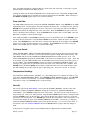
for viewing additional module information. The following is a sample of what the three screens contain:
FAULT 01
CURRENT
COMMUNICATION ERROR
MOD1
9/17 12:35
PRESS ENTER FOR MORE
FAULT 01
*SYS INFO*
ECHW 00.0
ECW 000.0
LCHW 00.0
LCW 000.0
PRESS ENTER FOR MORE
FAULT 01
* MOD INFO *
LCHW 00.0
HP = 000
SUCT 00.0
LP = 000
Screen #1
Screen #2
Screen #3
Screen one displays information about the fault. The status of the fault will be displayed as CURRENT,
RESET, or RECORD. CURRENT means that the fault is still present, RESET means that the fault can be
reset at the master controller, and RECORD means that the fault is part of the history for future reference.
The date and time of the fault, the fault that occurred and where the fault occurred are also displayed on the
first screen. On screen two, the system temperatures at the time the fault occurred are displayed. On screen
MCTS_A01-SE
Page 15
three, the module information is displayed that was current at the time of the fault. If the fault is a system
fault the module information will display all zeros.
Clearing the faults from the FAULT REVIEW removes all the faults at once. Hold down the Prg and UP
arrow buttons simultaneously for all faults to be removed from the FAULT REVIEW. When a message of
NO MORE ALARMS appears on the screen, release the buttons.
Time and Date
The TIME AND DATE option is located in the SYSTEM VARIABLES’ MENU. Press ENTER on the TIME
AND DATE option. The time appears first and is displayed in 24 hour time. To change the time, press the
ENTER button, putting the program into edit mode. The cursor is now in the hour field, use the UP and
DOWN arrow buttons to change the hour to the correct time. Press the ENTER button again to move the
cursor to the minute field to change it. Press the ENTER button one more time to set the TIME. Press the
Esc button, at anytime, to abort the time change.
After setting the TIME, use the DOWN arrow button to move to the DATE screen. Press ENTER to move
the cursor into the month field. Using the UP and DOWN arrow buttons, change the value to the current
month. Press ENTER again to move the cursor to the day field, adjust the day accordingly. Press ENTER
again to move to the year field, adjust the year accordingly. Press ENTER one more time to accept the
DATE. Press the Esc button, at anytime, to abort the date change.
Customer Resets
CHILL WATER RESET (CHW) and LOAD LIMIT RESET are external inputs that are program selectable
as 0-10Volt, 0-20 mA, or 4-20 mA. The customer can send a signal to change these values remotely. The
CHW RESET will increase the UPPER and LOWER SETPOINTS in the chiller from 0 to 10 °F. The
LOAD LIMIT RESET will allow the LOAD LIMIT of the chiller to be changed from 0 to 100%. There will
be an asterisk (*) by the CHW OFFSET or the LOAD LIMIT values on the second system status screen, if
they are enabled. The CUSTOMER RESET options are located in the SYSTEM VARIABLES’ MENU. An
asterisk (*) also appears next to CAPACITY on the main status screen when either reset is enabled. Press
ENTER and use the UP and DOWN arrow buttons to enable the feature to be used. Both default to OFF,
but when enabling the user must select the type of input being used. (0-10 Volt, 0-20 mA, or 4-20 mA)
Temperature Readings
The temperature readings default to Fahrenheit (°F). The readings may be set to display in Celsius (°C), by
going to the SYSTEM VARIABLES’ MENU. Press ENTER on TEMP. READINGS option. Press ENTER
again to move the cursor into the field. Use the UP or DOWN arrow buttons to change the field from
Fahrenheit to Celsius. Press ENTER again to accept the change.
Security
The security option in the MAIN MENU is used to lock the SYSTEM VARIABLES. The first screen tells
whether the variables are locked or unlocked. Initially the screen will say ‘SYSTEM VARIABLES
UNLOCKED’. Press ENTER to change the status of the security. The cursor will be on the first letter of
the password code. Enter a five letter password, using the UP and DOWN arrow buttons to change the letter
and press ENTER to move to the next letter. After entering the last letter, the next screen is to accept the
password or clear the password. Press ENTER again to set the password or Esc to clear the password. The
screen will then display the status of the SYSTEM VARIABLES as LOCKED. An asterisk (*) is displayed
within the SYSTEM VARIABLES’ MENU in place of the greater than sign (>) as a cursor for the menu. If
the asterisk is seen, the SYSTEM VARIABLES need to be unlocked before trying to make any changes to
them.
If the password is forgotten, please call your Multistack Service Representative at 608-366-2400.
MCTS_A01-SE
Page 16
Board LED’s
Five LED’s are present on the master controller board. Two LED’s are located at the bottom of the board,
one yellow and one red. The yellow one indicates that the board is receiving power. The red one is an alarm
LED that would indicate that something is wrong with the board internally. Three more LED’s are located at
the top of the board next to the DIP switches. These LED’s indicate that the connection, address definition
and pLan (network of the modules) are working correctly. The green and yellow LED’s should be lit for the
network to be working properly.
Four LED’s are present on each module board. They are all located at the top of the board. One single
yellow LED indicates that the board is receiving power. The other three LED’s indicate that the connection,
address definition and pLan (network of the modules) are working correctly. The green and yellow LED’s
should be lit for the network to be working properly.
Program Version
The program version is found by going to the Main Menu and pressing the PRG and UP arrow buttons
simultaneously. A screen will appear that displays the version of the program in the controllers and the
month and year the program was developed. The version will appear in a format similar to MCTS_A00-SE.
When looking at the version, the forth position could vary between S, L, and B. The S stands for a Standard
application, the L for a Low Ambient application, and the B for a Brine or Low Temperature application.
Each of these programs may have different cutouts or temperature ranges available to the customer. The
standard application system variables and cutouts are located on page 6.
MCTS_A01-SE
Page 17
BAS Interface
The master controller is capable of tying into a building automation system. Modbus and BACnet are the two
protocols that are currently available. First the BAS INTERFACE needs to be enabled. This is accomplished
by going to the SYSTEM VARIABLES Menu and changing the enable point, under BAS INTERFACE, to yes.
The enable defaults to no. This menu also has a variable to select which Protocol will be used. Select the
appropriate Protocol for the job. BACnet is the default for this variable.
Modbus
Modbus requires that a RS485 card is installed into the pCO2 Master Controller. This card plugs into the
serial port and communicates Modicon Modbus Protocol Rev. D. The Modbus protocol used is RTU type.
The configuration is multipoint for RS-485. The data communication is asynchronous serial, 8 data bits, 2
stop bits, and no parity across an EIA-485 two-wire half-duplex connection. The minimum cable size
recommended is an AWG20/22 two-wire twisted shielded cable. The pin wiring is GND, RX+/TX+, RX/TX- and is stamped on the terminal connector. The customer can adjust the Baud Rate and the Network
Number. These settings are found in the SYSTEM VARIABLES Menu under BAS INTERFACE. The Baud
Rate defaults to 9600 bps and can be adjusted to 1200, 2400, 4800, 9600, or 19200 bps. The Network
Number is the same as a slave address and defaults to 1. This number must be unique to the Modbus
network. The range for the Network Number is from 1-200. See the MagLev Modbus Technical Manual for
a table of Modbus registers.
Figure 1 - RS485 Card
Figure 2 - pCO2 with RS485 Card
BACnet
BACnet requires that a pCO Web card is installed in to the pCO2 Master Controller. This card plugs into the
serial port and communicates BACnet over Ethernet (ISO8802-2 or 8802-3) or BACnet over TCP/IP (Addenda
A/Annex J). The recommended cable is shielded class 5, max 100mt. The Baud Rate has to be set and defaults
to 19200. See the MagLev BACnet Technical Manual for a table of points and instructions on changing the IP
Addressing scheme.
Figure 3 – pCO Web Card
Figure 4 - pCO2 with pCO Web Card
MCTS_A01-SE
Page 18
APPENDIX A
DEFINITION OF
INPUTS AND OUTPUTS
MCTS_A01-SE
Page 19
TURBOCOR SE
MASTER CONTROL (UNIT WITH DISPLAY)
ANALOG INPUTS
B1
CHW RESET OR LOAD LIMIT RESET (selectable)
B2
ENTERING CONDENSER WATER SENSOR (ECW)
B3
LEAVING CONDENSER WATER SENSOR (LCW)
B4
ENTERING CHILL WATER SENSOR (ECHW)
B5
LEAVING CHILL WATER SENSOR (LCHW)
DIGITAL INPUTS
ID1 EX 1 INPUT
ID2 REMOTE START / STOP
ID3
ID4 POWER PHASE MONITOR
ID5 CHILL WATER FLOW SWITCH
ID6 CONDENSER WATER FLOW SWITCH
ID7
ID8
ANALOG OUTPUTS
Y1
Y2
Y3
Y4
DIGITAL OUTPUTS (RELAY TYPE)
NO1 CUSTOMER ALARM RELAY
NO2 FULL LOAD RELAY
NO3 RUN STATUS OR CONDENSER PUMP RELAY
NO4 DDRS
NO5
NO6
NO7
NO8
NC8
MCTS_A01-SE
Page 20
TURBOCOR SE
MODULE BOARDS
ANALOG INPUTS
B1
B2
B3
B4
LEAVING CHILL WATER SENSOR (LCHW)
DIGITAL INPUTS
ID1 MANUAL MODE
ID2 AUTO MODE
ID3 COMPRESSOR FAULT
ID4
ID5
ID6
ANALOG OUTPUTS
Y1
Y2
Y3
DIGITAL OUTPUTS (RELAY TYPE)
NO1 LIQUID LINE SOLENOID VALVE
NO2
NO3 ALARM OUTPUT
NO4 COMPRESSOR START SIGNAL (INTERLOCK)
NO5 WATER SOLENOID VALVE
NC5
MCTS_A01-SE
Page 21