1
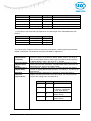
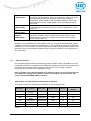
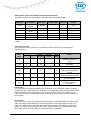
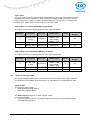
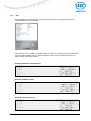
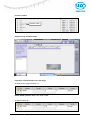
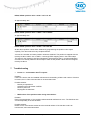
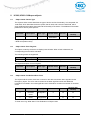
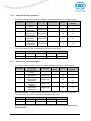
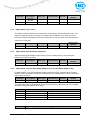
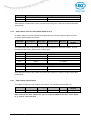
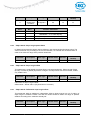
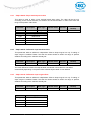
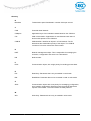
SDO (Service Data Object) CANopen frames containing parameters. SDOs are typically used to read or write parameters, while the application is running. COB-ID (Communication Object Identifier) Each CANopen frame starts with a COB-ID working as the identifier in the CAN frame. Duringthe configuration phase each node receives the COB-ID(s) of the frame(s), for which it is the provider (or consumer). The NMT protocols are used to issue state machine change commands (i. e. to start and stop the devices), detect remote device boot ups and error conditions. NMT (Network Management Protocol) 3.1 Operating modes 3.1.1 Mode: Preoperational When the device is in this state, its configuration can be modified. However, only SDOs can be used to read or write device-related data. The device goes into "Pre-Operational" state: after the power up or on receiving the "Enter Pre-Operational" NMT indication, if it was in operational state. When configuration is complete, the device goes into one of the following states on receiving the corresponding indication: "Stopped" on receiving the "Stop Remote Node" NMT indication "Operational" on receiving the "Start Remote Node" NMT indication. To set one or all nodes to pre-operational mode, the master must send the following message: Identifier Byte 0 0h 80h 0h 80h NN: node number 3.1.2 Byte 1 00 NN (in hex) Description NMT: Pre-operational Mode, all nodes NMT: Pre-operational Mode, NN Mode: Start Operational The device goes into the "Operational" state, if it was in the "Pre-Operational" state on receiving the "Start Remote Node" indication. When the CANopen network is started using the "Node start" NMT services in "Operational" state, all device functionalities can be used. Communication is possible by PDOs or SDOs. Note: Modifications to the configuration in "Operational" mode may have unexpected consequences and should therefore only made in "Pre-Operational" mode. IK360; IK360L-CAN x Date: 08.08.2013 Page 7 of 42 Art.no. 86089 Mod. Status 292/13