1
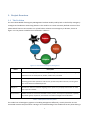
disaster assists emergency management personnel in making good decisions regarding which tasks to
perform and how best to prepare for the next phase. Additionally, the model provides a frame of reference
when analyzing a disaster after the fact, either for training/preparedness activities or academic research.
Despite these benefits, the model has received criticism from both emergency management practitioners
and academics (Neal, 1997), mainly due to the discrepancy between the model’s clearly delineated phases
and the overlapping and ad hoc nature of emergency management activities in practice. The model has been
redefined and extended by a number of sources (FEMA, 2006; FEMA, 2009; NFPA 2007), but the
fundamental critiques remain. Thus, work is needed to better adapt the model to real world emergency
situations.
1.2 Our Solution
This project, performed under the direction of the CTRNet project (described below), addresses the
shortcomings of the Four Phase Model by leveraging micro-blogging data from the social media giant,
Twitter. As micro-blogs, or ‘tweets,’ have become an increasingly viable and popular form of communication
and are available in large quantity, much may be learned about an important event such as a disaster
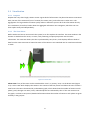
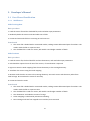
(natural or otherwise) in real-time. Our end-to-end approach provides two major contributions: (1) a
pipeline for processing and classifying tweets into categories and (2) a visualization system for displaying
them in a multi-view manner to quickly extract meaning across tweets (‘What’), users (‘Who’), locations
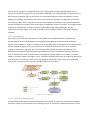
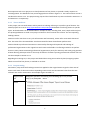
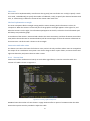
(‘Where’), and time (‘When’). See Figure 1-2 for a flowchart describing the project at a high level. We started
with data from Hurricane Isaac, which struck the Caribbean and Southern USA in August and September
2012, as our case study, but the approach should extend to other disasters.
Figure 1-2: Project flowchart
1.2.1
Tweet Processing Pipeline
The four phase model captures professional and personal activities. In tweets, we observed that people do
not tend to report personal activities, but are willing to share or comment on professional activities. Those
2