1
It is generally a good idea to run imstat on the flats just to identify any possible bad
frames and eliminate them from the input data.
1. For each of the on/off sets in the filters, imcombine each set into a single image (e.g.,
flat.k.on, etc.). One can generally use average, with avsigclip rejection, although median
should work as well. For the ‘lamp on’ images, one can scale the images using the mean
of a large subregion [500:1500,500:1500] to take out the effects of any drift in the lamp
intensity during the observation. The ‘lamp off’ data generally does not require scaling,
since the numbers are small.
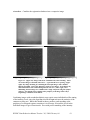
Figure 2.2: Flatfield images at Ks with the flat lamp on (left panel) and off (right
panel). Note there is substantial thermal background flux even with the lamp off.
2. Subtract the ‘lamp off’ from the ‘lamp on’ image to yield a dark-bias subtracted flat.
3. It is useful to normalize the flats to 1.0 using a fairly large subregion such as
[500:1500,500:1500] to keep the science data values from changing too much after the
flatfielding operation.
4. It is also worthwhile to use the IRAF routine imreplace to eliminate very small or
negative numbers from the flat so one does not get enormous numbers in the flatfielded
science images. I typically use a replacement value of 1.0 and an upper limit of 0.02,
keeping the lower level at INDEF.
5. One can also generate a bad pixel map, but the procedures for WHIRC flats are still in
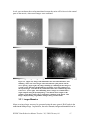
the experimental stage. There are a lot of circular “dimples” in the WHIRC array (Fig
2.4) which appear to be dead, but are actually regions of reduced sensitivity and cannot
be simply handled using the standard bad pixel map thresholds. In fact, these regions
flatfield out fairly well and are a legitimate feature of the flatfield image.
WHIRC Data Reduction Manual Version 1.01, 2009 February 04
6