1
2-Understanding RAID
Volume Set
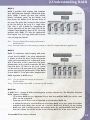
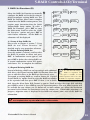
A Volume Set is seen by the host system as a single logical device. It is organized in a RAID
level with one or more physical disks. RAID level refers to the level of data performance
and protection of a Volume Set. A Volume Set capacity can consume all or a portion of
the disk capacity available in a RAID
Set. Multiple Volume Sets can exist
Free Space
on a group of disks in a RAID Set.
Volume 1
Parity
Data
Data
Additional Volume Sets created in a
Data
specified RAID Set will reside on all
Volume 2
Data
Data
Parity
Parity
the physical disks in the RAID Set.
Disk 1
Disk 2
Disk 3
Disk 4
Thus each Volume Set on the RAID Set
A 4 Disk RAIDset may contain two volumes. Volume 1 can be
will have its data spread evenly across assigned a RAID 5 level of operation while Volume 2 might be
assigned a RAID 0+1 level of operation.
all the disks in the RAID Set.
• Volume Sets of different RAID
levels may coexist on the same
RAID Set.
• The maximum addressable size of a single volume set is 2 Terabytes.
• Up to eight volume sets can be created in a RAID set
Online Capacity Expansion
Online Capacity Expansion makes it possible to add one or more physical drives to a volume set,
while the server is in operation, eliminating the need to store and restore after re-configuring
the RAID set. When disks are added to a RAID set, unused capacity is added to the end of the
RAID set. Data on the existing volume sets residing on that RAID set is redistributed evenly
across all the disks. A contiguous block of unused capacity is made available on the RAID set.
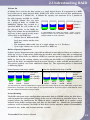
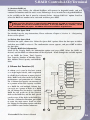
The unused capacity can create additional volume set. The expansion process is illustrated
as following figure:
Before Expansion: Disk Array A, 600GB
After Disk Expansion: Disk Array A, 800GB
Free Space
200GB
Vol 1 (200GB)
Free Space
400GB
Vol 1 (200GB)
Vol 2 (200GB)
Vol 2 (200GB)
Disk 1
200GB
Disk 2
200GB
Disk 3
200GB
Disk 1
200GB
Disk 2
200GB
Disk 3
200GB
Disk 4
200GB
The RAID subsystem controller redistributes the original volume set over the original and newly added disks, using the same
fault-tolerance configuration. The unused capacity on the expanded RAID set can then be used to create additional volume
sets, with a different fault tolerance setting if required.
Array Roaming
The RAID subsystem stores configuration information both in NVRAM and on the disk drives,
and can protect the configuration settings in the case of a disk drive or controller failure. Array
roaming allows the administrator the ability to move a complete RAID set to another system
without losing RAID configuration and data on that RAID set. Should the PlatinumRAID
enclosure cease to function, the RAID set disk drives can be moved to another PlatinumRAID,
inserted in any order, and become instantly available.
PlatinumRAID Pro Owner’s Manual
15