1
UISIM
User's Manual
Introduction
The Unemployment Insurance Simulation Model (UISIM) was constructed to assist
policymakers in developing countries to make projections of Unemployment Insurance
(UI) benefit costs, contributions, and trust fund balances.
The model is written in Visual Basic in an Excel Spreadsheet platform. It is constructed
to fit the UI system of almost any country, and to be powerful enough to provide accurate
estimates for numerous UI variables. The procedures are user-friendly and the program
can save considerable time compared to building an individual spreadsheet model.
Users are asked to complete the beginning period input data sheets in an Excel
workbook, and the model then performs calculations in Visual Basic to produce output
tables and charts. The model projects the primary variables of interest – the UI system’s
revenues and expenditures. The model’s main advantage is the ability to quickly evaluate
the quantitative impact of a proposed change in one or more of the UI system parameters
or economic variables. For example, the implications of changes in any of the following
parameters and variables on UI system’s revenues and expenditures can be analyzed:
•
•
•
•
•
•
•
initial UI eligibility,
the length of potential eligibility,
benefit level, including minimum and maximum benefits,
indexation of UI benefits,
the strictness of monitoring of continuing UI eligibility,
financing of UI: contribution rate, compliance with paying the contribution,
coverage rate;
economic conditions: GDP growth, inflation, interest rate.
This manual provides the necessary background to understand and operate the model. It
is divided into four chapters. Chapter I describes how to install, operate and run the
model. Chapter II provides guidance about the preparation of data required by the model,
both the economic data and model settings – the modeling and simulation choices the
user must provide. Chapter III explains how data and other information are entered into
the model. Chapter IV summarizes the model’s methodology, that is, explains how the
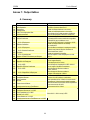
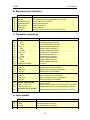
model calculates its outputs, and Annex 1 provides definitions of variables calculated by
the model.
3