1
SESAM
Program version 7.3
5
Presel
01-OCT-2004
5-1
COMMAND DESCRIPTION
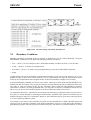
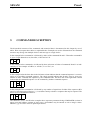
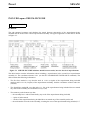
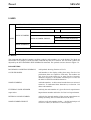
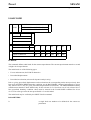
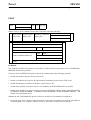
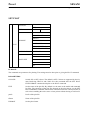
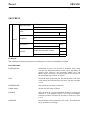
The hierarchical structure of the commands and numerical data is documented in this chapter by use of
tables. How to interpret these tables is explained below. Examples are used to illustrate how the command
structure may diverge into multiple choices and converge to a single choice.
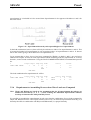
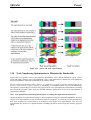
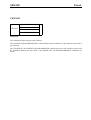
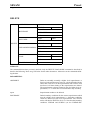
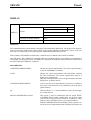
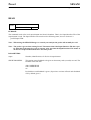
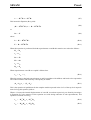
In the example below command A is followed by either of the commands B and C. Thereafter command D
is given. Legal alternatives are, therefore, A B D and A C D.
B
A
D
C
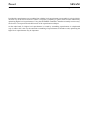
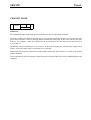
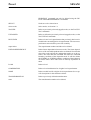
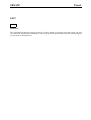
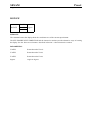
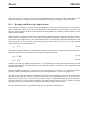
In the example below command A is followed by three selections of either of commands B and C as indicated by *3. For example: A B B B, or: A B B C, or A C B C, etc.
B
A
*3
C
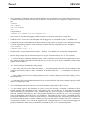
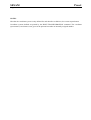
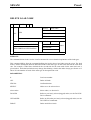
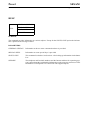
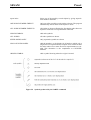
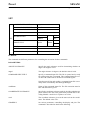
In the example below the three dots in the left-most column indicate that the command sequence is a continuation of a preceding command sequence. The single asterisk indicate that B and C may be given any
number of times. Conclude this sequence by the command END. The three dots in the right-most column
indicate that the command sequence is to be continued by another command sequence.
B
*
... A C
...
END
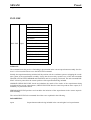
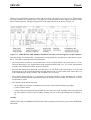
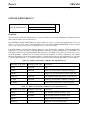
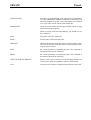
In the example below command A is followed by any number of repetitions of either of the sequences B D
and C D. Note that a pair of braces ({ }) is used here merely to define a sequence that may be repeated. The
braces are not commands themselves.
B
A {
D }*
C
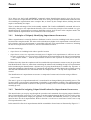
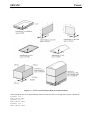
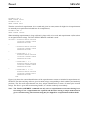
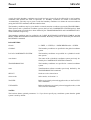
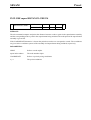
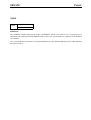
The characters A, B, C and D in the examples above represent parameters being COMMANDS (written in
upper case) and numbers (written in lower case). All numbers may be entered as real or integer values.
Brackets ([ ]) are used to enclose optional parameters.