1
Lotus Service Notes
Section CI
Camber Adjustment
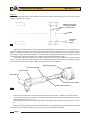
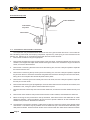
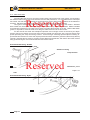
Camber is the angle from vertical of the wheel when viewed from the front, and is said to be negative when
the wheel leans inwards at the top (positive when leaning outwards). The primary purpose of camber is to
achieve the maximum efficiency of the tyre under cornering loads and body roll, with the specification closely
allied to a particular wheel/tyre combination. The camber angle changes with suspension travel, becoming
more negative on bump, and should be measured only at the specified ride height. Incorrect camber can result
in handling deficiencies and excessive tyre wear.
Camber angle
Vertical
c29
Wheel centreline
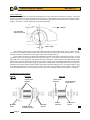
Camber adjustment is effected by adding or deleting shim plates between the steering arm (to which the
upper steering swivel joint is fixed) and the hub carrier.
Camber adjustment
shimplate
Steering arm
Hub carrier
-
c30a
Shimplates are available in 1mm and 3mm thicknesses.
Reducing the shim pack thickness will increase negative camber. Adding shims will reduce negative
camber.
A 1mm shim plate will alter camber by approximately 0.25°.
Apply Permabond A130 (A912E7033) to the two steering arm fixing bolts, and tighten to 45 Nm
Page 5