1
Lotus Service Notes
Section CI
Castor Adjustment
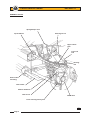
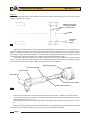
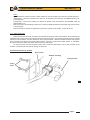
Castor is the angle from vertical of the steering axis of the wheel when viewed from the side. Its primary
purpose is to provide a natural straight running tendency of the steered wheels with forward vehicle motion.
Castor angles have a complex interaction with other steering geometries and if unbalanced or outside of specification, can result in various stability and handling deficiencies.
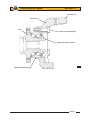
FRONT
Top & bottom
steering swivels
Castor angle
c27
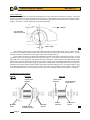
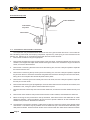
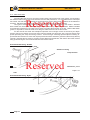
The wishbone pivot bushes are bonded rubber type with a plastic flanged outer sleeve, a plain steel inner sleeve, and a plastic interleaf sleeve within the rubber bush to control the flexing characteristic. The top
wishbone rear bush, identified by a blue paint mark, has no interleaf sleeve.
The top wishbone pivots are sandwiched between the walls of transverse chassis box sections, the pick
up points in which are reinforced either with machined inserts, or in the case of the foremost position, a thick
alloy plate, each being bonded to the chassis with epoxy adhesive. Spacer washers are fitted ahead of and
behind each of the top wishbone pivot bushes to allow the wishbone to be displaced forwards or backwards,
with an associated change of castor angle. A rubber faced snubber washer fitted against the rear face of the top
wishbone front bush prevents metal to metal contact under extreme braking forces. The spacer washers may
be re-distributed between the front and rear of each pivot bush but the snubber washer position, and the total
shim pack thickness of 4 x 1.5mm at each pivot (inc. the 1.5mm snubber washer) must remain unchanged.
Top Wishbone Inboard Fixing
FRONT
Front leg
Rear leg
1.5mm shim
washers
Bonded
plate
Page 6
Rubber faced
snubber washer
1.5mm shim
washers
Bonded
inserts
Plastic
interleaf
Flanged plastic
outer sleeve
Inner steel
sleeve
c32