1
TOPIC 6 ACCESSORIES
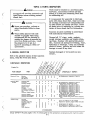
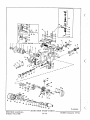
ELECTRICAL SHUT-OFF
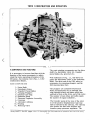
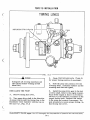
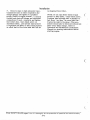
The Electrical Shut-Off Device may be
furnished for "energized to run" or
"energized to shut-off" operation. It is
available for 12, 24 and 32 volt systems .
Since this device is housed within the
governor control cover, the external
dimensions of the pump do not change .
OPERATION
ENERGIZED TO RUN
ETR
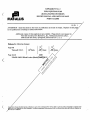
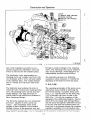
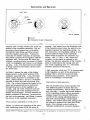
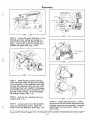
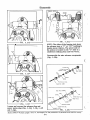
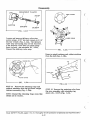
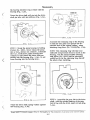
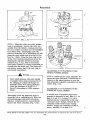
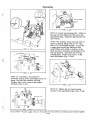
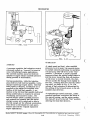
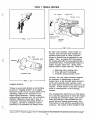
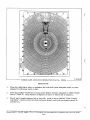
ENERGIZED TO SHUT-OFF (ETSO):
Energizing the coil overcomes the force of
the shut-down coil spring, pulling the arm
in and causing the tab on its lower end to
contact the governor linkage hook. This
moves the linkage hook against the governor
linkage spring tension, rotating the metering valve to its closed position and cutting
off the fuel (Fig. 6.1).
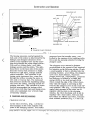
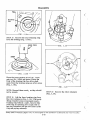
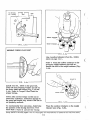
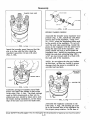
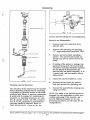
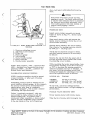
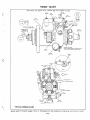
FIG. 6.2
09 LOCK NUT
es t
RETAINING NUT
e
e ,:::,
WASHER
(::::;) 4::>.-----------."- INSULATING WASHER
C=)
COVER
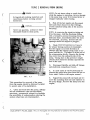
NOTE: Most ETSO applications use a coil
with a voltage rating lower than system
voltage to provide positive shut-off action.
This is allowable since the coil is used
under intermittent duty conditions .
INSULATING TUBES
SHUT-OFF ARM SPRING
SHUT-OFF ARM
SPRING SLEEVE
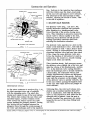
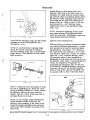
E.T.R.
E.T.S.O.
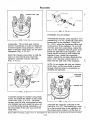
FIG. 6.3
ENERGIZED TO SHUT OFF
ETSO
FIG.6.1
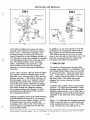
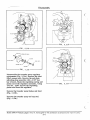
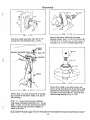
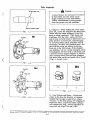
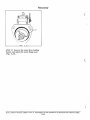
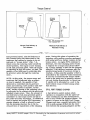
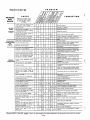
ENERGIZED TO RUN (ETR): De-engergizing
the coil allows the shut-down coil spring to
release the shut-off arm. The lower end of
the arm moves the governor linkage hook,
rotating the metering valve to the closed
position and cutting off the fuel (Fig. 6.2)
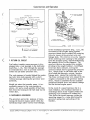
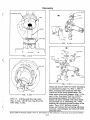
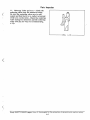
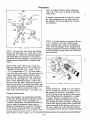
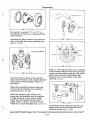
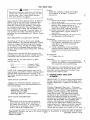
NOTE: Some "Energized to Run" applications of Model "DM" pumps will incorporate a mechanical override device
for emergency use if the coil becomes inoperative due to electrical system failure.
The override consists of a rod and guide
assembly attached to the control cover
through a tapped hole at the rear of the
cover in a location that aligns the rod with
the solenoid arm assembly. When the rod
is pushed into the cover to the limit of its
travel it contacts the solenoid arm assembly and locks it up against the solenoid,
allowing the linkage hook to operate. Shut-
Study SAFETY RULES, pages I thru III, thoroughly for the protection of personal and machine safety.
6-1