1
Prefazione, Indice
SIMATIC
SIMATIC NET
Reti Industrial Twisted Pair e Fiber
Optic
Informazioni generali
1
Reti con Industrial Ethernet
e Fast Ethernet
2
Componenti passivi per reti
elettriche
3
Componenti passivi per reti
ottiche
4
Componenti attivi &
topologie
5
Manuale
Progettazione della rete
Direttive di montaggio
Disegni in scala
6
7
8
Appendici
Bibliografia
A
Support e Training
B
Istruzioni per l’uso
OLM/ELM
C
Istruzioni per l’uso
OSM/ORM
D
Glossario, indice analitico
6GK1970--1BA10--0AA4
Edizione 1
Avvertenze tecniche di sicurezza
Il presente manuale contiene avvertenze tecniche relative alla sicurezza delle persone e alla prevenzione
di danni materiali che vanno assolutamente osservate. Le avvertenze sono contrassgnate da un triangolo
e, a seconda del grado di pericolo, rappresentate nel modo seguente:
!
!
!
Pericolo di morte
significa che la non osservanza delle relative misure di sicurezza provoca la morte, gravi lesione alle
persone e ingenti danni materiali.
Pericolo
significa che la non osservanza delle relative misure di sicurezza può causare la morte, gravi lesione alle
persone e ingenti danni materiali.
Attenzione
significa che la non osservanza delle relative misure di sicurezza può causare leggere lesioni alle persone o lievi danni materiali.
Avvertenza
è un’informazione importante sul prodotto, sull’uso dello stesso o su quelle parti della documentazione a
cui si deve prestare una particolare attenzione.
Personale qualificato
La messa in servizio e il funzionamento di un dispositivo devono essere eseguiti esclousivamente da personale qualificato. Personale qualificato ai sensi delle avvertenze di sicurezza contenute nella presente
documentazione è quello che dispone della qualifica a inserire, mettere a terra e contrassegnare, secondo
gli standard della tecnica di sicurezza, apparecchi, sistemi e circuiti elettrici.
Uso conforme alle disposizioni
Osservare quanto segue:
!
Pericolo
Il dispositivo deve essere impiegato solo per l’uso previsto nel catalogo e nella documentazione tecnica e
solo in combinazione con apparecchiature e componenti esterni omologati dalla Siemens.
Per garantire un funzionamento inaccepibile e sicuro del prodotto è assolutamente necessario un trasporto, immagazzinamento, un’installazione ed un montaggio conforme alle regole nonché un uso accurato ed una manutenzione appropriata .
Marchio di prodotto
SIMATICR, SIMATIC HMIR e SIMATIC NETR sono marchi di prodotto della SIEMENS AG.
Tutte le altre sigle qui riportate possono corrispondere a marchi, il cui uso da parte di terzi può violare i
diritti dei possessori.
Copyright Siemens AG 1999 All rights reserved
Esclusione della responsabilità
La duplicazione e la cessione della presente documentazione sono Abbiamo controllato che il contenuto della presente documentavietate, come anche l’uso improprio del suo contenuto, se non dietro zione corrisponda all’hardware e al software. Non potendo tuttavia
previa autorizzazione scritta. Le trasgressioni sono punibili di escludere eventuali differenze, non garantiamo una concordanza
risarcimento dei danni. Tutti i diritti sono riservati, in particolare quelli totale. Il contenuto della presente documentazione viene tuttavia
relativi ai brevetti e ai marchi registrati.
verificato regolarmente, e le correzioni o modifiche eventualmente
Siemens AG
necessarie sono contenute nelle edizioni successive. Saremo lieti
Divisione tecnica di automazione e di azionamento
di ricevere qualunque tipo di proposta di miglioramento.
Ramo commerciale
Comunicazione industriale SIMATIC NET
Postfach 4848, D- 90327 Nürnberg
ii
Siemens Aktiengesellschaft
E Siemens AG 1999
ConSIMATIC
riserva di modifiche
tecniche
NET Reti
Industrial Twisted Pair e Fiber Optic
6GK1970--1BA10--0AA4
N. di ordinazione 6GK1970--1BA10--0AA4
1
2
3
4
5
Informazioni generali . . . . . . . . . . . . . . . . . . . . . . . . . . . . . . . . . . . . . . . . . . . . . . . . . . .
1-1
1.1
Simboli . . . . . . . . . . . . . . . . . . . . . . . . . . . . . . . . . . . . . . . . . . . . . . . . . . . . . . . .
1-2
1.2
1.2.1
Reti locali nell’automazione di produzione e di processo . . . . . . . . . . . . . .
I sistemi di comunicazione SIMATIC NET . . . . . . . . . . . . . . . . . . . . . . . . . . .
1-4
1-6
Reti con Industrial Ethernet e Fast Ethernet . . . . . . . . . . . . . . . . . . . . . . . . . . . . . .
2-1
2.1
Standard Ethernet IEEE 802.3 . . . . . . . . . . . . . . . . . . . . . . . . . . . . . . . . . . . .
2-3
2.2
Industrial Ethernet . . . . . . . . . . . . . . . . . . . . . . . . . . . . . . . . . . . . . . . . . . . . . . .
2-5
2.3
Fast Ethernet . . . . . . . . . . . . . . . . . . . . . . . . . . . . . . . . . . . . . . . . . . . . . . . . . . .
2-6
2.4
Switching . . . . . . . . . . . . . . . . . . . . . . . . . . . . . . . . . . . . . . . . . . . . . . . . . . . . . .
2-8
2.5
Esempio di una rete Industrial Ethernet . . . . . . . . . . . . . . . . . . . . . . . . . . . . .
2-11
Progettazione della rete . . . . . . . . . . . . . . . . . . . . . . . . . . . . . . . . . . . . . . . . . . . . . . . . .
3-1
3.1
3.1.1
3.1.2
3.1.3
3.1.4
Reti CSMA/CD . . . . . . . . . . . . . . . . . . . . . . . . . . . . . . . . . . . . . . . . . . . . . . . . . .
Linee in fibre ottiche . . . . . . . . . . . . . . . . . . . . . . . . . . . . . . . . . . . . . . . . . . . . .
Linee Industrial Twisted Pair . . . . . . . . . . . . . . . . . . . . . . . . . . . . . . . . . . . . . .
Linee AUI . . . . . . . . . . . . . . . . . . . . . . . . . . . . . . . . . . . . . . . . . . . . . . . . . . . . . .
Progettazione dell’intera rete . . . . . . . . . . . . . . . . . . . . . . . . . . . . . . . . . . . . . .
3-2
3-2
3-4
3-4
3-5
3.2
3.2.1
3.2.2
3.2.3
3.2.4
3.2.5
3.2.6
3.2.7
Progettazione di una rete Industrial Ethernet . . . . . . . . . . . . . . . . . . . . . . . .
Valori per tempi di propagazione equivalenti e Variability Values . . . . . . .
Struttura lineare . . . . . . . . . . . . . . . . . . . . . . . . . . . . . . . . . . . . . . . . . . . . . . . . .
Struttura lineare dell’OLM tramite cavi in fibre ottiche . . . . . . . . . . . . . . . . .
Struttura lineare solo con ELM . . . . . . . . . . . . . . . . . . . . . . . . . . . . . . . . . . . .
Combinazione lineare di OLM e ELM . . . . . . . . . . . . . . . . . . . . . . . . . . . . . . .
Struttura ad anello ridondante con OLM . . . . . . . . . . . . . . . . . . . . . . . . . . . .
Combinazione di accoppiatori a stella e altri componenti della rete . . . . .
3-7
3-7
3-10
3-10
3-11
3-12
3-14
3-16
3.3
3.3.1
3.3.2
3.3.3
Progettazione di una backbon 100 MBit/s (switching) . . . . . . . . . . . . . . . . .
Linee di cavi in fibre ottiche . . . . . . . . . . . . . . . . . . . . . . . . . . . . . . . . . . . . . . .
Struttura linerare OSM . . . . . . . . . . . . . . . . . . . . . . . . . . . . . . . . . . . . . . . . . . .
Struttura ad anello ridondante con OSM e ORM . . . . . . . . . . . . . . . . . . . . .
3-21
3-21
3-22
3-23
Componenti passivi per reti elettriche . . . . . . . . . . . . . . . . . . . . . . . . . . . . . . . . . . . .
4-1
4.1
4.1.1
Cavi Twisted Pair e Twisted Pair . . . . . . . . . . . . . . . . . . . . . . . . . . . . . . . . . .
Cavo standard Industrial Twisted Pair . . . . . . . . . . . . . . . . . . . . . . . . . . . . . .
4-2
4-2
4.2
4.2.1
Cavi Twisted Pair . . . . . . . . . . . . . . . . . . . . . . . . . . . . . . . . . . . . . . . . . . . . . . . .
Twisted Pair Cord . . . . . . . . . . . . . . . . . . . . . . . . . . . . . . . . . . . . . . . . . . . . . . .
4-7
4-7
4.3
4.3.1
4.3.2
4.3.3
Cavi Industrial Twisted Pair (ITP) e Twisted Pair (TP)
confezionati . . . . . . . . . . . . . . . . . . . . . . . . . . . . . . . . . . . . . . . . . . . . . . . . . . . .
Cavi Industrial Twisted Pair confezionati . . . . . . . . . . . . . . . . . . . . . . . . . . . .
Cavi Twisted Pair confezionati . . . . . . . . . . . . . . . . . . . . . . . . . . . . . . . . . . . .
Convertitore d’interfaccia Twisted Pair . . . . . . . . . . . . . . . . . . . . . . . . . . . . . .
4-11
4-12
4-15
4-18
4.4
Connettore Sub--D Industrial Twisted Pair . . . . . . . . . . . . . . . . . . . . . . . . . .
4-20
4.5
Connettore RJ45 . . . . . . . . . . . . . . . . . . . . . . . . . . . . . . . . . . . . . . . . . . . . . . . .
4-23
Componenti passivi per reti ottiche . . . . . . . . . . . . . . . . . . . . . . . . . . . . . . . . . . . . . .
5-1
5.1
Tecnica ottica di trasmissione . . . . . . . . . . . . . . . . . . . . . . . . . . . . . . . . . . . . .
5-2
5.2
Cavi in fibre ottiche di vetro . . . . . . . . . . . . . . . . . . . . . . . . . . . . . . . . . . . . . . .
5-3
SIMATIC NET Reti Industrial Twisted Pair e Fiber Optic
6GK1970--1BA10--0AA4
i
6
7
ii
5.2.1
5.2.2
5.2.3
5.2.4
5.2.5
Cavo standard in fibre ottiche . . . . . . . . . . . . . . . . . . . . . . . . . . . . . . . . . . . . .
Cavo interno in fibre ottiche INDOOR . . . . . . . . . . . . . . . . . . . . . . . . . . . . . .
Cavo da trascinamento flessibile in fibre ottiche . . . . . . . . . . . . . . . . . . . . .
Cavo marino duplex in fibre ottiche SIENOPYR . . . . . . . . . . . . . . . . . . . . .
Cavi speciali . . . . . . . . . . . . . . . . . . . . . . . . . . . . . . . . . . . . . . . . . . . . . . . . . . . .
5-7
5-8
5-9
5-12
5-14
5.3
Connettori per cavi in fibre ottiche di vetro . . . . . . . . . . . . . . . . . . . . . . . . . .
5-15
Componenti & topologie attivi . . . . . . . . . . . . . . . . . . . . . . . . . . . . . . . . . . . . . . . . . . .
6-1
6.1
6.1.1
6.1.2
6.1.3
6.1.3.1
6.1.3.2
6.1.3.3
6.1.4
6.1.4.1
6.1.4.2
Electrical e Optical Link Module (ELM, OLM) . . . . . . . . . . . . . . . . . . . . . . . .
Fornitura . . . . . . . . . . . . . . . . . . . . . . . . . . . . . . . . . . . . . . . . . . . . . . . . . . . . . . .
Montaggio . . . . . . . . . . . . . . . . . . . . . . . . . . . . . . . . . . . . . . . . . . . . . . . . . . . . . .
Descrizione del funzionamento . . . . . . . . . . . . . . . . . . . . . . . . . . . . . . . . . . . .
Funzioni generali . . . . . . . . . . . . . . . . . . . . . . . . . . . . . . . . . . . . . . . . . . . . . . . . . .
Funzioni specifiche dell’interfaccia ITP . . . . . . . . . . . . . . . . . . . . . . . . . . . . . . .
Funzioni specifiche dell’interfaccia FO . . . . . . . . . . . . . . . . . . . . . . . . . . . . . . .
Topologie . . . . . . . . . . . . . . . . . . . . . . . . . . . . . . . . . . . . . . . . . . . . . . . . . . . . . . .
Struttura lineare . . . . . . . . . . . . . . . . . . . . . . . . . . . . . . . . . . . . . . . . . . . . . . . . . .
Struttura ad anello ridondante con Industrial Ethernet OLM . . . . . . . . . . . . .
6-2
6-5
6-5
6-5
6-5
6-7
6-7
6-8
6-9
6-9
6.2
6.2.1
6.2.2
6.2.3
6.2.4
6.2.5
6.2.6
6.2.7
Optical Switch Modul (OSM) . . . . . . . . . . . . . . . . . . . . . . . . . . . . . . . . . . . . . .
Settore d’impiego . . . . . . . . . . . . . . . . . . . . . . . . . . . . . . . . . . . . . . . . . . . . . . . .
Struttura . . . . . . . . . . . . . . . . . . . . . . . . . . . . . . . . . . . . . . . . . . . . . . . . . . . . . . .
Funzioni . . . . . . . . . . . . . . . . . . . . . . . . . . . . . . . . . . . . . . . . . . . . . . . . . . . . . . .
Topologia lineare con l’OSM . . . . . . . . . . . . . . . . . . . . . . . . . . . . . . . . . . . . . .
Accoppiamento di sotto--reti all’OSM . . . . . . . . . . . . . . . . . . . . . . . . . . . . . . .
Accoppiamento ridondante di sotto--reti con l’OSM . . . . . . . . . . . . . . . . . . .
Fornitura dell’OSM . . . . . . . . . . . . . . . . . . . . . . . . . . . . . . . . . . . . . . . . . . . . . .
6-11
6-11
6-12
6-12
6-13
6-14
6-16
6-17
6.3
6.3.1
6.3.2
6.3.3
6.3.4
6.3.5
Optical Redundancy Manager (ORM) . . . . . . . . . . . . . . . . . . . . . . . . . . . . . .
Settore d’impiego . . . . . . . . . . . . . . . . . . . . . . . . . . . . . . . . . . . . . . . . . . . . . . . .
Struttura . . . . . . . . . . . . . . . . . . . . . . . . . . . . . . . . . . . . . . . . . . . . . . . . . . . . . . .
Funzioni . . . . . . . . . . . . . . . . . . . . . . . . . . . . . . . . . . . . . . . . . . . . . . . . . . . . . . .
Struttura ad anello ridondante con OSM e ORM . . . . . . . . . . . . . . . . . . . . .
Dotazione ORM . . . . . . . . . . . . . . . . . . . . . . . . . . . . . . . . . . . . . . . . . . . . . . . . .
6-18
6-18
6-18
6-19
6-20
6-21
6.4
Accoppiatore a stella ASGE . . . . . . . . . . . . . . . . . . . . . . . . . . . . . . . . . . . . . .
6-22
6.5
6.5.1
6.5.2
6.5.3
Accoppiatore di bus ottico MINI OTDE . . . . . . . . . . . . . . . . . . . . . . . . . . . . .
Dotazione . . . . . . . . . . . . . . . . . . . . . . . . . . . . . . . . . . . . . . . . . . . . . . . . . . . . . .
Funzioni . . . . . . . . . . . . . . . . . . . . . . . . . . . . . . . . . . . . . . . . . . . . . . . . . . . . . . .
Topologie con il MINI OTDE . . . . . . . . . . . . . . . . . . . . . . . . . . . . . . . . . . . . . .
6-24
6-25
6-25
6-25
Direttive di montaggio . . . . . . . . . . . . . . . . . . . . . . . . . . . . . . . . . . . . . . . . . . . . . . . . . .
7-1
7.1
Avvertenze generali per l’utilizzo di cavi di bus . . . . . . . . . . . . . . . . . . . . . .
7-2
7.2
Sicurezza elettrica . . . . . . . . . . . . . . . . . . . . . . . . . . . . . . . . . . . . . . . . . . . . . . .
7-3
7.3
Protezione mecanica dei cavi di bus . . . . . . . . . . . . . . . . . . . . . . . . . . . . . . .
7-4
7.4
7.4.1
7.4.2
7.4.3
7.4.4
7.4.5
Compatibilità elettromagnetica dei cavi di bus . . . . . . . . . . . . . . . . . . . . . . .
Provvedimenti di protezione contro tensioni di disturbo . . . . . . . . . . . . . . .
Provvedimenti speciali per l’eliminazione di disturbi . . . . . . . . . . . . . . . . . .
Montagguo e collegamento a massa delle parti metalliche inattive . . . . .
Trattamento degli schermi per cavi di bus elettrici . . . . . . . . . . . . . . . . . . . .
Equipotenzialità . . . . . . . . . . . . . . . . . . . . . . . . . . . . . . . . . . . . . . . . . . . . . . . . .
7-7
7-7
7-8
7-9
7-9
7-12
SIMATIC NET Reti Industrial Twisted Pair e Fiber Optic
6GK1970--1BA10--0AA4
7.5
7.5.1
7.5.2
7.5.3
7.5.4
Installazione di cavi di bus elettrici . . . . . . . . . . . . . . . . . . . . . . . . . . . . . . . . .
Categorie e distanze dei cavi . . . . . . . . . . . . . . . . . . . . . . . . . . . . . . . . . . . . .
Installazione dei cavi all’interno di armadi . . . . . . . . . . . . . . . . . . . . . . . . . . .
Installazione dei cavi all’interno di edifici . . . . . . . . . . . . . . . . . . . . . . . . . . . .
Installazione dei cavi al di fuori di edifici . . . . . . . . . . . . . . . . . . . . . . . . . . . .
7-14
7-14
7-17
7-17
7-18
7.6
Compatibilità elettromagnetica dei cavi a fibre ottiche . . . . . . . . . . . . . . . .
7-19
7.7
7.7.1
Posa di cavi di bus . . . . . . . . . . . . . . . . . . . . . . . . . . . . . . . . . . . . . . . . . . . . . .
Avvertenze per la posa di cavi di bus elettrici e ottici . . . . . . . . . . . . . . . . .
7-20
7-20
7.8
Ulteriori avvertenze per l’installazione di cavi in fibre ottiche . . . . . . . . . . .
7-22
7.9
Montaggio del connettore Industrial Twisted Pair . . . . . . . . . . . . . . . . . . . . .
7-23
7.10
Allacciamento dei cavi in fibre ottiche . . . . . . . . . . . . . . . . . . . . . . . . . . . . . .
7-29
Disegni in scala . . . . . . . . . . . . . . . . . . . . . . . . . . . . . . . . . . . . . . . . . . . . . . . . . . . . . . . .
8-1
8.1
Optical Link Module (OLM) e Elektrical Link Module (ELM) . . . . . . . . . . . .
8-2
8.2
Optical Switch Module (OSM) . . . . . . . . . . . . . . . . . . . . . . . . . . . . . . . . . . . . .
8-3
8.3
Optical Redundancy Manager (ORM) . . . . . . . . . . . . . . . . . . . . . . . . . . . . . .
8-5
8.4
Accoppiatore a stella attivo ASGE . . . . . . . . . . . . . . . . . . . . . . . . . . . . . . . . .
8-6
8.5
Accoppiatore di bus ottico MINI OTDE . . . . . . . . . . . . . . . . . . . . . . . . . . . . .
8-7
8.6
Connettori . . . . . . . . . . . . . . . . . . . . . . . . . . . . . . . . . . . . . . . . . . . . . . . . . . . . . .
8-8
A
Bibliografia . . . . . . . . . . . . . . . . . . . . . . . . . . . . . . . . . . . . . . . . . . . . . . . . . . . . . . . . . . . .
A-1
B
SIMATIC NET -- Supporto e training . . . . . . . . . . . . . . . . . . . . . . . . . . . . . . . . . . . . . .
B-1
C
Industrial Ethernet OLM/ELM . . . . . . . . . . . . . . . . . . . . . . . . . . . . . . . . . . . . . . . . . . . .
C-1
D
Industrial Ethernet OSM/ORM . . . . . . . . . . . . . . . . . . . . . . . . . . . . . . . . . . . . . . . . . . .
D-1
8
Glossario . . . . . . . . . . . . . . . . . . . . . . . . . . . . . . . . . . . . . . . . . . . . . . . . . . . . . . . .
Glossar-1
Abbreviazioni . . . . . . . . . . . . . . . . . . . . . . . . . . . . . . . . . . . . . . . . . . . . . . .
Abbreviazioni-1
Index . . . . . . . . . . . . . . . . . . . . . . . . . . . . . . . . . . . . . . . . . . . . . . . . . . . . . . .
Index-1
SIMATIC NET Reti Industrial Twisted Pair e Fiber Optic
6GK1970--1BA10--0AA4
iii
iv
SIMATIC NET Reti Industrial Twisted Pair e Fiber Optic
6GK1970--1BA10--0AA4
Informazioni generali
1
Argomenti trattati in questo capitolo
1.1
Simboli . . . . . . . . . . . . . . . . . . . . . . . . . . . . . . . . . . . . . . . . . . . . . . . . . . . . . . . .
1-2
1.2
1.2.1
Reti locali nell’automazione di produzione e di processo . . . . . . . . . . . . . .
I sistemi di comunicazione SIMATIC NET . . . . . . . . . . . . . . . . . . . . . . . . . . .
1-4
1-6
SIMATIC NET Reti Industrial Twisted Pair e Fiber Optic
6GK1970--1BA10--0AA4
1-1
Informazioni generali
1.1
Simboli
Cavi Industrial Twisted Pair
Cavo a fibre ottiche duplex
Cavo triassiale Industrial Ethernet
Resistenza terminale per cavo triassiale
Cavo con connettore 727-1 (dropcable)
Accoppiatore di bus ottico
Accoppiatore di bus (transceiver)
ELM
Industrial Ethernet ELM (Electrical Link Module)
OLM
Industrial Ethernet OLM (Optical Link Module)
Industrial Ethernet OSM (Optical Switch Modul)
OSM
ORM
Industrial Ethernet ORM (Optical Redundancy Manager)
Accoppiatore a stella attivo (ASGE) con ECTP3 e ECFL2
1-2
SIMATIC NET Reti Industrial Twisted Pair e Fiber Optic
6GK1970--1BA10--0AA4
Informazioni generali
SIMATIC S7-400
SIMATIC S7-300
Pannello operativo (Operator Panel, OP)
Dispositivo di programmazione (PG)
Stampante
Personal computer (PC)
SIMATIC NET Reti Industrial Twisted Pair e Fiber Optic
6GK1970--1BA10--0AA4
1-3
Informazioni generali
1.2
Reti locali nell’automazione di produzione e di processo
Informazioni generali
La potenzialità dei sistemi di controllo non viene determinata solo dai controllori
programmabili, ma anche dalla loro locazione. Oltre al comando e alla supervisione
è necessario un sistema di comunicazione di elevate prestazioni.
Decentramento nell’automazione di produzione e di processo
Nell’automazione di produzione e di preocesso è in aumento l’impiego di sistemi di
automazione decentrati. Ciò significa che i compiti di comando complessi vengono
suddivisi in compiti parziali minori utilizzando sistemi di comando decentrati. Tra i
sistemi decentrati è di conseguenza necessaria una maggiore comunicazione.
Queste strutture decentrate permettono:
S
la messa in funzione simultanea e indipendente dei singoli componenti dell’impianto.
S
di ridurre la portata dei programmi rendendoli così più accessibili.
S
l’elaborazione parallela grazie a sistemi di automazione suddivisi.
Ne risultano:
- riduzione dei tempi di reazione e
- carico limitato delle singole unità di elaborazione.
S
Aumento della disponibilità dell’impianto.
Per una struttura decentrata dell’impianto è assolutamente necessario un sistema
di comunicazione completo e di elevate prestazioni. Le basi del sistema di comunicazione sono delle reti locali che possono essere realizzate a seconda delle seguenti condizioni generali:
1-4
S
completamente elettriche
S
completamente ottiche oppure
S
combinate elettriche/ottiche
SIMATIC NET Reti Industrial Twisted Pair e Fiber Optic
6GK1970--1BA10--0AA4
Informazioni generali
A che cosa serve SIMATIC NET?
Con SIMATIC NET la SIEMENS propone dei sistemi di comunicazione aperti e
universali per i diversi livelli dell’automazione di processo nell’ambiente industriale.
I sistemi di comunicazione sono basati su standard nazionali e internazionali in
conformità del modello di riferimento secondo ISO/OSI.
SIMATIC NET comprende:
S
la rete di comunicazione, composta dai mezzi trasmissivi, dai componenti di
allacciamento e di trasmissione e dalla tecnica di trasmissione appropriata.
S
i protocolli e i servizi che servono per la trasmissione dei dati tra gli apparecchi
sopraindicati e
S
le unità del controllore programmabile o del computer che stabiliscono un collegamento con la rete di comunicazione (processori di comunicazione ”CP”).
SIMATIC NET Reti Industrial Twisted Pair e Fiber Optic
6GK1970--1BA10--0AA4
1-5
Informazioni generali
1.2.1
I sistemi di comunicazione SIMATIC NET
Per risolvere i vari compiti della tecnica di automazione SIMATIC NET mette a disposizione diverse reti di comunicazione a seconda dell’esigenza.
La topologia degli ambienti, degli edifici, delle sale di fabbricazione e degli interi
complessi industriali, nonché le condizioni ambientali determinano le diverse esigenze.
Di conseguenza i componenti di automazione da collegare in rete richiedono al
sistema di comunicazione diversi requisiti di potenzialità. In base a queste esigenze, SIMATIC NET propone le seguenti reti di comunicazione conformi alle
norme nazionali e internazionali:
S
AS-Interface,
Aktor-Sensor-Interface (AS-i) per l’automazione nel livello inferiore di automazione per l’allacciamento tra controllori programmabili e attuatori e sensori binari
tramite cavo di bus AS-i.
S
PROFIBUS,
Una rete di comunicazione per il livello di cella e di campo in base allo standard
PROFIBUS EN 50170-1-2 con la tecnica ibrida di accesso token bus e master-slave. Il collegamento in rete viene eseguito tramite un cavo a due conduttori
oppure un cavo a fibre ottiche.
S
Industrial Ethernet
Una rete di comunicazione per il livello di cella con tecnica di trasmissione a
banda base secondo IEEE 802.3 e tecnica di accesso CSMA/CD.
Il collegamento in rete viene eseguito con una velocità di trasmissione di
10 MBit/s su cavi di bus triassiali, a fibre ottiche o Twisted Pair schermati.
S
Fast Industrial Ethernet
Una rete di comunicazione con una velocità di trasmissione di 100 MBit/s.
Il collegamento in rete viene eseguito con cavi in fibre ottiche o cavi Twisted
Pair schermati.
I diversi sistemi di comunicazione SIMATIC NET possono essere impiegati separatamente oppure, in base alla necessità, combinati tra di loro.
1-6
SIMATIC NET Reti Industrial Twisted Pair e Fiber Optic
6GK1970--1BA10--0AA4
Reti con Industrial Ethernet e Fast Ethernet
2
Argomenti trattati in questo capitolo
2.1
Ethernet-Standard IEEE 802.3 . . . . . . . . . . . . . . . . . . . . . . . . . . . . . . . . . . . .
2-3
2.2
Industrial Ethernet . . . . . . . . . . . . . . . . . . . . . . . . . . . . . . . . . . . . . . . . . . . . . . .
2-5
2.3
Fast Ethernet . . . . . . . . . . . . . . . . . . . . . . . . . . . . . . . . . . . . . . . . . . . . . . . . . . .
2-6
2.4
Switching . . . . . . . . . . . . . . . . . . . . . . . . . . . . . . . . . . . . . . . . . . . . . . . . . . . . . .
2-8
2.5
Esempio di una rete Industrial Ethernet . . . . . . . . . . . . . . . . . . . . . . . . . . . . .
2-11
SIMATIC NET Reti Industrial Twisted Pair e Fiber Optic
6GK1970--1BA10--0AA4
2-1
Reti con Industrial Ethernet e Fast Ethernet
Comunicazione nel settore industriale
Le caratteristiche richieste alla comunicazione nel settore industriale si distinguono
in modo chiaro dalla comuniczione convenzionale di un ufficio. Questo riguarda in
particolare gli aspetti parziali della comunicazione come, p. es. componenti di rete
attivi e passivi, terminali allacciati, concetti/topologie di rete, disponibilità, ricezione
dei dati, condizioni ambientali, per elencare solo alcuni aspetti.
Esistono inoltre protocolli di rete ottimizzati in modo specifico per la comunicazione
industriale, anche se da poco tempo con TCP/IP un protocollo tradizionale slitta
sempre di più nel comando della produzione e del processo.
Industrial Ethernet - Designed for Industry
L’idea di base di Industrial Ethernet è di utilizzare gli standard già disponibili (standard di rete Ethernet IEEE 802.3) per completare le risorse necessarie e utile per
la comunicazione industriale.
Di conseguenza nascono prodotti per l’ambiente specifico della produzione e del
processo, Industrial Ethernet - Designed for Industry.
2-2
SIMATIC NET Reti Industrial Twisted Pair e Fiber Optic
6GK1970--1BA10--0AA4
Reti con Industrial Ethernet e Fast Ethernet
2.1
Standard Ethernet IEEE 802.3
Standard IEEE 802.3
L’“Institute of Electrical and Electronic Engineers (IEEE)” internazionale ha definito
nel 1985 il primo standard Ethernet 10BASE5. Questo standard basato come
mezzo trasmissivo su cavo coassiale costituisce la base per il primo Industrial
Ethernet. Grazie all’introduzione di un cavo triassiale per l’ambiente industriale, si è
confermata da molti anni con il marchio SINEC H1 una solida rete nell’automazione di processo e di produzione.
Fin dall’inizio sia lo standard IEEE, sia la gamma di prodotti SIMATIC NET hanno
seguito lo sviluppo delle nuove tecniche aumentando così costantemente la flessibilità e la potenzialità di una rete Ethernet. Questo è stato possibile grazie all’introduzione della trasmissione su cavi a fibre ottiche e cavi Twisted Pair, nonché
all’aumento della velocità di trasmissione fino a 10 volte utilizzando Fast Ethernet.
La base comune a tutte le alternative è la trasmissione a banda base e la tecnica
di accesso CSMA/CD.
Tecnica di trasmissione a banda base
Ethernet secondo IEEE 802.3 utilizza la tecnica di trasmissione a banda base. Ciò
significa che i dati non modulati vengono trasmessi sotto forma di impulsi sul
mezzo trasmissivo (p. es. cavo di bus). Il mezzo trasmissivo forma un unico canale
di trasmissione, di conseguenza la capacità viene ripartita fra i terminali allacciati.
Tutti i terminali allacciati ricevono contemporaneamente i dati trasmessi sul mezzo
trasmissivo. Tuttavia in un determinato momento può trasmettere dati sempre solo
un terminale. Se dovessero trasmettere più terminali contemporaneamente, sul
mezzo trasmissivo si verifica una collisione. I segnali dei dati dei trasmettitori coinvolti si distruggono reciprocamente.
Sul mezzo trasmissivo comune è necessario un relativo accesso di trasmissione
dei terminali. Lo standard IEEE 802.3 regola l’accesso in base alla tecnica CSMA/
CD.
SIMATIC NET Reti Industrial Twisted Pair e Fiber Optic
6GK1970--1BA10--0AA4
2-3
Reti con Industrial Ethernet e Fast Ethernet
Accesso alla rete in base alla tecnica CSMA/CD
CSMA/CD (Carrier Sense Multiple Access with Collision Detect) significa “Ascolto
della linea, accesso multiplo con identificazione della collisione”.
Si tratta di una tecnica di accesso decentrata, vale a dire che ogni terminale sulla
rete dispone degli stessi diritti per accedere a questa rete.
Se un terminale intende trasmettere dati, esso “ascolta” dapprima se sul mezzo
trasmissivo trasmettono già altri terminali. In caso contrario il terminale può iniziare
la trasmissione dei dati. Se il terminale trova il mezzo trasmissivo occupato da un
altro terminale che trasmette, esso deve attendere fino a quando il mezzo trasmissivo è di nuovo libero.
I dati tramessi vengono ascoltati da tutti i terminali. In base all’informazione dell’indirizzo di destinazione contenuta nei dati, un terminale è in grado di identificate se i
dati sono indirizzati ad esso.
Se esistono più terminale che intendono trasmettere contemporaneamente e tutti
constatato che la linea è libera, essi iniziato a trasmettere. Dopo breve tempo si
verifica una collisione di dati.
Le stazioni sono equipaggiate con un dispositivo che identifica le collisioni. Tutti i
terminali coinvolti nella collisione interrompono l’operazione di trasmissione, attendono un tempo definito individualmente e ripetono il tentativo di trasmissione dei
dati. Questa situazione persiste fino a quando un terminale riesce a prevalere. A
questo punto gli altri terminali attendono fino a quando il mezzo trasmissivo è di
nuovo libero.
Campo di collisione
Per garantire un funzionamento corretto della tecnica di accesso CSMA/CD,
l’estensione di una rete Ethernet è limitata da un tempo massimo ammesso di propagazione del segnale per un pacchetto di dati. L’area nella quale la tecnica
CSMA/CD funziona correttamente viene chiamata campo di collisione. Con Ethernet di 10 Mbit/s, il campo di collisione ha un’estensione caratteristica di 4520 m. Le
regole di progettazione derivanti sono descritte nel capitolo “Progettazione della
rete”.
2-4
SIMATIC NET Reti Industrial Twisted Pair e Fiber Optic
6GK1970--1BA10--0AA4
Reti con Industrial Ethernet e Fast Ethernet
2.2
Industrial Ethernet
Industrial Twisted Pair (10BASE-T)
Industrial Twisted Pair basato sullo standard Twisted Pair IEEE 802.3i
(10BASE-T). Il mezzo trasmissivo è un cavo S/STP a 2x2 conduttori (ingl. Screened/Shielded Twisted Pair) con un’impedenza caratteristica di 100 ohm.
I collegamenti Twisted Pair sono sostanzialmente collegamenti di terminali tra due
componenti attivi elettrici. Ciò significa che da un terminale viene condotto sempre
un cavo diretto verso la porta di un altro componente della rete. Il componente
della rete ha il compito di rigenerare e ripartire i segnali ricevuti emettendo di
nuovo i dati alle porte di uscita. Nella rete SIMATIC NET Industrial Ethernet questo
compito viene assunto da OLM, ELM e OSM. La lunghezza massima del collegamento tra stazione e componenti di rete, il cosiddetto segmento link, non deve superare i 100 m.
Nell’Industrial Twisted Pair il connettore standard previsto RJ45 è stato sostituito
con il sistema di connessione Sub--D notevolmente più robusto, resistente a sollecitazioni meccaniche e resistente a disturbi elettromagnetici. Inoltre il sistema di
connessione Sub-D permette l’allacciamento diretto del cavo standard ITP a componenti di rete e terminali.
Fiber Optic (10BASE-FL)
L’alternativa Fiber Optic in Industrial Ethernet si basa sullo standard IEEE 802.3
(10BASE-FL). Il mezzo trasmissivo è un cavo in fibre ottiche Multimode con fibre di
vetro del tipo 62,5/125 !m.
I collegamenti con cavi a fibre ottiche sono sostanzialmente collegamenti di terminali tra due componenti elettrici attivi. Ciò significhe che da un componente della
rete viene condotto sempre un cavo diretto ad una porta di un altro componente di
rete. Un componente di rete ha il compito di rigenerare e ripartire i segnali ricevuti
emettendo di nuovo i dati ricevuti a tutte le porte di uscita. Nella rete ottica SIMATIC NET Industrial Ethernet questo compito viene assunto dai componenti di rete
OLM e dagli accoppiatori a stella ASGE.
SIMATIC NET Reti Industrial Twisted Pair e Fiber Optic
6GK1970--1BA10--0AA4
2-5
Reti con Industrial Ethernet e Fast Ethernet
2.3
Fast Ethernet
Alcune caratteristiche di Fast Ethernet sono sostanzialmente simili al noto standard Ethernet con una velocità di trasmissione dei dati aumentata di 10 volte a 100
MBit/s. Sono identici il formato dei dati, il metodo di accesso CSMA/CD, il cavo in
fibre ottiche di vetro e i cavi Twisted Pair utilizzati della categoria 5.
I prodotti SIMATIC NET supportano le seguenti specificazioni Fast Ethernet:
-- 100BASE-TX
2 coppie di conduttori (cavi Twisted Pair della categoria 5)
-- 100BASE-FX
su cavi in fibre ottiche 62,5/125 !m (a due fibre)
Tabella 2-1
Confronto Ethernet/ Fast Ethernet
Ethernet
Fast Ethernet
Standard IEEE
802.3
802.3u
Velocità di trasmissione dati
10 MBit/s
100 MBit/s
Durata di un bit
100 ns
10 ns
Tecnica di accesso
CSMA/CD
Pacchetto dati massimo
1518 byte
Pacchetto dati minimo
64 byte
Lunghezza campo indirizzo
48 byte
Topologia
Bus, stella, albero
stella, albero
Mezzi supportati
SIMATIC NET
Coassiale:
Twisted Pair:
FO:
Twisted Pair: 100BASE-TX
FO:
100BASE-FL
10BASE5
10BASE-T
10BASE-FL
Estensione massima rete 1) 4520 m
412 m
Lungh. massima cavo TP
100 m
100 m
Lungh. massima cavo FO
HDX2)
2000 m
412 m (punto a punto)
Lungh. massima cavo FO
FDX2)
2000 m
2000 m
1) L’estensione massima della rete è basata sul tempo di propagazione del segnale. Essa si
riduce in base al tipo e al numero di componenti attivi utilizzati.
2) Abbreviazioni: FO= Fiber Optic, HDX = Half Duplex, FDX = Full Duplex
2-6
SIMATIC NET Reti Industrial Twisted Pair e Fiber Optic
6GK1970--1BA10--0AA4
Reti con Industrial Ethernet e Fast Ethernet
100BASE-TX (Twisted Pair)
La specificzaione IEEE 802.3u (100BASE-TX) definisce la trasmissione con la velocità di trasmissione 100 Mbyte/s su un cavo Twisted Pair della categoria 5 con 2
coppie di cavi. In questo modo l’intera infrastruttura dei cavi di una rete Industrial
Twisted Pair (cavi della categoria 5) è completamente utilizzabile per Fast Ethernet.
La lunghezza massima dei cavi Twisted Pair è di 100 m, come per è l’Ethernet
convenzionale. Come connettore vengono utilizzati i connettori RJ45 già noti per
10BASE-T e il sistema di connessione Sub--D per il cavo STP (Shielded Twisted
Pair).
Per 100BASE-TX l’estensione della rete (campo di collisione) è limitata a 412 m.
100BASE-FX (cavo in fibre ottiche)
La specifiazione IEEE 802.3u (100BASE-FX) definisce la trasmissione 100 Mbit/s
su due cavi in fibre ottiche di vetro 62,5/125 !m (Fiber Optic). Come connettori
per Industrial Ethernet vengono utilizzati i tipi BFOC già noti per 10BASE-FL.
La tecnica a fibre di vetro è sostanzialmente adatta per superare grandi distanze. Il
metodo di accesso CSMA/CD limita tuttavia anche in questo caso l’intera estensione della rete (campo di collissione) a 412 m.
L’eccellente proprietà di trasmissione ad elevata velocità di una linea di fibre ottiche può essere sfruttata al massimo in combinazione con la tecnologia “Switching”
descritta nel capitolo successivo.
SIMATIC NET Reti Industrial Twisted Pair e Fiber Optic
6GK1970--1BA10--0AA4
2-7
Reti con Industrial Ethernet e Fast Ethernet
2.4
Switching
Switching aumenta la capacità di trasmissione e l’estensione di una rete
Negli impianti di grande estensione con elevato traffico di dati la rete Ethernet è
sempre più spesso confrontata con i propri limiti di potenzialità dovuti alla trasmissione in banda base e con la limitazione di estensione dovuta alla tecnica di accesso CSMA/CD (campo di collisione). L’impiego della tecnologia switching permette di spostare di un multiplo queste limitazioni.
Con gli Optical Switch Module (OSM) SIMATIC NET offre un prodotto di switching
ottimizzato per le esigenze dell’industria.
Informazioni di base sullo switching
Sul livello fisico operano componenti della rete come repeater, accoppiatori a
stella, OLM, ELM, ... che inoltrano in modo trasparente i dati ricevuti. Ciò significa
che i dati ricevuti su una porta vengono di nuovo inviati a tutte le porte di uscita,
indipendentemente dal loro contenuto. Dal punto di vista logico questi componenti
si comportano come una linea e devono essere inclusi nel calcolo del campo di
collisione come una linea con una determinata lunghezza.
I componenti della rete con funzione switching (ingl. inserire, mediare) inoltrano i
dati dal trasmettitore al ricevitore in base alle informazioni di provenienza e di destinazione che sono contenute all’inizio dei dati.
Filtraggio dell’indirizzo
Uno switch apprende automaticamente dall’analisi del traffico dei dati con quali
porte può accedere ad un terminale (modo di autoapprendimento). Esso trasferisce questo indirizzo di destinazione in una tabella di indirizzi compilata per ogni
porta. Solo i dati indirizzati a terminali di un altra rete parziale vengono trasferiti
ulteriormente dalla porta di ingresso alla relativa porta di uscita dello switch; il traffico dei dati locale rimane locale. Lo switch è in grado di sviluppare parallelamente
diversi di questi flussi di dati a condizione che questi non abbiano come destinazione la stessa porta.
Grazie a questo filtraggio del traffico di dati in base agli indirizzi di provenienza e di
destinazione nei dati (indirizzi MAC), sulle linee di trasmissione scorrono solo dati
che raggiungono anche un ricevitore su questo percorso. La capacità di trasmissione dell’intera rete viene sfruttata in modo più effettivo.
2-8
SIMATIC NET Reti Industrial Twisted Pair e Fiber Optic
6GK1970--1BA10--0AA4
Reti con Industrial Ethernet e Fast Ethernet
Principio “Store-and-Forward”
SIMATIC NET Optical Switch Module (OSM) funziona secondo il principio “Storeand-Forward”, cioè memorizza completamente un messaggio ricevuto nella memoria intermedia prima di ritrasmetterlo ad una porta (o a più porte) di uscita.
Da questo metodo risultano diversi vantaggi:
S
il campo di collisione termina sulla porta dello switch, cosa che semplifica notevolmente la progettazione della rete in quanto uno switch collega i campi di collisione
S
i dati difettosi non vengono trasmessi ulteriormente e quindi non occupano la
rete
S
le porte di ingresso e di uscita possono funzionare con velocità di trasmissione
diverse
S
permette una capacità di trasmissione superiore grazie alla trasmissione Full
Duplex
Separazione di campi di collisione
Grazie alla memorizzazione intermedia dei dati ricevuti, la porta di uno switch
“Store-and-Forward” si comporta come un terminale allacciato. Il campo di collisione di una rete Ethernet termina sulla porta dello switch. La porta di uscita fa
parte di un altro campo di collisione. Grazie al posizionamento adatto dello switch,
le grandi reti possono essere suddivise in piccoli campi di collisione più controllabili. Questo semplifica notevolmente la progettazione della rete. Il collegamento in
cascata di moduli switch “Store-and-Forward” permette un’estensione della rete
fino a 150 km e oltre. Per distanze superiori a 150 km è necessario tenere in considerazione i tempi di propagazione del segnale.
Filtraggio di dati difettosi
Uno switch secondo il principio “Store-and-Forward” riceve dapprima completamente i dati e successivamente calcola una somma di controllo. Grazie al confronto della somma di controllo alla fine dei dati, esso può identificare se i dati sono
stati ricevuti correttamente. I dati difettosi non vengono trasmessi ulteriormente e
non occupano spazio di trasmissione sulla rete.
Modifica delle velocità di trasmissione
Grazie alla memorizzazione intermedia di dati, ogni porta di uno switch può funzionare con una velocità di trasmissione individuale.
Nell’OSM le porte FO funzionano a 100 Mbit/s e le porte Industrial Twisted Pair a
10 Mbit/s. Nell’OSM queste impostazioni sono predefinite.
SIMATIC NET Reti Industrial Twisted Pair e Fiber Optic
6GK1970--1BA10--0AA4
2-9
Reti con Industrial Ethernet e Fast Ethernet
Trasmissione full duplex
Lo scambio dei dati tra due terminali in una rete convenzionale Ethernet può svolgersi solo in modo sequenziale. Mentre un terminale trasmette, l’altro può solo ricevere. Se in un determinato momento la trasmissione dei dati può avvenire in una
sola direzione, si tratta di una trasmissione half-duplex.
Se si collegamento due switch che funzionano secondo il principio “Store-and-Forward” su percorsi diretti, è possibile trasmettere e ricevere contemporaneamente
grazie alla causa della memoria dei dati esistente per ogni porta. Esiste una trasmissione full-duplex. La linea offre una doppia capacità di trasmissione.
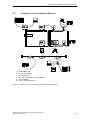
Esempio di una rete Industrial Ethernet
La figura 2-1 illustra un esempio di combinazione di tra diverse tecniche e generazioni di prodotti Industrial-Ethernet in un’intera rete. SIMATIC NET garantisce il
collegamento tecnico di comunicazione di impianti piccoli già disponibili da anni (p.
es. su base di cavi triassiali) in un’estesa rete moderna con tecnologia switching.
2-10
SIMATIC NET Reti Industrial Twisted Pair e Fiber Optic
6GK1970--1BA10--0AA4
Reti con Industrial Ethernet e Fast Ethernet
2.5
Esempio di una rete Industrial Ethernet
1
2
3
3
OLM
OLM
1
OSM
OSM
ORM
OLM
OSM
6
2
3
ELM
4
5
4
3
ELM
4
3
1
1.
2.
3.
4.
5.
6.
ITP standard 9/15
ITP XP standard 9/9
TP Cord 9/RJ45
Cavo con connettore 727-1 (Dropcable)
Cavo triassiale
Cavo in fibre ottiche (FO)
Figura 2-1 Struttura di rete con componenti della rete Industrial Ethernet
SIMATIC NET Reti Industrial Twisted Pair e Fiber Optic
6GK1970--1BA10--0AA4
2-11
Reti con Industrial Ethernet e Fast Ethernet
2-12
SIMATIC NET Reti Industrial Twisted Pair e Fiber Optic
6GK1970--1BA10--0AA4
Progettazione della rete
3
Argomenti trattati in questo capitolo
3.1
3.1.1
3.1.2
3.1.3
3.1.4
Reti CSMA/CD . . . . . . . . . . . . . . . . . . . . . . . . . . . . . . . . . . . . . . . . . . . . . . . . . .
Linee in fibre ottiche . . . . . . . . . . . . . . . . . . . . . . . . . . . . . . . . . . . . . . . . . . . . .
Linee Industrial Twisted Pair . . . . . . . . . . . . . . . . . . . . . . . . . . . . . . . . . . . . . .
Linee AUI . . . . . . . . . . . . . . . . . . . . . . . . . . . . . . . . . . . . . . . . . . . . . . . . . . . . . .
Progettazione dell’intera rete . . . . . . . . . . . . . . . . . . . . . . . . . . . . . . . . . . . . . .
3-2
3-2
3-4
3-4
3-5
3.2
3.2.1
3.2.2
3.2.3
3.2.4
3.2.5
3.2.6
3.2.7
Progettazione di una rete Industrial Ethernet . . . . . . . . . . . . . . . . . . . . . . . .
Valori per tempi di propagazione equivalenti e Variability Values . . . . . . .
Struttura lineare . . . . . . . . . . . . . . . . . . . . . . . . . . . . . . . . . . . . . . . . . . . . . . . . .
Struttura lineare dell’OLM tramite cavi in fibre ottiche . . . . . . . . . . . . . . . . .
Struttura lineare solo con ELM . . . . . . . . . . . . . . . . . . . . . . . . . . . . . . . . . . . .
Combinazione lineare di OLM e ELM . . . . . . . . . . . . . . . . . . . . . . . . . . . . . . .
Struttura ad anello ridondante con OLM . . . . . . . . . . . . . . . . . . . . . . . . . . . .
Combinazione di accoppiatori a stella e altri componenti della rete . . . . .
3-7
3-7
3-10
3-10
3-11
3-12
3-14
3-16
3.3
3.3.1
3.3.2
3.3.3
Progettazione di una backbon 100 MBit/s (switching) . . . . . . . . . . . . . . . . .
Linee di cavi in fibre ottiche . . . . . . . . . . . . . . . . . . . . . . . . . . . . . . . . . . . . . . .
Struttura linerare OSM . . . . . . . . . . . . . . . . . . . . . . . . . . . . . . . . . . . . . . . . . . .
Struttura ad anello ridondante con OSM e ORM . . . . . . . . . . . . . . . . . . . . .
3-21
3-21
3-22
3-23
SIMATIC NET Reti Industrial Twisted Pair e Fiber Optic
6GK1970--1BA10--0AA4
3-1
Progettazione della rete
3.1
Reti CSMA/CD
Dei prodotti che funzionano in base alla tecnica CSMA/CD fanno parte OLM/ELM,
Mini-OTDE, accoppiatori a stella ASGE e porte ITP dell’OSM.
Questi componenti permetto di realizzare strutture lineari, a stella e ad anello.
Questo capitolo ha lo scopo di chiarire le regole di configurazione da osservare
durante la realizzazione di una rete. È di conseguenza consigliabile distinguere tra
le limitazioni di lunghezza di una singola linea a fibre ottiche dovute all’attenuazione, Twisted Pair oppure AUI e i limiti di estensione da rispettare dell’intera rete
per il principio Ethernet (campo di collisione).
Avvertenza
Avvertenze dettagliate relative alla progettazione, al montaggio e al funzionamento
di componenti della rete triassiale SIMATIC NET sono riportati nel manuale per reti
triassiali (tedesco / inglese, N. di ordinazione 6GK1 970--1AA20--0AA0)
3.1.1
Linee in fibre ottiche
Le interfacce ottiche dei componenti di rete sopraindicati corrispondono alla norma
IEEE 802.3j: 10BASE-FL. In questo modo è possibile accoppiare tutte le interfacce
con una qualsiasi combinazione.
Per il collegamento sono adatte fibre di vetro multimodo del tipo 50/125!m o
62,5/125!m.
La lunghezza delle linee in fibre ottiche dipende dal budget ottico disponibile e
dall’attenuazione della linea con una lunghezza d’onda di 850 nm.
Budget ottico
Tra il trasmettitore e il ricevitore di una linea in fibre ottiche è disponibile un budget
ottico di potenza.
Esso rappresenta la differenza tra una potenza ottica accoppiata in una determinata fibra di un trasmettitore ottico e la potenza di ingresso di cui necessita un ricevitore ottico per una corretta identificazione del segnale.
3-2
SIMATIC NET Reti Industrial Twisted Pair e Fiber Optic
6GK1970--1BA10--0AA4
Progettazione della rete
Budget ottico in SIMATIC NET Industrial Ethernet
Le interfacce ottiche in base a 10BASE--FL funzionano su una lunghezza d’onda di
850 nm. Poiché in Industrial Ethernet la potenza ottica accoppiata da un trasmettitore e la potenza necessaria per un ricevitore è standardizzata, è possibile stabilire
dei valori fissi per il budget ottico.
S
Fibra 50/125 !m:
8 dBm
S
Fibra 62,5/125 !m:
11 dBm
Il budget ottico per fibre 50/125 !m è inferiore in quanto in questo caso viene accoppiata meno luce rispetto alle fibre 62,5/125 !m.
Questo budbget di potenza può essere “consumato” dalla linea in fibre ottiche inserita come attenuazione della linea.
Attenuazione della linea
L’attenuazione della linea è costituita da tutti gli effetti di attenuazione che si presentano su una linea in fibre ottiche. Questi effetti sono:
S
attenuazione della fibra con una lunghezza d’onda di 850 nm (rilevare i valori
dal foglio dei dati del cavo a fibre ottiche)
S
attenuazione dovuta a punti di sdoppiamento (ca. 0,2 dB per ogni punto di
sdoppiamento)
S
attenuazione dovuta ad accoppiamenti (ca. 0,4 dB per ogni accoppiamento)
I valori riportati tra parentesi sono dei valori orientativi che possono essere utilizzati
per una progettazione. L’attenuazione effettiva di una linea installata deve essere
assolutamente controllata con un misuratore di attenuazione.
Se l’attenuazione della linea è uguale o inferiore del budget di potenza, la linea in
fibre ottiche progettata è realizzabile.
I livelli ottici sono generalmente specificati in dBm. L’unità dBm descrive il rapporto
di potenza logaritmico con la potenza di riferimento 1 mW.
I valori di attenuazione delle fibre e dei punti di collegamento sono specificati in dB.
SIMATIC NET cavo in fibre ottiche di vetro
La gamma di prodotti SIMATIC NET per Industrial Ethernet comprende diverse
alternative di modelli di cavi in fibre ottiche di vetro con fibre 62,5/125 !m (vedere
capitolo “Componenti passivi per reti ottiche”).
Per accoppiamenti di componenti di rete SIMATIC NET Industrial Ethernet combinati con cavi in fibre ottiche di vetro SIMATIC NET possono essere raggiunte delle
linee con le seguenti lunghezze massime:
SIMATIC NET Reti Industrial Twisted Pair e Fiber Optic
6GK1970--1BA10--0AA4
3-3
Progettazione della rete
Tabella 3-1
Lunghezza massima della linea con tipo di fibra G 62,5/125 !m tra due componenti di rete
ottici secondo 10BASE--FL
Cavo in fibre ottiche
Attenuazione cavo
in fibre ottiche con
850 nm
Budget disponibile
Lunghezza massima
Cavo in fibre ottiche standard
<=3,1 dB/km
11 dB
ca. 3.500 m
Cavo in fibre ottiche interno
INDOOR
<=3,5 dB/km
11 dB
ca. 3.100 m
Cavo in fibre ottiche flessibile
da trascinamento
<=3,1 dB/km
11 dB
ca. 3.500 m
Cavo in fibre ottiche SchiffsDuplex SIENOPYR
<=3,1 dB/km
11 dB
ca. 3.500 m
3.1.2
Linee Industrial Twisted Pair
Una singola linea Industrial Twisted Pair è limitata a max. 100 m . Questa linea può
comprendere max. 10 m di TP Cord. Il resto della linea va realizzato con un cavi
standard ITP.
3.1.3
Linee AUI
In base alla norma ”Ethernet” ISO 8802, per le linee AUI è ammessa una lunghezza massima di 50 m.
Avvertenza
Per il CP 1511 la lunghezza massima ammessa del cavo per la linea AUI è limitata
a 40 m!
3-4
SIMATIC NET Reti Industrial Twisted Pair e Fiber Optic
6GK1970--1BA10--0AA4
Progettazione della rete
3.1.4
Progettazione dell’intera rete
L’estensione di una rete Industrial Ethernet è limitata da un tempo di propagazione
del segnale limitato a causa del meccanismo di collisione CSMA/CD e del mantenimento della distanza minima tra due pacchetti di dati.
Tempo di propagazione equivalente
Il meccanismo di collisione CSMA/CD di una rete locale secondo IEEE 802.3 richiede un tempo di propagazione del segnale limitato. Di conseguenza l’estensione fisica della rete (campo di collisione) è limitata. A causa del tempo di propagazione del segnale è possibile una distanza massima di 4520 m tra due nodi di
rete qualsiasi. Ogni componente della rete con il relativo tempo di propagazione
equivalente significa una riduzione del valore massimo.
Il tempo di propagazione equivalente descrive il ritardo del segnale di un componente nel percorso del segnale. Il valore di ritardo del segnale viene specificato in
metri anziché in secondi. La specificazione in metri corrisponde alla distanza che il
segnale potrebbe percorrere entro questo tempo se esso procedesse lungo un
cavo anziché attraverso il componente. La somma di questi equivalenti va detratta
dal budget complessivo (4520 m). Il resto del budget è disponibile esclusivamente
per il cablaggio dei singoli componenti, indipendentemente che si tratti di cavi in
fibre ottiche, Industrial Twisted Pair, cavo triassiale, cavo con connettore ecc.
Variability Value e Path Variability Value
In una rete locale secondo IEEE 802.3, tra due pacchetti di dati deve intercorrere
un determinato intervallo minimo. Se questo intervallo minimo viene superato, si
tratta di un errore Interframe Gap.
Il Variability Value di un componente descrive le oscillazioni del tempo di propagazione di un pacchetto di dati attraverso un componente della rete. Se due pacchetti
di dati passano attraverso diversi componenti uno dopo l’altro, l’intervallo tra i pacchetti si riduce. La somma dei valori di tutti i componenti è il Path Variability Value
(PVV). Il PVV sul percorso tra due nodi deve essere di max. 40 tempi di bit (BT),
cioè l’intervallo tra i pacchetti può essere ridotto al massimo a 40 BT. Questo valore comprende una riserva di sicurezza che include inoltre il valore Variability della
prima MAU (Medium Attachment Unit, p. es. Twisted Pair transceiver integrato in
un nodo).
Mantenendo questo valore massimo viene garantito un intervallo minimo tra i pacchetti di dati che permette un’identificazione corretta dei pacchetti. Il transceiver,
possibilmente allacciato al secondo nodo più lontano, non contribuisce alla riduzione dell’intervallo dei pacchetti.
SIMATIC NET Reti Industrial Twisted Pair e Fiber Optic
6GK1970--1BA10--0AA4
3-5
Progettazione della rete
Punti da osservare durante la configurazione di una rete:
1. “Controllare” che sulla rete non vi siano percorsi critici di collegamento (grandi
distanze fisiche; passaggio attraverso molti componenti di rete) tra due nodi.
2. Controllare che i percorsi di collegamenti critici trovati presentino un’estensione
ammessa (tempo di propagazione equivalente). La somma delle lunghezze del
cavo tra due nodi + la somma del tempo di propagazione equivalente dei
componenti della rete tra i due nodi non deve superare i 4520 m.
3. Controllare che i percorsi di collegamento critici trovati non superino il Path
Variability Values (PVV). La somma del Variability Values dei componenti della
rete tra due nodi non deve superare i 40 BT.
4. Per una progettazione corretta secondo IEEE 802.3, tutti i percorsi del
collegamento devono soddisfare questi criteri.
Avvertenza
In caso di impiego di OSM Industrial Ethernet è necessario controllare il tempo di
propagazione equivalente e il Path Variability Value solo fino alla porta di un OSM
in quanto il campo di collisione inizia e termina in questo punto.
3-6
SIMATIC NET Reti Industrial Twisted Pair e Fiber Optic
6GK1970--1BA10--0AA4
Progettazione della rete
3.2
Progettazione di una rete Industrial Ethernet
In una rete Industrial Ethernet vengono impiegati i seguenti componenti e cavi:
S
Componenti
-- OLM/ELM
-- Accoppiatore a stella con schede di interfaccia
-- MINI-OTDE
S
Cavi
-- Cavo in fibre ottiche
-- Industrial Twisted Pair
-- Cavo triassiale
3.2.1
Valori per tempi di propagazione equivalenti e Variability Values
Per il controllo di entrambi i requisiti sopraindicati sono necessari i valori del tempo
di propagazione equivalente e del Variability Value di ogni componente. Questi valori sono illustrati sotto forma di tabella per i componenti più importati.
Optical Link Module (OLM)
Port 1
Port 2
Tempo di propaga-zione equivalente
Variability Value
FO
FO
260 m
3 BT
FO
ITP
360 m
6 BT
ITP
ITP
190 m
3 BT
Tempo di propaga-zione equivalente
Variability Value
Electrical Link Module (ELM)
Port 1
Port 2
ITP
ITP
190 m
3 BT
AUI
ITP
190 m
3 BT
SIMATIC NET Reti Industrial Twisted Pair e Fiber Optic
6GK1970--1BA10--0AA4
3-7
Progettazione della rete
Scheda dell’accoppiatore a stella ottico
Scheda di interfaccia
Tempo di propaga-zione equivalente
Variability Value
ECFL 2
170 m *)
**)
ECFL 4
130 m *)
**)
Scheda dell’accoppiatore a stella elettrico
Scheda di interfaccia
Tempo di propaga-zione equivalente
Variability Value
ECAUI
165 m *)
**)
ECTP 3
55 m *)
**)
*
Rispetto al calcolo per l’OLM/ELM, il tempo di propagazione equivalente
specificato delle schede dell’accoppiatore a stella si riferisce ad una sola
porta (ingresso o uscita). Se in un accoppiatore a stella esiste, p. es., un
passaggio da ECFL2 a ECTP3, i 170 m di ECFL2 e i 55 m di ECTP3
vanno sommati. La stessa cosa vale anche se il passaggio è tra due porte
della stessa unità; in questo caso i valori della relativa scheda di interfaccia devono essere calcolati due volte.
** I valori Variability delle schede dell’accoppiatore a stella dipendono dalle
combinazioni di schede di interfaccia nell’accoppiatore a stella e sono
riportate nella tabella 3-2.
Altri componenti (transceiver, SSV, accoppiatore di bus ecc.)
Componenti
Tempo di propaga-zione equivalente
Variability Value
MINI-OTDE
100 m
2 BT
Accoppiatore di bus
10 m
3 BT
Repeater
140 m
2 BT
Port <-> Port
10 m
3 BT
Port <-> Transceiver
5m
2 BT
15 m
5 BT
8m
4 BT
140 m
0 BT
SSV 102
SSV 104
Port <-> Port
Port <-> Transceiver
CP con transceiver Industrial
Twisted Pair integrato
p. es. CP 443-1, CP 343-1,
CP 1514, CP 1613
3-8
SIMATIC NET Reti Industrial Twisted Pair e Fiber Optic
6GK1970--1BA10--0AA4
Progettazione della rete
Tabella 3-2
Variablity Values in tempi di bit (BT) per accoppiamenti schede interfaccia
ECFL2
ECFL4
ECTP3
ECAUI
KYDE-S
ECFL2
4 BT
4 BT
5 BT
4 BT
4 BT
ECFL4
-
3 BT
5 BT
3 BT
3 BT
ECTP3
-
-
5 BT
5 BT
5 BT
ECAUI
-
-
-
2 BT
2 BT
Nodo 1
Nodo 2
1
OLM
1
OLM
100 m
100 m
2000 m
2
1. ITP Standard Cable 9/15
2. Cavo in fibre ottiche (FO)
Figura 3-1 Esempio di configurazione semplice
Esempio di calcolo:
Un semplice esempio di come controllare la configurazione della rete viene fornito
dal collegamento punto a punto di due terminali tramite due OLM.
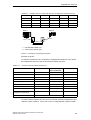
Tabella 3-3
Esempio di calcolo relativo alla figura 3-1
Nodo 1 --> nodo 2
Lunghezza del cavo
Tempo di propaga-zione equivalente
Variability Value
140 m
0 BT
360 m
6 BT
360 m
6 BT
140 m
0 BT
Nodo 1
Nodo 1 - OLM 1
100 m
OLM 1 (ITP/FO)
OLM 1 - OLM 2
2000 m
OLM 2 (FO/ITP)
OLM 2 - nodo 2
100 m
Nodo 2
Somma della lunghezza del cavo
2200 m
Somma del tempo di
propagazione equivalente
Totale
1000 m
3200 m
12 BT
La somma delle lunghezze del cavo più la somma del tempo di propagazione equivalente è uguale a 3200 m. Il PVV è di 12 BT. La configurazione è quindi corretta.
SIMATIC NET Reti Industrial Twisted Pair e Fiber Optic
6GK1970--1BA10--0AA4
3-9
Progettazione della rete
3.2.2
Struttura lineare
La struttura lineare permette il collegamento in serie di OLM e ELM tramite cavi in
fibre ottiche oppure Industrial Twisted Pair (ITP). Inoltre tra due moduli di accoppiamento è possibile una distanza da 0 a 3100 m. Con ITP può essere raggiunta
una distanza fino a 100 m . Se un modulo si guasta o se un cavo di spezza, la rete
di suddivide in due sotto--reti. All’interno di queste sotto--reti è possibile un funzionamento senza disturbi. Il vantaggio di questa topologia consiste nella possibilità di
coprire lunghi percorsi ammessi secondo le regole di progettazione.
3.2.3
Struttura lineare dell’OLM tramite cavi in fibre ottiche
Se non esistono ulteriori componenti della rete è possibile collegare con linee in
cascata fino a 11 OLM con una lunghezza restante del cavo di 1180 m (vedere
l’esempio di calcolo).
Nodo 1
Nodo 2
1
OLM
OLM
OLM
OLM
1
2
1. ITP Standard Cable 9/15
2. Cavo in fibre ottiche (FO)
Figura 3-2 Esempio di una struttura lineare dell’OLM
Esempio di calcolo (limitazioni del collegamento in cascata):
Numero di OLM
Path Variablity Value da nodo
1 a nodo 2
Somma PVV
2
6 BT + 6 BT
12 BT
4
6 BT + 2 * 3 BT + 6 BT
18 BT
8
6 BT + 6 * 3 BT + 6 BT
30 BT
11
6 BT + 9 * 3 BT + 6 BT
39 BT
12
6 BT + 10 * 3 BT + 6 BT
42 BT > 40 BT !!
3-10
SIMATIC NET Reti Industrial Twisted Pair e Fiber Optic
6GK1970--1BA10--0AA4
Progettazione della rete
Numero di OLM
Tempo di propagazione equivalente da nodo
1 a nodo 2
Lunghezza restante del cavo
2
140 m + 2 * 360 m + 140 m
3520 m
4
140 m + 360 m + 2 * 260 m + 360 m + 140m
3000 m
8
140 m + 360 m + 6 * 260 m + 360 m + 140 m
1960 m
11
140 m + 360 m + 9 * 260 m + 360 m + 140 m
1180 m
Osservazioni:
3.2.4
S
Se un terminale viene allacciato tramite l’interfaccia TP integrata, questo allacciamento deve essere tenuto in considerazione nel calcolo della lunghezza con
un tempo di propagazione equivalente di 140 m e un PVV di 0.
S
Ogni ulteriore componente di rete aumenta il PVV e riduce la lunghezza rimanente del cavo.
Struttura lineare solo con ELM
Se non esistono altri componenti della rete è possibile allacciare in cascata fino a
13 ELM in modo lineare utilizzando ITP (vedere l’esempio di calcolo).
Allacciamento in cascata di ELM tramite porte ITP
Nodo 2
Nodo 1
1
ELM
ELM
ELM
2
2
ELM
2
1
1. ITP Standard Cable 9/15
2. ITP XP Standard Cable 9/9
Figura 3-3 Esempio di una struttura lineare con ELM tramite porte ITP
SIMATIC NET Reti Industrial Twisted Pair e Fiber Optic
6GK1970--1BA10--0AA4
3-11
Progettazione della rete
Osservazioni:
S
Durante l’allacciamento in cascata degli OLM e ELM tramite Industrial Twisted
Pair è necessario fare attenzione che il cavo ITP XP Standard Cable 9/9 venga
inserito con coppie di conduttori incrociati. Questo cavo è disponibile con lunghezza da 2 a 100 metri. Ulteriori informazioni e i dati per l’ordinazione sono
riportati nel capitolo “Componenti passivi per reti elettriche“.
S
Ogni ulteriore componente della rete aumenta il PVV e riduce la lunghezza restante del cavo.
Numero di ELM
Path Variablity Value da nodo
1 a nodo 2
Somma PVV
2
3 BT + 3 BT
6 BT
4
3 BT + 2 * 3 BT + 3 BT
12 BT
8
3 BT + 6 * 3 BT + 3 BT
24 BT
11
3 BT + 9 * 3 BT + 3 BT
33 BT
12
3 BT + 10 * 3 BT + 3 BT
36 BT
13
3 BT + 11 * 3 BT + 3 BT
39 BT
14
3 BT + 12 * 3 BT + 3 BT
42 BT > 40 BT !!
Numero di ELM
Path Variablity Value da nodo
1 a nodo 2
Lunghezza restante del cavo
2
140 m + 190 m + 190 m + 140 m
3860 m
4
140 m + 190 m + 2 * 190 m + 190 m + 140 m
3480 m
8
140 m + 190 m + 6 * 190 m + 190 m + 140 m
2720 m
11
140 m + 190 m + 9 * 190 m + 190 m + 140 m
2150 m
12
140 m + 190 m + 10 * 190 m + 190 m + 140 m
1960 m
13
140 m + 190 m + 11 * 190 m + 190 m + 140 m
1770 m
3.2.5
Combinazione lineare di OLM e ELM
È possibile realizzare anche una struttura lineare combinata OLM/ELM. Inoltre può
essere realizzato un collegamento tra una rete ottica e una rete triassiale. La profondità di cascata raggiungibile e le lunghezze restanti del cavo dipendono dai moduli impiegati.
Fare attenzione che un passaggio nell’OLM da FO a ITP comporta un tempo di
propagazione equivalente e un valore Variability superiore.
3-12
SIMATIC NET Reti Industrial Twisted Pair e Fiber Optic
6GK1970--1BA10--0AA4
Progettazione della rete
Esempio:
Nodo 2
Nodo 1
1
2
OLM
OLM
OLM
ELM
ELM
OLM
3
3
OLM
6
6
4
4
4
5
1. ITP Standard Cable 9/15
2. TP Cord 9/RJ45
3. ITP XP Standard Cable 9/9
4. Cavo con connettore 727-1 (Dropcable)
5. Cavo triassiale
6. Cavo in fibre ottiche (FO)
Figura 3-4 Esempio per una struttura lineare combinata OLM/ELM
Verifica dell’esempio:
Nodo 1 --> Nodo 2
Tempo di propagazione equivalente
Variability Value
Nodo 1
140 m
0 BT
OLM 1 (ITP/FO)
360 m
6 BT
OLM 2 (FO/FO)
260 m
3 BT
OLM 3 (FO/ITP)
360 m
6 BT
ELM 1 (ITP/AUI)
190 m
3 BT
Accoppiatore di bus
10 m
3 BT
Accoppiatore di bus
10 m
3 BT
ELM 2 (AUI/ITP)
190 m
3 BT
OLM 4 (ITP/FO)
360 m
6 BT
OLM 5 (FO/FO)
260 m
3 BT
MINI OTDE
100 m
-
Totale
2240 m
36 BT
Valore restante
2280 m
4 BT
La tabella illustra che la configurazione progettata nell’esempio è corretta e che per
il collegamento in rete dei componenti è ancora disponibile una lunghezza del cavo
di 2280 m.
SIMATIC NET Reti Industrial Twisted Pair e Fiber Optic
6GK1970--1BA10--0AA4
3-13
Progettazione della rete
Osservazioni:
3.2.6
S
Se gli OLM e gli ELM vengono allacciati in cascata tramite Industrial Twisted
Pair è assolutamente necessario utilizzare il cavo ITP XP Standard Cable 9/9
con coppie di conduttori incrociate. Questo cavo è diponibile con una lunghezza
da 2 a 100 metri. Ulteriori informazioni e i dati per l’ordinazione sono riportati nel
capitolo “Componenti passivi per reti elettriche“.
S
Ogni ulteriore componente della rete aumenta il PVV e riduce la lunghezza restante del cavo.
Struttura ad anello ridondante con OLM
Questa topologia di rete rappresenta una forma speciale della topologia lineare. Il
primo e l’ultimo OLM vengono collegati tra di loro con un cavo a fibre ottiche e
l’anello è di conseguenza chiuso. La porta 5 di un OLM all’interno di questa struttura ad anello deve essere commutata nel modo ridondante. La linea allacciata alla
porta 5 diventa quindi una linea ridondante che viene utilizzata per la trasmissione
dei dati solo in caso di interruzioni nell’anello. Rispetto ad una struttura lineare, un
anello ridondante offre la massima sicurezza dei dati, poiché in caso di rottura del
cavo o di guasto di un OLM, il traffico di dati può essere mantenuto e solo le sezioni guaste interessate vengono segmentate.
Avvertenza
Tutti i moduli nell’anello ridondante devono essere collegati tra di loro solo con linee FO.
Avvertenza per OLM della versione 1:
Per evitare perdite di performance nelle strutture ad anello ridondante con OLM
della versione 1 nel modo di ridondanza, è necessario calcolare la ripartizione del
carico nella rete. Per eseguire questo calcolo procedere nel modo seguente:
S
Determinare quale OLM trasferisce il maggior volume di dati nell’anello
ridondate tramite le porte Twisted Pair.
S
Progettare gli apparecchi allacciati a questo OLM in modo che siano essi a
stabilire dei collegamenti del livello 4 (realizzazione del collegamento attiva),
S
Stabilire un collegamento tra questo OLM e la porta 5 di un OLM adiacente e
commutare quest’ultimo nel modo ridontante.
Per gli OLM della versione 2.0 non è necessario tenere in considerazione la ripartizione del carico nella rete nel modo ridondante.
Se all’interno di una struttura ad anello ridondante si trovano contemporaneamente
OLM della versione 1 e della versione 2.0, per semplificare la progettazione è più
conveniente inserire un OLM della versione 2.0 nel modo di ridondanza.
3-14
SIMATIC NET Reti Industrial Twisted Pair e Fiber Optic
6GK1970--1BA10--0AA4
Progettazione della rete
Anche all’interno di un anello ridondante è possibile allacciare in cascata fino a 11
OLM, cioè un telegramma può passare attraverso max. 11 OLM durante il trasferimento da un terminale che trasmette ad uno che riceve.
Nodo 1
1
OLM
Carico massimo del bus
nella rete
Modo di ridondanza = ON 1
OLM
OLM
200 m
Nodo 2
400 m
OLM
500 m
5
OLM
4
600 m
2
1000 m
Linea più breve
Linea ridondante
1. ITP Standard Cable 9/15
2. Cavo in fibre ottiche (FO)
Figura 3-5 Esempio di una struttura ad anello ridondante con OLM
Per la lunghezza totale è necessario calcolare tutte le lunghezze dei cavi
nell’anello e dei cavi verso terminali, meno la linea più breve nell’anello (cioè nel
peggiore dei casi se una linea è guasta).
Esempio:
In un anello ridondante sono inseriti 5 OLM. Con 5 OLM rimangono 3020 m per la
lunghezza del cavo. I terminali con interfaccia ITP integrata vengono rispettivamente allacciati con un cavo ITP di 100 m. Per l’anello ridondante rimangono
quindi 2540 m. La somma delle lunghezze di questo esempio è 200 m + 400 m +
500 m + 600 m + 1000 m = 2700 m, meno la linea più breve di 200 m risultano
2500 m. In questo modo la struttura ad anello ridondante è realizzata secondo le
regole di progettazione.
SIMATIC NET Reti Industrial Twisted Pair e Fiber Optic
6GK1970--1BA10--0AA4
3-15
Progettazione della rete
Osservazioni:
S
Se durante la realizzazione di un anello ottico ridondante risultano dei problemi
a causa di sezioni FO troppo lunghe, questo problema può essere risolto collegando ogni modulo con il secondo modulo successivo. All’inizio e alla fine di
una configurazione di questo tipo i moduli adiacenti devono essere collegati tra
di loro (vedere figura 3-6).
S
Tutti i moduli di un anello devono essere collegati tra di loro tramite cavi in fibre
ottiche.
OLM
OLM
OLM
OLM
OLM
Figura 3-6 Tecnica alternativa di cablaggio per una struttura di rete con topologia ottica ad
anello ridondante
3.2.7
Combinazione di accoppiatori a stella e altri componenti della
rete
S
Schede di interfaccia ottiche ECFL2, ECFL4
In una rete ottica gli OLM possono essere combinati con un accoppiatore a
stella (vedere figura 3-7). Una struttura lineare o ad anello ridondante può essere realizzata con ECFL2 o ECFL4. L’estensione massima dell’anello dipende
in questo caso dalle combinazioni.
S
Scheda di interfaccia Industrial Twisted Pair ECTP3
Gli ECTP3 permettono di allacciare gli OSM, OLM e ELM ad un accoppiatore a
stella tramite Industrial Twisted Pair (vedere figura 3-7). Per l’allacciamento in
cascata è necessario impiegare il cavo standard ITP XP 9/9.
3-16
SIMATIC NET Reti Industrial Twisted Pair e Fiber Optic
6GK1970--1BA10--0AA4
Progettazione della rete
S
Transceiver ottico MINI OTDE
Il transceiver ottico può essere innestato in tutti i terminali che dispongono di
un’interfaccia AUI. Di conseguenza è possibile un collegamento diretto con
componenti ottici come, p. es. l’OLM.
Il collegamento ottico di MINI OTDE (10 Mbit/s) e OSM (100 Mbit/s) non è possibile.
S
Accoppiatore di bus, transceiver
Utilizzando gli accoppiatori di bus e un cavo con connettore 727-1 è possibile
allacciare gli ELM al segmento triassiale. Fare attenzione che per gli accoppiatori a stella vecchi con due interfacce della versione 4 o inferiore, l’accoppiamento deve essere eseguito sull’interfaccia sinistra.
Per ogni configurazione vanno osservate le direttive di progettazione come specificato nei capitoli precedenti.
Esempio
L’esempio successivo illustra ancora una volta il procedimento per la progettazione
della rete in caso di configurazione combinata di OSM, OLM, ELM e accoppiatori a
stella. A tale scopo vengono controllati i singoli percorsi del collegamento.
Il collegamento tra nodo 1 a nodo 3 rappresenta un percorso critico. Il nodo 3 è
allacciato all’OLM 4 nell’anello ridondante. In una struttura ad anello ridondante
assicurarsi che la situazione “worst case” venga considerata per il collegamento
durante la progettazione. Ciò significa che deve essere incluso anche un collegamento utilizzato in modo ridondante che nel modo normale rappresenta un allungamento del percorso.
SIMATIC NET Reti Industrial Twisted Pair e Fiber Optic
6GK1970--1BA10--0AA4
3-17
Linea ridondante
ridondanza
300 m
200 m
OLM
4. Cavo con connettore 727-1 (dropcable)
5. Cavo triassiale
6. Cavo a fibre ottiche (FO)
5
OLM
OLM
1
Nodo 4
1. ITP Standard Cable 9/15
2. TP Cord 9/RJ45
3. ITP XP Standard Cable 9/9
4
3
ELM
6
250 m
2
1
400 m
OLM
OLM
1
100 m
Nodo 1
4
2
ELM
3
OLM
Nodo 5
3
80 m
3
6
3
100 m
7
OLM
400 m
ASGE
4
OLM
6
4
300 m
100 m
1
OSM
OSM
5
OLM
Nodo 3
6
2
OSM
5
Nodo 2
Porta 5 in
Progettazione della rete
Figura 3-7 Combinazione di OLM e accoppiatori a stella
Se, come nell’esempio, sono collegati degli anelli OLM ridondanti ad una accoppiatore a stella, questo anello deve essere segmentato in una linea worst case. Nella
configurazione di esempio ciò significa che la linea tra accoppiatore a stella e OLM
4 viene interrotta (vedere figura 3-7). Se a questo punto il nodo 3 collegato all’OLM
4 deve scambiare dati con il nodo 1 collegato all’OLM 1 è necessario calcolare il
percorso partendo da OLM 4 tramite OLM 5, 6 e 7 verso l’accoppiatore a stella.
3-18
SIMATIC NET Reti Industrial Twisted Pair e Fiber Optic
6GK1970--1BA10--0AA4
Progettazione della rete
Avvertenza
Se ad una struttura con accoppiatore a stella sono collegati anelli ridondanti, durante il controllo della configurazione l’anello ridondante deve essere segmentato
in una struttura lineare worst case. Di conseguenza il collegamento più breve
dall’accoppiatore a stella ad uno dei due OLM adiacenti è interrotto.
Tabella 3-4
Verifica dell’esempio
Nodo 1
--> nodo 3
Lunghezza
cavo (come
esempio)
Nodo 1
Nodo 1 - OLM 1
225 m
5 BT
260 m
3 BT
260 m
3 BT
260 m
3 BT
360 m
6 BT
140 m
0 BT
1830 m
Somma tempo di
propagazione equivalente
Totale
6 BT
100 m
Nodo 3
Somma lunghezza cavo
360 m
300 m
OLM 4 (FO/ITP)
OLM 4 - Nodo 3
3 BT
300 m
OLM 5 (FO/FO)
OLM 5 - OLM 4
260 m
200 m
OLM 6 (FO/FO)
OLM 6 - OLM 5
6 BT
100 m
OLM 7 (FO/FO)
OLM 7 - OLM 6
360 m
80 m
ASGE (ECTP3/ECFL2)
ECFL 2 - OLM 7
0 BT
250 m
OLM 3 (FO/ITP)
OLM 3 - ECTP 3
140 m
400 m
OLM 2 (FO/FO)
OLM 2 - OLM 3
Variability Value
100 m
OLM 1 (ITP/FO)
OLM 1 - OLM 2
Tempo di propagazione
equivalente
2625 m
4455 m
35 BT
In questo modo il percorso del collegamento tra nodo 1 e nodo 3 è progettato correttamente, cioè tutti i terminali allacciati all’anello ridondante possono scambiare
dati tramite l’accoppiatore a stella e i segmenti lineari allacciati all’ECTP 3.
SIMATIC NET Reti Industrial Twisted Pair e Fiber Optic
6GK1970--1BA10--0AA4
3-19
Progettazione della rete
Lo stesso controllo va eseguito per altri percorsi (p. es. nodo 1 <-> nodo 4, nodo 3
<-> nodo 4). La progettazione è stata eseguita correttamente solo se per tutti i percorsi non sono stati superati i valori limite.
Avvertenza
Il percorso del collegamento dei nodi 1, 3, 4 e 5 con il nodo 2 deve essere controllato solo fino al primo OSM. A causa del tipo di funzionamento dell’OSM (”store
and forward switching”) ogni campo di collisione termina sulla porta di un OSM.
3-20
SIMATIC NET Reti Industrial Twisted Pair e Fiber Optic
6GK1970--1BA10--0AA4
Progettazione della rete
3.3
Progettazione di una backbon 100 MBit/s (switching)
Prodotti
Fast Ethernet nella tecnica switching viene impiegata per collegamenti backbone
nelle reti OSM/ORM.
3.3.1
Linee di cavi in fibre ottiche
Le interfacce ottiche dei componenti di rete indicati sopra corrispondono alla norma
IEEE 802.3u: 100BASE-FX. Le interfacce ottiche dell’OSM/ORM funzionano su
una lunghezza d’onda di 1300 nm. Le interfacce dell’OSM e ORM possono essere
accoppiate con una combinazione qualsiasi.
Per il collegamento di alcune fibre di vetro multimodo del tipo 50/125!m e
62,5/125!m.
La lunghezza delle linee in fibre ottiche inseribili viene determinata da:
S
attenuazione della linea in fibre ottiche con 1300 nm
S
prodotto della lunghezza per la larghezza di banda delle fibre ottiche
Caratteristiche richieste del cavo in fibre ottiche
I cavi in fibre ottiche da inserire devono presentare le seguenti caratteristiche per
quel che riguarda l’attenuazione e il prodotto della lunghezza per la larghezza di
banda delle fibre ottiche:
Tabella 3-5
Lunghezza massima della linea con tipo di fibra G 62,5/125 !m tra due componenti di rete
ottici secondo 100BASE--FX
Cavo in fibre ottiche tipo
Attenuazione cavo
in fibre ottiche con
1300 nm
Prodotto della lunghezza per la larghezza di banda
Lunghezza massima
50/125!m
<=2,6 dB/km
>= 500 MHz * km
ca. 3.000 m
62,5/125!m
<=1,6 dB/km
>= 500 MHz * km
ca. 3.000 m
SIMATIC NET Reti Industrial Twisted Pair e Fiber Optic
6GK1970--1BA10--0AA4
3-21
Progettazione della rete
Cavi in fibre ottiche di vetro SIMATIC NET
La gamma di prodotti SIMATIC NET per Industrial Ethernet comprende diverse
alternative di modelli per cavi in fibre ottiche di vetro con fibre 62,5/125 !m (vedere
capitolo “Componenti passivi per reti ottiche”):
S
Cavo interno INDOOR Fiber Optic
S
Cavo standard Fiber Optic
S
Cavo da trascinamento flessibile Fiber Optic Schleppleitung
S
Cavo marino in fibre ottiche duplex SIENOPYR
Per l’accoppiamento di SIMATIC NET Industrial Ethernet OSM/ORM collegato con
cavo in fibre ottiche di vetro SIMATIC NET sono ammesse linee con una lunghezza da 0 a 3000 m tra due componenti adiacenti.
3.3.2
Struttura lineare OSM
Gli OSM Industrial Ethernet permettono la realizzazione di una struttura lineare
backbone di 100 Mbit/s. Tra due OSM deve esserci una linea con lunghezza massima di 3000 m per la quale l’allacciamento in cascata viene eseguito tramite la
porta FO. La profondità di cascata e l’estensione complessiva della rete vengono
limitate solo dal tempo di controllo del collegamento di comunicazione nei terminali.
Questi tempi devono essere impostati con valori più alti rispetto al ritardo del segnale della linea di trasmissione.
2
1
1
2
OSM
OSM
OSM
OSM
3
1. ITP Standard Cable 9/15
2. TP Cord 9/RJ45
3. Cavo in fibre ottiche (FO)
Figura 3-8 Struttura lineare OSM
3-22
SIMATIC NET Reti Industrial Twisted Pair e Fiber Optic
6GK1970--1BA10--0AA4
Progettazione della rete
3.3.3
Struttura ad anello ridondante con OSM e ORM
Con un ORM Industrial Ethernet (Optical Redundancy Manager) è possibile chiudere una struttura lineare OSM in un anello ottico ridondante al quale si allaccia ad
entrambe le estremità del backbone OSM 100 Mbit/s l’Optical Redundancy Manager. In caso di un tempo di riconfigurazione di 0,3 s è possibile comandare fino a
50 OSM e un ORM in un anello ottico con una lunghezza complessiva di cavo in
fibre ottiche fino a 150 km.
La distanza massima tra due OSM o un OSM e l’ORM è di 3000 m.
Avvertenza
All’interno dell’anello ottico ridondante come componenti attivi devono essere utilizzati solo OSM.
SIMATIC NET Reti Industrial Twisted Pair e Fiber Optic
6GK1970--1BA10--0AA4
3-23
Progettazione della rete
3-24
SIMATIC NET Reti Industrial Twisted Pair e Fiber Optic
6GK1970--1BA10--0AA4
Componenti passivi per reti elettriche
4
Argomenti trattati in questo capitolo
4.1
4.1.1
Cavi Twisted Pair e Twisted Pair . . . . . . . . . . . . . . . . . . . . . . . . . . . . . . . . . .
Cavo standard Industrial Twisted Pair . . . . . . . . . . . . . . . . . . . . . . . . . . . . . .
4-2
4-2
4.2
4.2.1
Cavi Twisted Pair . . . . . . . . . . . . . . . . . . . . . . . . . . . . . . . . . . . . . . . . . . . . . . . .
Twisted Pair Cord . . . . . . . . . . . . . . . . . . . . . . . . . . . . . . . . . . . . . . . . . . . . . . .
4-7
4-7
4.3
4.3.1
4.3.2
4.3.3
Cavi Industrial Twisted Pair (ITP) e Twisted Pair (TP)
confezionati . . . . . . . . . . . . . . . . . . . . . . . . . . . . . . . . . . . . . . . . . . . . . . . . . . . .
Cavi Industrial Twisted Pair confezionati . . . . . . . . . . . . . . . . . . . . . . . . . . . .
Cavi Twisted Pair confezionati . . . . . . . . . . . . . . . . . . . . . . . . . . . . . . . . . . . .
Convertitore d’interfaccia Twisted Pair . . . . . . . . . . . . . . . . . . . . . . . . . . . . . .
4-11
4-12
4-15
4-18
4.4
Connettore Sub--D Industrial Twisted Pair . . . . . . . . . . . . . . . . . . . . . . . . . .
4-20
4.5
Connettore RJ45 . . . . . . . . . . . . . . . . . . . . . . . . . . . . . . . . . . . . . . . . . . . . . . . .
4-23
SIMATIC NET Reti Industrial Twisted Pair e Fiber Optic
6GK1970--1BA10--0AA4
4-1
Componenti passivi per reti elettriche
4.1
Cavi Twisted Pair e Twisted Pair
In questo capitolo vengono descritte le caratteristiche tecniche dei cavi Industrial
Twisted Pair e Twisted Pair. Dapprima vengono descritti i tipi di cavi non confezionati. Per l’allacciamento vengono preferiti i cavi già confezionati disponibili.
Avvertenza
I cavi Industrial Twisted Pair (ITP Standard Cable) sono previsti per l’impiego all’interno di edifici.
I cavi Twisted Pair (TP Cord) sono previsti per l’impiego in ambienti a basse interferenze elettromagnetiche come, p. es., uffici oppure all’interno di armadi di comando.
4.1.1
Cavo standard Industrial Twisted Pair
Struttura del cavo standard
Il cavo standard è realizzato come cavo S/STP 100 " S/STP (ingl. Screened/
Shielded Twisted Pair) con due coppie di conduttori. L’elemento di base della struttura è una coppia di conduttori cordati con elementi di supporto, il cosiddetto Twisted Pair.
I conduttori sono di rame massiccio con guaina di isolamento di polietilene cellulato
(PE cellulare) e con un rivestimento di poliolefina non ramificata (foam skin). La
contrassegnatura dei conduttori è riportata nella tabella 4-1. Il rivestimento esterno
è in PVC verde.
Tabella 4-1
Contrassegnatura dei colori delle coppie di conduttori
1
Paar
4-2
2
Conduttore a
bianco
bianco
Conduttore b
blu
arancione
SIMATIC NET Reti Industrial Twisted Pair e Fiber Optic
6GK1970--1BA10--0AA4
Componenti passivi per reti elettriche
Schermaggio
Ogni coppia di conduttori è schermata con due lamine di alluminio rivestite in plastica con superficie di contatto esterna. Tutte le coppie di conduttori sono avvolti
da uno schermo complessivo a maglia costituito da fili di rame stagnati (copertura
ca. 90%).
Coppia di conduttori 2 (bianco/arancione)
Coppia di conduttori 1 (bianco/blu)
Rivestimento (verde)
Schermo complessivo a maglia
(maglia di rame stagnato)
Elementi di supporto
(coppia di conduttori 1)
I 0086m SIEMENS SIMATIC NET INDUSTRIAL ETHERNET ITP 6XV1 850-0AH10
Contrassegnatura del metraggio
(numero progressivo)
Schermatura a coppia
(lamine di alluminio
rivestite in plastica)
Membrana di plastica
Elemento di supporto
(coppia di conduttori 2)
Rivestimento (verde)
Membrana di plastica
Coppia di conduttori 2
(bianco/arancione)
Schermatura a coppia
(lamina di alluminio
rivestita in plastica)
Schermo complessivo a maglia
(maglia in rame stagnato)
Coppia di conduttori 1 (bianco/blu)
Elemento di supporto
Figura 4-1 Struttura del cavo standard Industrial Twisted Pair a 2x2 conduttori
Contrassegnatura
Il cavo standard riporta la scritta
”SIEMENS SIMATIC NET INDUSTRIAL ETHERNET ITP”.
Sull’estremità è stampato il numero di ordinazione del cavo non confezionato
”6XV1850-0AH10”.
Ad intervalli di rispettivamente un metro si trovano delle contrassegnature che permettono di controllare facilmente la lunghezza del cavo.
SIMATIC NET Reti Industrial Twisted Pair e Fiber Optic
6GK1970--1BA10--0AA4
4-3
Componenti passivi per reti elettriche
Dati tecnici
Tabella 4-2
Dati tecnici del cavo standard ITP a 20 oC
Categoria del cavo secondo EN 50173
CAT5
Resistenza del doppino
max.
124 "/km
Resistenza di isolamento
min.
5 G"#km
max.
3,6 dB
Attenuazione/100 m
Attenuazione di diafonia
vicina (NEXT)/100m
a
4
MHz
10
MHz
5,7 dB
100
MHz
18,0 dB
a 1 fino a 300
Impedenza caratteristica a
MHz
min.
80 dB
1...100 MHz
100 "$%&'
100...300 MHz
100 "()&#*+,'
Resistenza di collegamento
a
10
MHz
max.
2 m"/m
Attenuazione di riflusso
a
1...100 MHz
min.
23 dB
100..300MHz
15 dB
Attenuazione non simmetrica verso terra
min.
43 dB
Collegamento a terra
capacitivo
max.
3400 pF/km
Tensione di prova a
50 Hz
1 min
Valore effettivo
700 V
- conduttore/conduttore
1 min
700 V
- conduttore/schermo
4-4
SIMATIC NET Reti Industrial Twisted Pair e Fiber Optic
6GK1970--1BA10--0AA4
Componenti passivi per reti elettriche
Tabella 4-3
Dati meccanici del cavo standard ITP
Sigla identificativa a norma
J-02YSCY 2x2x0,64/1,5 PIMF F GN
- conduttore
0,64 mm
- esterno ca.
(9,2x6 $ 0,5) mm
Spessore del rivestimento ca.
0,8 mm
Raggio di curvatura:
sul lato piatto
in caso di installazione sotto trazione
installato senza trazione
Resistenza a trazione
Carico di pressione
sul lato alto
. 48 mm
-
. 33 mm
. 100 mm
/80 N
Pressione massima ammessa: 5 kN/10 cm
Esecuzione del controllo secondo IEC 794-1 E3
Campo di temperatura:
Funzionamento
-40 0C...70 0C
Installazione/montaggio
-5 0C...50 0C
Trasporto/magazzinaggio
-40 0C...70 0C
Quantità di rame
46 kg/km
Peso netto
90 kg/km
Esenti da alogeni
no
Infiammabilità
Resistente alla fiamma secondo DIN VDE 0472,
parte 804, tipo di prova B e IEC 60332-1
Resistenza all’olio
Resistente con limitazione a grassi e oli minerali
secondo VDE 0472, parte 803
Istruzioni particolari di montaggio
La lunghezza massima complessiva di una linea di trasmissione è di 100 m. Per
garantire le caratteristiche di trasmissione la linea di trasmissione deve essere
composta da un elemento di cavo. In casi particolari (come p. es. in caso di utilizzo
di 2 passaggi in armadi) la linea di trasmissione può essere composta con un massimo di 3 elementi parziali.
Le eccellenti caratteristiche di trasmissione dell’intero sistema possono essere garantite esclusivamente utilizzando componenti di rete SIEMENS Industrial Ethernet.
SIMATIC NET Reti Industrial Twisted Pair e Fiber Optic
6GK1970--1BA10--0AA4
4-5
Componenti passivi per reti elettriche
Versioni alternative
Il cavo standard a 2x2 conduttori è disponibile confezionato con connettori Sub--D
a 9 o 15 poli oppure a metraggio.
I seguenti cavi confezionati impiegano il cavo standard Industrial Twisted Pair:
4-6
S
ITP Standard Cable 9/15
S
ITP XP Standard Cable 9/9
S
ITP XP Standard Cable 15/15
SIMATIC NET Reti Industrial Twisted Pair e Fiber Optic
6GK1970--1BA10--0AA4
Componenti passivi per reti elettriche
4.2
Cavi Twisted Pair
4.2.1
Twisted Pair Cord
Informazioni generali
Il TP Cord (cavo di allacciamento) serve per allacciare direttamente le stazioni ai
componenti di rete. Esso è previsto per l’impiego in ambienti a basse interferenze
elettromagnetiche come, p. es. in uffici o all’interno di armadi di comando. Negli
armadi di comando non devono tuttavia essere installate sorgenti di disturbo elettromagnetico (contattori, parti di potenza degli di azionamenti o altri).
La lunghezza massima del cavo TP Cord per ogni linea di trasmissione (segmento)
è di 10 m. Impiegando la cosiddetta tecnica Patch (linea di trasmissione con struttura combinata costituita da una linea TP Cord fino a max. 5 m, una linea max. di
90 m con cavo standard e un’ulteriore linea TP Cord lunga max. 5 m) è possibile
raggiungere una lunghezza complessiva di max. 100 m.
Struttura
Il TP Cord è un cavo flessibile schermato con un’impedenza caratteristica di
100 ". Il cavo è composto da 4 conduttori cordati come una bicoppia a stella.
I conduttori sono costituiti da un cavetto di rame con un rivestimento di isolamento
di polipropilene cellulato (PP). Il rivestimento esterno è di PVC.
SIMATIC NET Reti Industrial Twisted Pair e Fiber Optic
6GK1970--1BA10--0AA4
4-7
Componenti passivi per reti elettriche
Schermaggio
Il TP Cord è schermato con una lamina sovrapposta rivestita in plastica con superficie di contatto esterna. I cavi sono avvolti con uno schermo complessivo a maglia
costituito da fili di rame (copertura ca. 85%).
Rivestimento
Schermo complessivo a maglia
(maglia di rame stagnato)
Bicoppia a
stella
SIEMENS SIMATIC NET INDUSTRIAL ETHERNET ITP 6XV1
Lamina di alluminio
rivestita in plastica
Rivestimento interno
polipropilene (PP)
Rivestimento
Conduttrore
Schermo complessivo a
maglia (maglia in rame
stagnato)
Lamina di
alluminio
Figura 4-2 Struttura del TP Cord (bicoppia a stella)
4-8
SIMATIC NET Reti Industrial Twisted Pair e Fiber Optic
6GK1970--1BA10--0AA4
Componenti passivi per reti elettriche
Dati tecnici
Tabella 4-4
Dati elettrici del Twisted Pair Cord a 20oC
Categoria del cavo secondo EN 50173
CAT5
Resistenza del doppino
max.
252 "/km
Resistenza di isolam.
min.
150 M"/km
Attenuazione/100 m
Attenuazione di diafonia
vicina
(NEXT)/100m
a
a
4
MHz
10
MHz
max.
6,4 dB
9,9 dB
100
MHz
33,0 dB
4
MHz
10
MHz
47 dB
100
MHz
32 dB
min.
53 dB
100 "$15%
Impedenza caratteristica a
1...100 MHz
Resistenza di collegamento
a
10
MHz
max.
Attenuazione di riflusso
a
1...20
MHz
min.
100 m"/m
23 dB
20...100 MHz
23 dB - 10log(f/20)
Attenuazione non simmetrica verso terra
min.
43 dB
Collegamento a terra
capacitivo
max.
3400 pF/km
Tens. di prova a 50 Hz
Valore effettivo
-conduttore/conduttore
1 min
700 V
-conduttore/schermo
1 min
700 V
Tabella 4-5
Dati meccanici del Twisted Pair Cord
Sigla identificativa a norma
LI9Y2Y(ST)CY 4x1x0,16 GN
- cavetto di rame
0,51 mm
- esterno
ca. 4,7 mm
Spessore del rivestimento
ca. 0,45 mm
Raggio di curvatura:
40 mm
Resistenza a trazione:
/100 N
Campo di temperatura:
Funzionamento
Installazione/montaggio
-40 oC...70 oC
0 oC...50 oC
Trasporto/magazzinaggio
-40 oC...70 oC
Peso netto
34 kg/km
Esenti da alogeni
Infiammabilità
SIMATIC NET Reti Industrial Twisted Pair e Fiber Optic
6GK1970--1BA10--0AA4
no
Resistenze alla fiamma secondo DIN VDE 0472,
parte 804 tipo di prova B
4-9
Componenti passivi per reti elettriche
Versioni alternative
I seguenti cavi confezionati utilizzano il TP Cord:
4-10
S
TP Cord 9/15 con un connettore Sub--D a 9 o 15 poli
S
TP XP Cord 9/9 con due connettori a 9 poli
S
TP Cord 9/RJ45 con un connettore Sub--D a 9 poli e un connettore RJ45
S
TP Converter 15/RJ45 con un connettore femmina Sub--D a 15 poli e un connettore RJ45
SIMATIC NET Reti Industrial Twisted Pair e Fiber Optic
6GK1970--1BA10--0AA4
Componenti passivi per reti elettriche
4.3
Cavi Industrial Twisted Pair (ITP) e Twisted Pair (TP)
confezionati
Impiego dei cavi confezionati
Per il collegamento di terminali e componenti della rete vengono proposti cavi SIMATIC NET confezionati.
La seguente tabella riporta i cavi disponibili e illustra l’impiego previsto.
Tabella 4-6
Cavi Industrial Twisted Pair (ITP) e Twisted Pair (TP) confezionati
Componenti
CP 1613
CP 1430
CP 1613
altro CP
OLM/ELM
OSM,
ECTP3
Hub/Switch
Sub--D--15
RJ45
Sub--D--9
RJ45
IT XP Standard Cable
15/15
----
ITP Standard Cable
9/15 o
TP Cord
9/15
TP Cord
15/RJ45
----
TP Cord
9/RJ45
----
ITP XP
Standard
Cable 9/9 o
TP XP Cord
9/9
----
Sistema di connettori
CP 1613
CP 1430
Sub--D--15
CP 1613
CP fremd
RJ45
OLM/ELM
OSM,
ECTP3
Sub--D--9
Hub/Switch
RJ45
----
Per trasformare l’interfaccia RJ45 di un terminale in un’interfaccia Sub--D a 15 poli
del sistema di cablaggio ITP è disponibile il TP Converter Cord 15/RJ45.
Avvertenza
Su richiesta sono disponibili ulteriori cavi e lunghezze speciali. Gli indirizzi per la
consulenza sono riportati nell’appendice B.
SIMATIC NET Reti Industrial Twisted Pair e Fiber Optic
6GK1970--1BA10--0AA4
4-11
Componenti passivi per reti elettriche
4.3.1
Cavi Industrial Twisted Pair confezionati
Informazioni generali
I cavi Industrial Twisted Pair confezionati sono realizzati con connettori robusti
Sub--D a 9 o 15 poli e un cavo standard ITP. Questi cavi sono previsti con l’“ITP”
supplementare. I requisiti per l’impiego di questi cavi sono i terminali e i componenti di rete con interfacce Industrial Twisted Pair.
Per il collegamento tra componenti di rete attivi e terminali viene impiegato un cavo
Industrial Twisted Pair con un connettore Sub--D a 9 poli (sul lato del componente
di rete) e uno a 15 poli (sul lato del terminale).
Per il collegamento di due componenti attivi della rete viene utilizzato un cavo Industrial Twisted Pair con due connettori Sub--D a 9 poli. Entrambe le coppie di conduttori sono incrociate. I cavi incrociati sono contrassegnati con un “XP” supplementare (coppie incrociate).
Per il collegamento di due terminali tra di loro viene impiegato un cavo Industrial
Twisted Pair con due connettori Sub--D a 15 poli. Anche in questo caso le coppie
di conduttori sono incrociate e di conseguenze previste con “XP” supplementare.
4-12
SIMATIC NET Reti Industrial Twisted Pair e Fiber Optic
6GK1970--1BA10--0AA4
Componenti passivi per reti elettriche
Gamma di prodotti
Sono disponibili i seguenti cavi Industrial Twisted Pair confezionati:
Tabella 4-7
Dati per cavi Industrial Twisted Pair
Contrassegnatura del cavo
Impiego
Lunghezze disponibili
MLFB
ITP Standard Cable 9/15
Allacciamento di un terminale
(connettore Sub--D a 15 poli)
ad un componente di rete Industrial Ethernet (connettore
Sub--D a 9 poli) in ambiente
con disturbi elettromagnetici
2 m, 5 m, 8 m,
12 m, 15 m,
20 m, 30 m,
40 m, 50 m,
60 m, 70 m,
80 m, 90 m,
100 m
6XV1850-0Bxxx¡
ITP XP Standard Cable 9/9
Collegamenti tra due componenti di rete Industrial Ethernet in ambiente con disturbi
elettromagnetici
2 m, 5 m, 8 m,
12 m, 15 m,
20 m, 30 m,
40 m, 50 m,
60 m, 70 m,
80 m, 90 m,
100 m
6XV1850-0Cxxx¡
ITP XP Standard Cable 15/15 Collegamento di due CP Industrial Ethernet (processori
di comunicazione) in ambiente con disturbi elettromagnetici
2 m, 6 m, 10 m
6XV1850-0Dxxx¡
¡ La lista completa di MLFB è riportata nel catalogo IK10
SIMATIC NET Reti Industrial Twisted Pair e Fiber Optic
6GK1970--1BA10--0AA4
4-13
Componenti passivi per reti elettriche
Occupazione dei pin
Componente della rete
Funzione
Terminale
Pin
Contenitore, schermo
blu
1
RD+
bianco
6
RD-
bianco
9
TD-
Funzione
3
TD+
10
TD-
5
RD+
12
RD-
arancione
5
TD+
Pin
6 Codifica per
commutazione
7
interfaccia AUI/ITP
Connettore Sub-D a 15 poli
Connettore Sub--D a 9 poli
a) Occupazione dei pin del cavo standard ITP 9/15
Componente della rete
Componente della rete
Funzione
Pin
Contenitore, schermo
Funzione
Pin
RD+
blu
1
RD-
6
TD+
aranc.
5
TD-
1
RD+
6
RD-
5
TD+
9
TD-
bianco
bianco
9
Connettore Sub-D a 9 poli
Connettore Sub-D a 9 poli
b) occupazione dei pin del cavo standard ITP XP 9/9
Terminale
Funzione
(DTE)
TD+
TDRD+
RDCodifica per com-mutazione inter-faccia AUI/ITP
Contenitore, schermo
Pin
3
10
5
12
blu
bianco
aranc.
bianco
Terminale
Pin
Funzione
(DTE)
3
TD+
10
TD-
5
RD+
12
RD-
6 Codifica per com-mutazione inter-7 faccia AUI/ITP
6
7
Connettore Sub-D a 15 poli
Connettore Sub-D a 15 poli
c) Occupazione dei pin del cavo standard ITP XP 15/15
Figura 4-3 Occupazione dei pin dei cavi standard Industrial Twisted Pair
4-14
SIMATIC NET Reti Industrial Twisted Pair e Fiber Optic
6GK1970--1BA10--0AA4
Componenti passivi per reti elettriche
4.3.2
Cavi Twisted Pair confezionati
Informazioni generali
In pochi ambienti con disturbi elettromagnetici e con linee di trasmissione con lunghezze fino a 10 m possono essere impiegati cavi Twisted Pair. È possibile utilizzare il TP Cord, che rispetto ai cavi Industrial Twisted Pair presenta una struttura
decisamente più sottile e flessibile con uno schermaggio minimo. Come connettori
vengono utilizzati RJ45 a norma e connettore Sub-D per l’allacciamento a componenti Industrial Twisted Pair.
Gamma di prodotti
Sono disponibili i seguenti cavi Twisted Pair confezionati:
Tabella 4-8
Dati per cavi Twisted Pair confezionati
Contrassegnatura del
cavo
Impiego
Lunghezze
disponibili
MLFB
TP Cord 9/15
Allacciamento di un terminale con in- da 1 m a 10 m
terfaccia ITP a 15 poli ad un compo- (passi da 1 m)
nente di rete con interfaccia ITP a 9
poli in ambienti con disturbi elettromagnetici ridotti
6XV1850-2Bxxx 1)
TP XP Cord 9/9
Collegamento diretto di due componenti di rete Industrial Ethernet con
interfaccia ITP a 9 poli in ambiente
con disturbi elettromagnetici ridotti
6XV1850-2CH10
TP Cord 9/RJ45
Allacciamento di un terminale con in- 2 m, 6 m, 10 m 6XV1850-2Dxxx 1)
terfaccia RJ45 ad un componente di
rete Industrial Ethernet con interfaccia ITP (a 9 poli) in ambiente con disturbi elettromagnetici ridotti
TP Cord 15/RJ45
Allacciamento di un terminale con in- 2 m, 6 m, 10 m 6XV1850-2Fxxx 1)
terfaccia ITP (a 15 poli) ad un componente di rete con interfaccia RJ45
in ambiente con disturbi elettromagnetici ridotti
1m
1) La lista completa di MLFB si trova nel catalogo IK10
SIMATIC NET Reti Industrial Twisted Pair e Fiber Optic
6GK1970--1BA10--0AA4
4-15
Componenti passivi per reti elettriche
Occupazione dei pin
Componenti della rete
Funzione
RD+
RDTD+
Terminale
Pin
Contenitore, schermo
bianco
1
turchese
6
5
viola
Funzione
3
TD+
10
TD-
5
RD+
12
RD-
blu
9
TD-
Pin
6 Codifica per com-mutazione inter-7
faccia AUI/ITP
Connettore Sub-D a15 poli
Connettore Sub-D a 9 poli
a) Occupazione dei pin del cavo TP Cord 9/15
Componenti della rete
Funzione
Contenitore, schermo
Pin
RD+
RDTD+
TD-
1
6
5
9
bianco
turchese
blu
viola
Connettore Sub-D a 9 poli
Componenti della rete
Funzione
Pin
1
RD+
6
RD-
5
TD+
9
TD-
Connettore Sub-D a 9 poli
b) Occupazione dei pin del cavo TP XP Cord 9/9
Figura 4-4 Occupazione dei pin dei cavi TP Cord
4-16
SIMATIC NET Reti Industrial Twisted Pair e Fiber Optic
6GK1970--1BA10--0AA4
Componenti passivi per reti elettriche
Occupazione dei pin
Terminale
Funzione
TD+
TDRD+
RD-
Componenti della rete
Contenitore, schermo
Pin
Pin
1
bianco
turchese
2
blu
3
viola
6
Funzione
1
RD+
6
RD-
5
TD+
9
TD-
Connettore Sub-D a 9 poli
Connetore RJ45
c) Occupazione dei pin del cavo TP Cord 9/RJ45
Componenti della rete
Funzione
RD+
RDTD+
TD-
Terminale
Contenitore, schermo
Pin
1
2
3
6
Pin
3
bianco
turchese
blu
viola
10
TD-
5
RD+
12
RD-
6
Connettore RJ45
Funzione
TD+
7
Codifica per commuta-zione interfaccia
AUI/ITP
Connettore Sub-D a 15 poli
d) Occupazione dei pin del cavo TP Cord 15/RJ45
Figura 4-5 Occupazione dei pin dei cavi TP Cord
SIMATIC NET Reti Industrial Twisted Pair e Fiber Optic
6GK1970--1BA10--0AA4
4-17
Componenti passivi per reti elettriche
4.3.3
Convertitore d’interfaccia Twisted Pair
Informazioni generali
Il convertitore d’interfaccia serve per l’allacciamento di un terminale con interfaccia
RJ45 al sistema di cablaggio Industrial Twisted Pair.
Il convertitore d’interfaccia dispone su un lato di un connettore RJ45 per l’allacciamento del terminale, sull’altro lato di un connettore femmina Sub--D a 15 poli con
bloccaggio a scorrimento. Il connettore e il connettore femmina sono collegati con
un cavo corto TP Cord. In questo modo il connettore femmina RJ45 del terminale
viene trasformato in un’interfaccia di terminale Industrial Twisted Pair. Al connettore femmina Sub--D a 15 poli possono essere allacciati cavi standard ITP con una
lunghezza fino a 90 m che possono essere installati anche in ambienti soggetti a
disturbi elettromagnetici.
Squadra di montaggio
Il connettore femmina Sub-D è equipaggiato con una squadra di montaggio. In
questo modo il connettore femmina può essere facilmente montato. La squadra di
montaggio ha due funzioni:
S
Scarico di tiro
Il TP Cord e di conseguenza il connettore femmina RJ45 nel terminale vengono
protetti contro un’elevata sollecitazione meccanica.
S
Messa a terra
La squadra di montaggio è collegata con il contenitore del connettore femmina
e di conseguenza con lo schermo del cavo. La squadra deve essere collegata
con buona conduzione ad una piastra o una guida messa a terra.
Gamma dei prodotti
Tabella 4-9
Dati del convertitore d’interfaccia TP Converter Cord 15/RJ45
Contrassegnatura del cavo
TP Converter Cord 15/RJ45
4-18
Impiego
Lunghezze disponibili
Allacciamento di un terminale 0,5 m
con interfaccia RJ45 ad un si- 2 m
stema di cablaggio ITP in ambienti con disturbi elettromagnetici ridotti
MLFB
6XV1850-2EE50
6XV1850-2EH20
SIMATIC NET Reti Industrial Twisted Pair e Fiber Optic
6GK1970--1BA10--0AA4
Componenti passivi per reti elettriche
Occupazione dei pin
Terminale
Funzione
TD+
TDRD+
RD-
Cavo ITP per compo-nenti di rete
Contenitore, schermo
Pin
1
2
3
6
Pin
bianco
turchese
blu
viola
Funzione
3
TD+
10
TD-
5
RD+
12
RD-
Connettore RJ45
Connettore femmina Sub-D a 15 poli
Figura 4-6 Occupazione dei pin del convertitore d’interfaccia TP Converter Cord 15/RJ45
SIMATIC NET Reti Industrial Twisted Pair e Fiber Optic
6GK1970--1BA10--0AA4
4-19
Componenti passivi per reti elettriche
4.4
Connettore Sub--D Industrial Twisted Pair
Informazioni generali
Il connettore Sub--D Industrial Twisted Pair è conforme alle norme MIL-C-24308 e
DIN 41652. Questo tipo di connettore è stato preferito per la sua robustezza meccanica e la sua compatibilità elettromagnetica - raccomandato secondo IEEE
802.3 per 10BASE-T - connettore RJ45 nell’ambito del settore industriale.
Sono disponibili due versioni di connettori:
-- già montato (tecnica a crimpaggio)
-- per il montaggio in proprio
Struttura
Qui di seguito vengono descritti solo i connettori per il montaggio in proprio.
Per il montaggio in proprio del connettore Sub--D Industrial Twisted Pair sono disponibili e due modelli:
-- connettore a 9 poli con uscita diritta e viti di bloccaggio
-- connettore a 15 poli con uscita del cavo variabile (+300 , 00, -300) e perni di
fissaggio
Entrambi i tipi di connettori dispongono di un contenitore completamente di metallo. I cavi Industrial Twisted Pair vengono allacciati agli innesti del connettore tramite morsetti a vite, non è necessario nessun attrezzo speciale.
Una descrizione dettagliata del montaggio del connettore è riportata nel capitolo
7.9.
4-20
SIMATIC NET Reti Industrial Twisted Pair e Fiber Optic
6GK1970--1BA10--0AA4
Componenti passivi per reti elettriche
Connettore Sub--D Industrial Twisted Pair a 9 poli
S
Previsto per l’allacciamento a:
-- OLM/ELM (port 1-3)
-- OSM (port 1-4, standby-port)
-- Scheda di interfaccia ECTP3 (port 1-3) per accoppiatore a stella (ASGE)
S
Contenitore connettore con uscita cavo diritta
S
Con fissaggio meccanico a connettore femmina di allacciamento tramite viti a
rondella integrate
S
Semplice montaggio del cavo tramite morsetti a vite
Morsetti a vite
Inserto connettore
Vite a rondella
5 9 1 6
Coperchio del
contenitore
Contenitore connettore
Fascetta di connessione
Figura 4-7 Connettore Sub--D Industrial Twisted Pair (a 9 poli) per il montaggio in proprio
SIMATIC NET Reti Industrial Twisted Pair e Fiber Optic
6GK1970--1BA10--0AA4
4-21
Componenti passivi per reti elettriche
Connettore Sub--D Industrial Twisted Pair a 15 poli
S
Per l’allacciamento a terminali con interfaccia Industrial Twisted Pair integrata
S
Contenitore del connettore con uscita cavo variabile
+300 , 00 , -300
S
Con fissaggio meccanico al connettore femmina di allacciamento tramite bloccaggio scorrevole
S
2 tappi ciechi per la chiusura delle uscite del cavo non utilizzate
S
Semplice montaggio del cavo tramite morsetti a vite
S
Codifica interna per commutazione dell’interfaccia del terminale da AUI a Industrial Twisted Pair
Inserto connettore
Coperchio del
contenitore
5 12 3 10
Contenitore del
connettore
Tappi ciechi
Fascetta di connessione
Figura 4-8 Connettore Sub--D Industrial Twisted Pair (a 15 poli) per il montaggio in proprio
4-22
SIMATIC NET Reti Industrial Twisted Pair e Fiber Optic
6GK1970--1BA10--0AA4
Componenti passivi per reti elettriche
4.5
Connettore RJ45
Il connettore RJ45 è un connettore a 8 poli conforme alle norme EN 50137 (EIA/
TIA secondo la norma US) e EN 55022 (EMC). Questo tipo di connettore è raccomandato secondo IEEE 802.3 per 10BASE-T. Il connettore RJ45 viene impiegato
principalmente in ambienti sottoposti ad un carico elettromagnetico ridotto (p. es.
uffici). È stato sviluppato dalla ditta Western-Electric ed è di conseguenza spesso
contrassegnato anche come Western-Plug.
Il connettore RJ45 non è disponibile come elemento singolo, ma solo in combinazione con i cavi confezionati (TP Cord).
S
Contenitore del connettore con uscita del cavo diritta
S
Previsto per l’allacciamento a:
-- terminale con interfaccia RJ45 e
-- componenti di rete con interfaccia RJ45
Rappresentazione di un sistema di connessione RJ45
1
8
1
8
Figura 4-9 Connettore femmina e connettore RJ45
SIMATIC NET Reti Industrial Twisted Pair e Fiber Optic
6GK1970--1BA10--0AA4
4-23
Componenti passivi per reti elettriche
4-24
SIMATIC NET Reti Industrial Twisted Pair e Fiber Optic
6GK1970--1BA10--0AA4
Componenti passivi per reti ottiche
5
Argomenti trattati in questo capitolo
5.1
Tecnica ottica di trasmissione . . . . . . . . . . . . . . . . . . . . . . . . . . . . . . . . . . . . .
5-2
5.2
5.2.1
5.2.2
5.2.3
5.2.4
5.2.5
Cavi in fibre ottiche di vetro . . . . . . . . . . . . . . . . . . . . . . . . . . . . . . . . . . . . . . .
Cavo standard in fibre ottiche . . . . . . . . . . . . . . . . . . . . . . . . . . . . . . . . . . . . .
Cavo interno in fibre ottiche INDOOR . . . . . . . . . . . . . . . . . . . . . . . . . . . . . .
Cavo da trascinamento flessibile in fibre ottiche . . . . . . . . . . . . . . . . . . . . .
Cavo marino duplex in fibre ottiche SIENOPYR . . . . . . . . . . . . . . . . . . . . .
Cavi speciali . . . . . . . . . . . . . . . . . . . . . . . . . . . . . . . . . . . . . . . . . . . . . . . . . . . .
5-3
5-7
5-8
5-9
5-12
5-14
5.3
Connettori per cavi in fibre ottiche di vetro . . . . . . . . . . . . . . . . . . . . . . . . . .
5-15
SIMATIC NET Reti Industrial Twisted Pair e Fiber Optic
6GK1970--1BA10--0AA4
5-1
Componenti passivi per reti ottiche
5.1
Tecnica ottica di trasmissione
Cavo in fibre ottiche (FO)
Nei cavi in fibre ottiche (FO) la trasmissione dei dati viene eseguita tramite modulazione delle onde elettromagnetiche nel campo luminoso visibile e invisibile. Come
materiale vengono impiegate fibre di vetro di elevata qualità.
Qui di seguito vengono descritti solo i cavi in fibre ottiche previsti da SIMATIC NET
per Industrial Ethernet. I diversi tipi di fibre ottiche permettono delle soluzioni
adatte alle condizioni d’esercizio e ambientali per il collegamento dei componenti.
Rispetto ai cavi elettrici, le fibre ottiche presentano i seguenti vantaggi:
Vantaggi
S
Separazione galvanica dei nodi e dei segmenti
S
Nessun problema di messa a terra
S
Nessuna corrente di schermatura
S
Nessuna influenza della linea di trasmissione dovuta a disturbi elettromagnetici
esterni
S
Nessun elemento di protezione antifulmine necessario
S
Nessuna diffusione di disturbi lungo la linea di trasmissione
S
Peso ridotto
S
A seconda del tipo di fibra possono essere realizzate delle linee di alcuni chilometri anche con elevate velocità di trasmissione
Collegamento punto a punto
Con i cavi in fibre ottiche è tecnologicamente possibile realizzare solo collegamenti
punto a punto, ciò significa che un trasmettitore è collegato ad un solo ricevitore.
Per una linea di trasmissione tra due nodi sono di conseguenza necessarie due
fibre (una per ogni direzione di trasmissione). Tutti i cavi in fibre ottiche standard
SIMATIC NET sono quindi realizzati come cavi duplex.
5-2
SIMATIC NET Reti Industrial Twisted Pair e Fiber Optic
6GK1970--1BA10--0AA4
Componenti passivi per reti ottiche
5.2
Cavi in fibre ottiche di vetro
Designed for Industry
I cavi in fibre ottiche di vetro (FO) SIMATIC NET esistono in diverse versioni, permettendo così un adattamento ottimale ai diversi settori d’impiego.
Settore d’impiego
Cavo standard Fiber Optic
S
Cavo universale per l’impiego interno ed esterno
Cavo interno INDOOR Fiber Optic
S
Cavo in fibre ottiche esente da alogeni, calpestabile e difficilmente infiammabile
per l’impiego all’interno di edifici
Cavo da trascinamento flessibile Fiber Optic
S
Per l’impiego speciale di conduzione di movimento forzata
Cavo marino duplex in fibre ottiche SIENOPYR
S
Cavo ibrido composto da 2 cavi a fibre ottiche e due conduttori di rame supplementari per l’installazione su navi e unità offshore
Fibre standard SIMATIC NET
Per i cavi in fibre ottiche di vetro SIMATIC NET impiega come standard una fibra
con un diametro del nucleo di 62,5 !m. La sintonia ottimale dei componenti di bus
SIMATIC NET su queste fibre standard dà come risultato una maggiore lunghezza
raggiungibile della linea e regole di progettazione più semplici.
Progettazione semplice
In tutte le descrizioni e istruzioni per l’uso dei componenti di bus SIMATIC NET
sono riportate le lunghezze di linea raggiungibili con le fibre standard indicate sopra. È possibile progettare la propria rete ottica con l’aiuto dei valori limite, risparmiando calcoli complicati (vedere capitolo 3 “Progettazione della rete”).
Direttive di installazione
Le avvertenze per l’installazione dei cavi in fibre ottiche di vetro SIMATIC NET
sono riportate nel capitolo 7.7 del presente manuale.
SIMATIC NET Reti Industrial Twisted Pair e Fiber Optic
6GK1970--1BA10--0AA4
5-3
Componenti passivi per reti ottiche
Dati tecnici
Le tabelle 5-1 e 5-2 forniscono una panoramica di tutti i cavi a fibre ottiche di vetro
SIMATIC NET.
Tabella 5-1
Dati tecnici delle fibre ottiche INDOOR e del cavo standard in fibre ottiche
Tipo di cavo
Cavo standard in fibre ottiche
Cavo interno INDOOR in fibre
ottiche
Settore d’impiego
Cavo universale per l’impiego interno ed esterno
Cavi calpestabili, esenti da alogeni e difficilmente infiammabili
per l’impiego interno
Fornitura
Confezionato con 4 connettori
BFOC in lunghezze stabilite e a
metraggio
Confezionati con 4 connettori
BFOC in lunghezze stabilite
Tipo di cavo
AT-VYY 2G62,5/125
I-VHH 2G62,5/125
(sigla a norma)
3,1B200+0,8F600 F
3,2B200+0,9F600 F
TB3 FRNC OR
Tipo di fibra
Fibra multimodo graded--index
62,5/125 !m
Fibra multimodo gradded--index
62,5/125 !m
Attenuazione a 850 nm
Attenuazione a 1300 nm
<= 3,1 dB/km
<= 0,8 dB/km
<= 3,2 dB/km
<= 0,9 dB/km
Ampiezza modale banda
a 850 nm
a 1300 nm
200 MHz *km
600 MHz *km
200 MHz *km
600 MHz *km
Numero di fibre
2
2
Struttura del cavo
Cavo esterno divisibile
Cavo interno divisibile
Tipo di conduttore
Conduttori compatti
Conduttori fissi
Materiali dell’elemento di base
PVC, grigio
Copolimero, arancione
(FRNC)
Scarico di tiro
Filati aramidici e
filati di vetro imbevuti
Filati aramidici
Rivestimento esterno/
colore del cavo
PVC/ nero
Copolimero/
arancione chiaro (FRNC)
Dimensioni
elemento di base
(3,5 $ 0,2) mm -
2,9 mm -
Dimensioni esterne
(6,3 x 9,8) $ 0,4 mm
ca. 3,9 x 6,8 mm
Peso del cavo
ca. 74 kg/km
ca. 30 kg/km
Trazione ammessa
<= 370 N (in esercizio)
<= 500 N (per breve tempo)
<=200 N (in esercizio)
<= 800 N (per breve tempo)
Raggi di curvatura
100 mm
Solo per lato piatto
100 mm (per installazione)
60 mm (in esercizio)
Solo sulla superficie piatta
Resistenza a pressione
trasversale
5.000 N/10 cm
3.000 N/10 cm (per breve tempo)
1.000 N/10 cm (in permanenza)
5-4
SIMATIC NET Reti Industrial Twisted Pair e Fiber Optic
6GK1970--1BA10--0AA4
Componenti passivi per reti ottiche
Tabella 5-1
Dati tecnici delle fibre ottiche INDOOR e del cavo standard in fibre ottiche
Tipo di cavo
Cavo standard in fibre ottiche
Cavo interno INDOOR in fibre
ottiche
Resistenza all’urto
3 colpi
(energia iniziale: 5 Nm
raggio martello: 300 mm)
3 colpi
(energia iniziale: 1,5 Nm
raggio martello: 300 mm)
Temperatura di installazione
da -50C a +500C
da -50C a +500C
Temperatura d’esercizio
da -250C a +600C
da -200C a +600C
Temperatura di magazzinaggio
da -250C a +700C
da -250C a +700C
Infiammabilità
Resistente alla fiamma secondo
IEC 60332-3 cat. CF
Resistente alla fiamma secondo
IEC 60332-3 e secondo
DIN VDE 0472 parte 804, tipo di
protezione B
Esente da alogeni
no
sì
Omologazione UL
no
no
Approvazione per industria
navale
no
no
Tabella 5-2
Dati tecnici del cavo da trascinamento flessibile in fibre ottiche e del cavo marino duplex in
fibre ottiche SIENOPYR
Tipo di cavo
Cavo da trascinamento flessibile in fibre ottiche
Cavo marino duplex in fibre ottiche SIENOPYR
Settore d’impiego
Cavo flessibile per l’installazione
in catene di trascinamento
all’interno o all’esterno
Installazione fissa su navi e unità
offshore in tutti gli ambienti e sul
ponte
Fornitura
Confezionato con 4 conduttori
BFOC in lunghzze fisse e a
metraggio
A metraggio
Tipo di cavo
AT-W11Y (ZN)
11Y2G62,5/125
3,1B200+0,8F600 LG
MI-VHH 2G 62,5/125
3,1B200 + 0,8F600 +
2x1CU 300 V
Tipo di fibra
Fibra multimodo graded--index
62,5/125 !m
Fibra multimode graded--index
62,5/125 !m
Attenuazione a 850 nm
Attenuazione a 1300 nm
<= 3,1 dB/km
<= 0,8 dB/km
<= 3,1 dB/km
<= 0,8 dB/km
Ampiezza modale banda
a 850 nm
a 1300 nm
200 MHz *km
600 MHz *km
200 MHz *km
600 MHz *km
Numero di fibre
2
2
Struttura del cavo
Cavo esterno divisibile
Cavo esterno divisibile
Tipo di conduttore
Conduttori cavi, riempiti
Conduttore pieno
Materiali elemento di base
PUR, nero
Poliolefina
(sigla a norma)
SIMATIC NET Reti Industrial Twisted Pair e Fiber Optic
6GK1970--1BA10--0AA4
5-5
Componenti passivi per reti ottiche
Tabella 5-2
Dati tecnici del cavo da trascinamento flessibile in fibre ottiche e del cavo marino duplex in
fibre ottiche SIENOPYR
Tipo di cavo
Cavo da trascinamento flessibile in fibre ottiche
Cavo marino duplex in fibre ottiche SIENOPYR
Scarico di tiro
Elemento centrale GFK, filati
aramidici
Filati aramidici
Rivestimento esterno/colore del
cavo
PUR, nero
composizione di SHF1/ nero
Dimensioni elemento di base
(3,5 $ 0,2) mm -
(2,9 $ 0,2) mm -
Dimensioni esterne
ca. 12,9 mm
(13,3 $ 0,5) mm
Peso del cavo
ca. 136 kg/km
ca. 220 kg/km
Trazione ammessa
<= 2000 N (per breve tempo)
<=1000 N (in permanenza)
<= 500 N (per breve tempo)
<= 250 N (in permanenza)
Raggi di curvatura
150 mm
cicli di piegatura max. 100.000
133 mm (un’unica volta)
266 mm (più volte)
Temperatura d’installazione
da -50C a +500C
da -100C a +500C
Temperatura d’esercizio
da -250C a +600C
da -400C a +800C 1)
da -400C a +700C 2)
Temperatura di magazzinaggio
da -250C a +700C
da -400C a +800C
Infiammabilità
secondo IEC 60332--1
secondo IEC 60332-3 cat. A
Esente da alogeni
no
sì
Omologazioni UL
no
no
Approvazione industria navale
no
sì
1) con conduttori di rame non sollecitati
2) con conduttori di rame sollecitati al massimo (6 A)
5-6
SIMATIC NET Reti Industrial Twisted Pair e Fiber Optic
6GK1970--1BA10--0AA4
Componenti passivi per reti ottiche
5.2.1
Cavo standard in fibre ottiche
Guaina esterna in PVC nero
Guaina interna in PVC grigio
Elemento di supporto (filati di vetro)
Filati in kevlar
Fibra di vetro G62,5/125 !m
Figura 5-1 Struttura del cavo standard in fibre ottiche
Cavo standard in fibre ottiche 6XV1820-5****
Il cavo standard a fibre ottiche contiene 2 fibre multimodo graded--index del tipo
62,5/125 !m.
Sulla guaina esterna è stampigliata la scritta “SIEMENS SIMATIC NET FIBER OPTIC 6XV1 820-5AH10” a distanza di ca. 50 cm. Le contrassegnature dei metri,
composte da un trattino verticale e un numero di 4 cifre, semplificano il calcolo
della lunghezza di un cavo installato.
Proprietà
Il cavo standard in fibre ottiche presenta le seguenti caratteristiche:
S
è calpestabile
S
è resistente alla fiamma secondo IEC 60332-3 cat. CF
S
non è esente da alogeni
S
è disponibile a metraggio fino a 4000 m
S
è disponibile confezionato con 4 connettori BFOC con lunghezze fino a
1000 m
Impiego
Il cavo standard in fibre ottiche è un cavo universale per l’impiego interno ed
esterno. Esso è adatto per il collegamento di interfacce ottiche che funzionano nel
campo di lunghezza d’onda di 850 nm e 1300 nm.
SIMATIC NET Reti Industrial Twisted Pair e Fiber Optic
6GK1970--1BA10--0AA4
5-7
Componenti passivi per reti ottiche
5.2.2
Cavo interno in fibre ottiche INDOOR
Guaina esterna copolimero FRNC, arancione
chiaro
Guaina interna copolimero FRNC, grigia
Elementi di tiro aramidici
Rivestimento conduttori FRNC
Fibre di vetro G62,5/125 !m
Figura 5-2 Struttura del cavo interno in fibre ottiche INDOOR
Cavo interno a fibre ottiche INDOOR 6XV1820-7****
Il cavo interno in fibre ottiche INDOOR contiene due fibre multimodo graded--index
62,5/125 !m.
Sulla guaina esterna è stampigliata con la scritta “SIEMENS SIMATIC NET INDOOR FIBER OPTIC 6XV1 820-7AH10 FRNC” a distanza di ca. 50 cm . Le contrassegnature dei metri, composte da un trattino verticale e un numero di 4 cifre,
semplifica il calcolo della lunghezza di un cavo già installato.
Proprietà
Il cavo interno in fibre ottiche INDOOR presenta le seguenti caratteristiche:
S
è calpestabile
S
è resistente alla fiamma secondo IEC 60332-3 e in base a DIN VDE 0472,
parte 804, tipo di prova B
S
esente da alogeni
S
disponibile confezionato con 4 connettori BFOC con lunghezze da 0,5 m a
100 m
Impiego
Il cavo interno in fibre ottiche INDOOR è previsto per l’installazione in edifici protetti da intemperie. Esso è adatto per il collegamento di interfacce ottiche che funzionano nel campo di lunghezza d’onda di 850 nm e 1300 nm.
5-8
SIMATIC NET Reti Industrial Twisted Pair e Fiber Optic
6GK1970--1BA10--0AA4
Componenti passivi per reti ottiche
5.2.3
Cavo da trascinamento flessibile in fibre ottiche
Guaina esterna
Filati aramidici
Tessuto/cordatura
Elemento di supporto
Tondino
Guaina interna
Filati aramidici
Fibra di vetro
G 62,5/125 !m
Figura 5-3 Struttura del cavo da trascinamento flessibile in fibre ottiche
Cavo da trascinamento flessibile in fibre ottiche 6XV1820-6****
Il cavo standard in fibre ottiche contiene due fibre multimodo graded--index
62,5/125 !m. Gli elementi di supporto preparati provvedono a formare una sezione
tonda del cavo.
Sulla guaina esterna è stampigliata la scritta “SIEMENS SIMATIC NET FLEXIBLE
FIBER OPTIC 6XV1 820-6AH10 ” a distanza di ca. 50 cm. Le contrassegnature
dei metri, composte da un trattino verticale e un numero di 4 cifre, semplifica il calcolo della lunghezza di un cavo già installato.
Proprietà
Il cavo da trascinamento flessibile in fibre ottiche presenta le seguenti caratteristiche:
S
elevata flessibilità (cicli di piegatura 100.000 con raggio di curvatura min. di
150 mm)
S
non esente da alogeni
S
disponibile a metraggio con lunghezza fino a 2000 m
S
disponibile confezionato con 4 connettori BFOC con lunghezze fisse fino a
650 m
SIMATIC NET Reti Industrial Twisted Pair e Fiber Optic
6GK1970--1BA10--0AA4
5-9
Componenti passivi per reti ottiche
Impiego
Il cavo flessibile da trascinamento in fibre ottiche è stato sviluppato espressamente
per l’impiego con conduzione di movimento forzata come, p. es. parti di macchina
in continuo movimento (catene portacavi). Esso è progettato per 100.000 cicli di
curvatura di $ 900 (con il raggio minimo specificato). Il cavo da trascinamento può
essere impiegato sia all’interno, sia all’esterno. Questo cavo è adatto per il collegamento di interfacce ottiche che funzionano nel campo di lunghezza d’oda di 850
nm e 1300 nm.
5-10
SIMATIC NET Reti Industrial Twisted Pair e Fiber Optic
6GK1970--1BA10--0AA4
Componenti passivi per reti ottiche
!
Pericolo
Durante la posa e il funzionamento è necessario rispettare tutti i requisiti meccanici del cavo come i raggi di curvatura, le forze di tiro ecc. In caso di superamento
possono verificarsi dei peggioramenti permanenti delle proprietà di trasmissione
che comportano guasti temporali o completi della trasmissione dei dati.
Figura 5-4 Esempio di impiego del cavo da trascinamento in fibre ottiche di vetro in una catena portacavi
SIMATIC NET Reti Industrial Twisted Pair e Fiber Optic
6GK1970--1BA10--0AA4
5-11
Componenti passivi per reti ottiche
5.2.4
Cavo marino duplex in fibre ottiche SIENOPYR
Conduttore di rame
Isolamento
Fibra ottica
Scarico di tiro
Rivestimento di protezione
Rivestimento
Maglia di rame
Rivestimento complessivo
Guaina esterna
Figura 5-5 Struttura del cavo marino duplex in fibre ottiche SIENOPYR
Cavo marino duplex in fibre ottiche SIENOPYR
Il cavo marino duplex in fibre ottiche SIENOPYR contiene due fibre multimodo graded--index 62,5/125 !m. Inoltre contiene due conduttori di rame a più fili con isolamento di gomma con una sezione di 1 mm2. Essi consentono, p. es. l’alimentazione degli apparecchi allacciati.
La sezione tonda del cavo semplifica la guarnizione delle guide del cavo.
Ogni ca. 50 cm sulla guaina esterna è stampigliato l’anno di produzione e la scritta
“SIENOPYR-FR MI-VHH 2G 62,5/125 3,1B200+0,8F600+2x1CU 300V”.
Proprietà
Il cavo marino duplex in fibre ottiche SIENOPYR presenta le seguenti caratteristiche:
5-12
S
Resistenza all’ozono secondo DIN VDE 0472, parte 805 tipo di controllo B
S
Infiammabilità secondo IEC 60332-3 cat. A
S
Corrosione da gas di combustione secondo IEC 60754-2
S
Ermetico al fumo secondo IEC 61034
S
Esente da alogeni
S
Approvato dall’industria navale
SIMATIC NET Reti Industrial Twisted Pair e Fiber Optic
6GK1970--1BA10--0AA4
Componenti passivi per reti ottiche
Impiego
Il cavo marino duplex in fibre ottiche SIENOPYR è previsto per l’installazione fissa
su navi e unità offshore in tutti i locali e sul ponte. Esso è adatto per collegare interfacce ottiche che funzionano nel campo di lunghezza d’onda compreso tra ca.
850 nm e 1300 nm.
Fonte di riferimento
Un indirizzo di riferimento per questo cavo è riportato nell’appendice B.
SIMATIC NET Reti Industrial Twisted Pair e Fiber Optic
6GK1970--1BA10--0AA4
5-13
Componenti passivi per reti ottiche
5.2.5
Cavi speciali
Cavi speciali
Oltre ai cavi in fibre ottiche standard SIMATIC NET riportati nel catalogo IK10 esiste una vasta gamma di cavi speciali e accessori per il montaggio. Il numero di
pagine del catalogo e di questo manuale non è sufficiente per poter descrivere
tutte le versioni.
I dati tecnici dei componenti di bus SIMATIC NET specificano i cavi in fibre ottiche
SIMATIC NET previsti come standard per il collegamento e i tipi di fibre adatti a
questi componenti.
Avvertenza
Fare attenzione che utilizzando fibre con altri diametri del nucleo o altre proprietà
di attenuazione rispetto ai tipi descritti nelle istruzioni per l’uso, le distanze realizzabili si modificano.
Tipi di fibre
Oltre ai cavi in fibre ottiche standard SIMATIC NET vengono spesso utilizzati i seguenti tipi di fibre:
S
Fibra 50 !m
Questo tipo di fibra viene impiegato soprattutto in Europa nel campo della telecomunicazione al posto della fibra 62,5 !m. A causa del piccolo diametro di nucleo la potenza di trasmissione accoppiabile e di conseguenza la distanza realizzabile è ridotta.
Struttura del cavo
Per l’impiego speciale sono disponibili cavi con struttura di diverso tipo, p. es.
S
Conduttori a fascio (cavi con conduttori cavi nei quali vengono inserite diverse
fibre)
S
Cavo di protezione antiroditori per la posa diretta nel terreno
S
Cavi esenti da alogeni, p. es. per l’impiego in tubi della ferrovia sotterranea
S
Cavi ibridi con conduttori in fibra ottica e conduttori in rame in una guaina
S
Cavi certificati, p. es. per l’impiego su navi
Fonti di riferimento
Se i cavi a fibre ottiche sono destinati a impieghi speciali, rivolgersi al consulente
Siemens (vedere appendice LEERER MERKER).
5-14
SIMATIC NET Reti Industrial Twisted Pair e Fiber Optic
6GK1970--1BA10--0AA4
Componenti passivi per reti ottiche
5.3
Connettori per cavi in fibre ottiche di vetro
Connettore BFOC per cavi in fibre ottiche di vetro
Per le reti a fibre ottiche Industrial Ethernet vengono impiegati solo connettori
BFOC per cavi in fibre ottiche di vetro.
Bild 5-6
Connettore BFOC con protezione antipolvere
Confezione sul luogo di installazione
Se la confezione deve essere eseguita sul luogo di installazione
- chiedere l’intervento del servizio assistenza SIEMENS (vedere appendice
LEERER MERKER)
- sono disponibili connettori BFOC e attrezzi speciali adatti (vedere IK10).
Avvertenza
I connettori per cavi in fibre ottiche di vetro devono essere confezionati da personale specializzato. Con un montaggio appropriato si permette un’attenuazione di
inserimento molto bassa e un’elevata riproducibilità del valore anche dopo diversi
cicli di innesto.
Cavi confezionati
Per poter impiegare cavi in fibre ottiche di vetro anche senza personale specializzato sono disponibili cavi a fibre ottiche di vetro preconfezionati con 4 connettori
BFOC.
I dati per l’ordinazione sono riportati nell’attuale catalogo IK10 SIMATIC NET.
SIMATIC NET Reti Industrial Twisted Pair e Fiber Optic
6GK1970--1BA10--0AA4
5-15
Componenti passivi per reti ottiche
!
Attenzione
I connettori per cavi in fibre ottiche sono sensibili a imbrattamento e danneggiamenti meccanici della superficie frontale. Si consiglia di conseguenza di proteggere gli allacciamenti aperti con le protezioni parapolvere fornite!
Avvertenza
Togliere le protezioni parapolvere immediatamente prima di realizzare il collegamento.
5-16
SIMATIC NET Reti Industrial Twisted Pair e Fiber Optic
6GK1970--1BA10--0AA4
Componenti & topologie attivi
6
Argomenti trattati in questo capitolo
6.1
6.1.1
6.1.2
6.1.3
6.1.3.1
6.1.3.2
6.1.3.3
6.1.4
6.1.4.1
6.1.4.2
Electrical e Optical Link Module (ELM, OLM) . . . . . . . . . . . . . . . . . . . . . . . .
Fornitura . . . . . . . . . . . . . . . . . . . . . . . . . . . . . . . . . . . . . . . . . . . . . . . . . . . . . . .
Montaggio . . . . . . . . . . . . . . . . . . . . . . . . . . . . . . . . . . . . . . . . . . . . . . . . . . . . . .
Descrizione del funzionamento . . . . . . . . . . . . . . . . . . . . . . . . . . . . . . . . . . . .
Funzioni generali . . . . . . . . . . . . . . . . . . . . . . . . . . . . . . . . . . . . . . . . . . . . . . . .
Funzioni specifiche dell’interfaccia ITP . . . . . . . . . . . . . . . . . . . . . . . . . . . . .
Funzioni specifiche dell’interfaccia FO . . . . . . . . . . . . . . . . . . . . . . . . . . . . . .
Topologie . . . . . . . . . . . . . . . . . . . . . . . . . . . . . . . . . . . . . . . . . . . . . . . . . . . . . . .
Struttura lineare . . . . . . . . . . . . . . . . . . . . . . . . . . . . . . . . . . . . . . . . . . . . . . . . .
Struttura ad anello ridondante con Industrial Ethernet OLM . . . . . . . . . . .
6-2
6-5
6-5
6-5
6-5
6-7
6-7
6-8
6-9
6-9
6.2
6.2.1
6.2.2
6.2.3
6.2.4
6.2.5
6.2.6
6.2.7
Optical Switch Modul (OSM) . . . . . . . . . . . . . . . . . . . . . . . . . . . . . . . . . . . . . .
Settore d’impiego . . . . . . . . . . . . . . . . . . . . . . . . . . . . . . . . . . . . . . . . . . . . . . . .
Struttura . . . . . . . . . . . . . . . . . . . . . . . . . . . . . . . . . . . . . . . . . . . . . . . . . . . . . . .
Funzioni . . . . . . . . . . . . . . . . . . . . . . . . . . . . . . . . . . . . . . . . . . . . . . . . . . . . . . .
Topologia lineare con l’OSM . . . . . . . . . . . . . . . . . . . . . . . . . . . . . . . . . . . . . .
Accoppiamento di sotto--reti all’OSM . . . . . . . . . . . . . . . . . . . . . . . . . . . . . . .
Accoppiamento ridondante di sotto--reti con l’OSM . . . . . . . . . . . . . . . . . . .
Fornitura dell’OSM . . . . . . . . . . . . . . . . . . . . . . . . . . . . . . . . . . . . . . . . . . . . . .
6-11
6-11
6-12
6-12
6-13
6-14
6-16
6-17
6.3
6.3.1
6.3.2
6.3.3
6.3.4
6.3.5
Optical Redundancy Manager (ORM) . . . . . . . . . . . . . . . . . . . . . . . . . . . . . .
Settore d’impiego . . . . . . . . . . . . . . . . . . . . . . . . . . . . . . . . . . . . . . . . . . . . . . . .
Struttura . . . . . . . . . . . . . . . . . . . . . . . . . . . . . . . . . . . . . . . . . . . . . . . . . . . . . . .
Funzioni . . . . . . . . . . . . . . . . . . . . . . . . . . . . . . . . . . . . . . . . . . . . . . . . . . . . . . .
Struttura ad anello ridondante con OSM e ORM . . . . . . . . . . . . . . . . . . . . .
Dotazione ORM . . . . . . . . . . . . . . . . . . . . . . . . . . . . . . . . . . . . . . . . . . . . . . . . .
6-18
6-18
6-18
6-19
6-20
6-21
6.4
Accoppiatore a stella ASGE . . . . . . . . . . . . . . . . . . . . . . . . . . . . . . . . . . . . . .
6-22
6.5
6.5.1
6.5.2
6.5.3
Accoppiatore di bus ottico MINI OTDE . . . . . . . . . . . . . . . . . . . . . . . . . . . . .
Dotazione . . . . . . . . . . . . . . . . . . . . . . . . . . . . . . . . . . . . . . . . . . . . . . . . . . . . . .
Funzioni . . . . . . . . . . . . . . . . . . . . . . . . . . . . . . . . . . . . . . . . . . . . . . . . . . . . . . .
Topologie con il MINI OTDE . . . . . . . . . . . . . . . . . . . . . . . . . . . . . . . . . . . . . .
6-24
6-25
6-25
6-25
SIMATIC NET Reti Industrial Twisted Pair e Fiber Optic
6GK1970--1BA10--0AA4
6-1
Componenti & topologie attivi
6.1
Electrical e Optical Link Module (ELM, OLM)
Figura 6-1 Industrial Ethernet OLM
Figura 6-2 Industrial Ethernet ELM
6-2
SIMATIC NET Reti Industrial Twisted Pair e Fiber Optic
6GK1970--1BA10--0AA4
Componenti & topologie attivi
Informazioni generali
I SIMATIC NET Link Module per Industrial Ethernet permettono di realizzare in
modo flessibile reti Ethernet secondo la norma IEEE 802.3 con la tecnica a fibre
ottiche e in rame. La velocità di trasmissione è per tutte le interfacce di
0Mbit/s. I moduli di link vengono innestati su una guida ad U.
Gli OLM (Optical Link Module) dispongono di tre interfacce Industrial Twisted Pair
(ITP) e due interfacce ottiche (BFOC). Con ITP è possibile allacciare fino a tre
terminali o altri segmenti ITP, mentre i cavi in fibre ottiche permettono di allacciare
fino a due ulteriori terminali o componenti di rete ottici (OLM, accoppiatore a stella
con ECFL2 (Extension Card Fibre Link) ecc.).
Oltre alle tre interfacce Industrial Twisted Pair (ITP), gli ELM (Electrical Link Module) dispongono di un’interfaccia AUI. L’interfaccia AUI permette di allacciare un
segmento Ethernet al cavo triassiale tramite un connettore 727--1 e un accoppiatore di bus.
Entrambi i moduli sono conformi alle specificazioni della norma ISO/IEC 8802-3.
SIMATIC NET Reti Industrial Twisted Pair e Fiber Optic
6GK1970--1BA10--0AA4
6-3
Componenti & topologie attivi
Avvertenza
L’Optical Link Module (OLM) viene fornito dall’inizio del 1998 con la versione 2.0.
Rispetto alle versioni precedenti, la versione 2.0 presenta i seguenti miglioramenti:
-- il comando di ridondanza funziona indipendentemente dalla ripartizione del carico nella rete
-- i LED diagnostici indicano inoltre la segmentazione di una porta; di conseguenza cambia l’immagine di visualizzazione dei LED dello stato del link (LSLED)
-- il contatto di segnalazione indica inoltre la segmentazione di una porta
Nei relativi capitoli del presente manuale sono riportate le differenze derivanti.
Entrambe le versioni hanno funzioni compatibili e possono essere combinate tra di
loro a piacere durante la realizzazione di impianti.
La versione OLM può essere letta sulla targhetta del tipo riportata sulla parete laterale destra (vedere figura 6-3)
SIMATIC NET
OLM f. Industrial Ethernet
6GK1102-4AA00
SIMATIC NET
Industrial Ethernet OLM
Version 2.0
6GK1102-4AA00
DIL Switch Settings:
Port 1 .. Port 5
DIL Switch Settings:
Port 1 .. Port 5
LA1 ... LA5 Link Alarm
0
Disabled
LA1 ... LA5 Link Alarm
0
Disabled
1
Enabled
Port 5
OLM versione 1
1
Enabled
Port 5
OLM versione 2
Figura 6-3 Targhetta del tipo OLM versione 1 e versione 2.0
!
6-4
Pericolo
I dispositivi OLM/ELM sono progettati per il funzionamento con tensione di sicurezza a basso voltaggio; di conseguenza agli allacciamenti della tensione e al contatto di segnalazione devono essere allacciate solo tensioni di sicurezza a basso
voltaggio (SELV) secondo IEC 950/ EN 60950/ VDE 0805.
SIMATIC NET Reti Industrial Twisted Pair e Fiber Optic
6GK1970--1BA10--0AA4
Componenti & topologie attivi
6.1.1
Fornitura
SIMATIC NET Industrial Ethernet OLM/ELM compreso
S
morsettiera per tensione di alimentazione
S
descrizione e istruzioni per l’uso
SIMATIC NET Industrial Ethernet OLM
SIMATIC NET Industrial Ethernet ELM
6.1.2
Numero di ordinazione
6GK1102-4AA00
6GK1102-5AA00
Montaggio
Il montaggio di SIMATIC NET Industrial Ethernet OLM/ELM viene eseguito tramite
aggancio su una guida ad U. I moduli possono essere disposti direttamente uno di
fianco all’altro verticalmente. È necessario garantire la convezione libera dell’aria
ambientale, in particolare non deve essere impedito il passaggio dell’aria attraverso le aperture di ventilazione sul lato superiore e inferiore.
6.1.3
Descrizione del funzionamento
6.1.3.1
Funzioni generali
Generazione del segnale
L’OLM/ELM prepara la forma di segnale e l’ampiezza dei dati ricevuti.
Generazione dell’impulso (retiming)
Per impedire l’aumento di jitter su diversi segmenti, l’OLM/ELM rigenera il comportamento temporale dei dati da trasmettere.
Rigenerazione del preambolo (preamble regeneration)
L’OLM/ELM completa i bit di preambolo persi dei dati ricevuti con 64 bit (compreso
lo Start of Frame Delimiters (SFD)).
SIMATIC NET Reti Industrial Twisted Pair e Fiber Optic
6GK1970--1BA10--0AA4
6-5
Componenti & topologie attivi
Ampliamento di frammento (fragment extension)
In seguito a collisione possono verificarsi brevi frammenti. Se l’OLM/ELM riceve un
frammento, quest’ultimo viene completato con una lunghezza minima di 96 bit.
Questo garantisce un’identificazione sicura della collisione attraverso tutti i nodi
della rete.
Trattamento della collisione
Se l’OLM/ELM riconosce una collisione di dati, esso interrompe la trasmissione.
Per la durata della collisione, il pacchetto di dati che crea la collisione viene sostituito con un segnale jam (0/1 modello di bit) per l’identificazione della collisione da
parte dei erminali.
Segmentazione (auto partitioning)
I guasti alla rete possono essere causati da occupazione permanente, cavi spezzati, assenza di resistenze terminali, isolamenti di cavi danneggiate e frequenti
collisioni dovute a disturbi elettromagnetici. Per proteggere la rete da tali eventi,
l’OLM/ELM separa il segmento nel senso di ricezione dal resto della rete.
L’OLM/ELM dispone di questa funzione di segmentazione per ogni singola porta. In
questo modo quando una porta è stata segmentata, le altre porte possono continuare il loro funzionamento senza disturbi. In caso di una segmentazione la trasmissione nel segmento ITP o nel cavo in fibre ottiche prosegue, ma la ricezione
su questa porta viene disabilitata.
In Twisted Pair la segmentazione si attiva nei seguenti casi:
-- se una collisione di dati supera i 105 !s oppure
-- se si susseguono più di 64 collisione di dati.
Nel cavo in fibre ottiche la segmentazione si attiva nel seguenti casi:
-- se una collisione supera i 1,5 ms (modo normale) o 0,2 ms (modo di ridondanza) oppure
-- si susseguono più di 64 (modo normale) o 16 collisioni di dati (modo di ridondanza).
Soppressione della segmentazione (reconnection)
Il collegamento del segmento verso la rete viene ristabilito non appena sulla porta
interessata viene ricevuto senza collisione un pacchetto con una lunghezza minima di 51 !s, vale a dire quando il segmento funziona di nuovo correttamente.
Per i OLM della versione 2.0 nel modo di ridondanza, anche i pacchetti > 51 !s
trasmessi senza collisione comportano la soppressione della segmentazione.
6-6
SIMATIC NET Reti Industrial Twisted Pair e Fiber Optic
6GK1970--1BA10--0AA4
Componenti & topologie attivi
Protezione da occupazione permanente della rete (Jabber Lockup Protection)
La rete può, p. es., essere occupata in permanenza con dei dati da un accoppiatore di bus o da un controller LAN difettoso. Per proteggere la rete da una situazione di questo tipo l’OLM/ELM interrompe la ricezione
-- sulla porta ITP o AUI interessata dopo 5,5 ms.
L’interruzione viene eliminata dopo la fase Idle 9,6 !s.
-- sulla porta FO dopo 3,9 ms.
L’interruzione viene eliminata dopo 420 ms di funzionamento corretto.
6.1.3.2
Funzioni specifiche dell’interfaccia ITP
Controllo del cavo (Link Control)
L’OLM/ELM controlla che sui segmenti dei cavi ITP allacciati non vi sia cortocircuito o interruzione impiegando impulsi regolari di test del link in base alla norma
IEEE 802.3 10BASE-T. L’OLM/ELM non trasmette dati in un segmento ITP dal
quale non riceve un impulso di test del link.
Avvertenza
Un’interfaccia non occupata viene considerata come un’interruzione del cavo. Allo
stesso modo la linea ITP verso un terminale disinserito viene considerata come
un’interruzione del cavo in quanto il transceiver ITP senza corrente non può trasmettere impulsi di test di link.
Inversione di polarità (Auto Polarity Exchange)
Se una coppia di cavi di ricezione è allacciata in modo errato (RD+ e RD- scambiati), viene eseguita automaticamente un’inversione di polarità.
6.1.3.3
Funzioni specifiche dell’interfaccia FO
Standardizzazione
Entrambe le interfacce FO sul lato inferiore dell’OLM corrispondono allo standard
IEEE 802.3: 10BASE-FL. Esse sono equipaggiate con rispettivamente 2 connettori femmina BFOC per l’allacciamento di cavi in fibre ottiche di vetro (62,5/125 !m
o 50/125 !m). La lunghezza d’onda è di 850 nm.
SIMATIC NET Reti Industrial Twisted Pair e Fiber Optic
6GK1970--1BA10--0AA4
6-7
Componenti & topologie attivi
Controllo FO
L’OLM controlla che i cavi in fibre ottiche allacciati non presentino interruzioni utilizzando impulsi regolari di test del link. L’OLM non trasmette dati in un cavo in fibre
ottiche dal quale non riceve l’impulsi di test del link.
Ridondanza
Nelle aree nelle quali la sicurezza dei dati rappresenta la massima priorità è possibile superare un eventuale guasto di un cavo in fibre ottiche o di un OLM con
l’aiuto della funzione di ridondanza. Per questo motivo viene spesso inserito un
cavo sostitutivo in un altro tracciato di cavi. In caso di guasto viene eseguita la
commutazione automatica tra il cavo principale e quello sostitutivo.
6.1.4
Topologie
Industrial Ethernet OLM e ELM permettono di realizzare diverse topologie di rete.
S
Struttura lineare
S
Struttura a stella
S
Struttura ad anello ridondante
S
Combinazione delle strutture riportate sopra
Come base servono due strutture (struttura lineare e struttura ad anello ridondante).
6-8
SIMATIC NET Reti Industrial Twisted Pair e Fiber Optic
6GK1970--1BA10--0AA4
Componenti & topologie attivi
6.1.4.1
Struttura lineare
OLM
1
OLM
ELM
2
2
ELM
OLM
OLM
1
5
5
3
3
5
4
3
1.
2.
3.
4.
5.
ITP Standard Cable 9/15
ITP XP Standard Cable 9/9
Cavo con connettore 727-1 (dropcable)
Cavo triassiale
Cavo in fibre ottiche (FO)
Figura 6-4 Struttura lineare con OLM e ELM
6.1.4.2
Struttura ad anello ridondante con Industrial Ethernet OLM
2
1
OLM
1
OLM
OLM
OLM
3
1. ITP Standard Cable 9/15
2. TP Cord 9/RJ45
3. Cavo a fibre ottiche
Figura 6-5 Anello ridondante con OLM
Informazioni dettagliate relative alla progettazione e al funzionamento delle reti con
le topologie descritte sono riportante nel capitolo “Progettazione della rete”.
SIMATIC NET Reti Industrial Twisted Pair e Fiber Optic
6GK1970--1BA10--0AA4
6-9
Componenti & topologie attivi
Avvertenza
Tutti i moduli che si trovano nel percorso dell’anello ridondante devono essere collegati tra di loro solo con linee FO.
6-10
SIMATIC NET Reti Industrial Twisted Pair e Fiber Optic
6GK1970--1BA10--0AA4
Componenti & topologie attivi
6.2
Optical Switch Modul (OSM)
Figura 6-6 Optical Switch Modul (OSM)
6.2.1
Settore d’impiego
Informazioni generali
Gli Optical Switch Module (OSM) servono per realizzare reti di comunicazione Industrial Ethernet con tecnologia switching.
S
In linea di principio, per realizzare un backbone di cavi in fibre ottiche di vetro di
100 Mbit/s con struttura lineare può essere utilizzato un numero qualsiasi di
OSM. A partire da un’estensione di ca. 150 km i tempi di propagazione dei
pacchetti di dati attraverso la rete necessitano eventualmente di un adattamento dei tempi di controllo nei terminali della rete.
S
Per allacciare terminali o segmenti l’OSM deve essere equipaggiato con 4 interfacce Industrial Twisted Pair.
S
Grazie al tipo di funzionamento interno dell’OSM si verifica un disaccoppiamento del carico nelle sotto--reti allacciate e quindi un notevole aumento delle
performance dell’intera rete.
S
Per realizzare una struttura ad anello ottico ridondante Industrial--Ethernet con
una ridondanza più rapida dei mezzi trasmissivi possono essere impiegati fino a
50 OSM con un Optical Redundancy Manager (ORM).
S
Per l’accoppiamento ridondante di reti parziali vengono impiegati due OSM collegati tra di loro con stand by ports.
SIMATIC NET Reti Industrial Twisted Pair e Fiber Optic
6GK1970--1BA10--0AA4
6-11
Componenti & topologie attivi
6.2.2
Struttura
Contenitore, montaggio
Industrial Ethernet OSM è equipaggiato con un contenitore robusto di acciaio con
classe di protezione IP20. Il montaggio viene eseguito su una guida profilata a
norma di 35 mm (guida ad U). I moduli possono essere disposti direttamente uno
di fianco all’altro in posizione verticale. È necessario garantire la convezione libera
dell’aria ambientale, in particolare non deve essere impedito il passaggio dell’aria
attraverso le aperture di ventilazione dell’OSM.
Interfacce
Industrial Ethernet OSM dispone delle seguenti interfacce:
6.2.3
S
2 switched 100 MBit/s Fiber Optic Port secondo 100BASE-FX
per il collegamento in una rete a fibre di vetro 100 Mbit/s
realizzato con rispettivamente 2 connettori femmina BFOC per l’allacciamento
di cavi in fibre ottiche di vetro (62,5/125 !m o 50/125 !m), lunghezza d’onda
1300 nm;
S
4 switched 10 MBit/s ITP-Port secondo 10BASE-T
per l’allacciamento di terminali e sotto--reti
realizzato come connettore femmina Sub--D a 9 poli per l’allacciamento di cavi
ITP;
S
Standby Port
per la sincronizzazione di OSM nelle linee di accoppiamento ridondanti
realizzato come connettore femmina sub--D a 9 poli;
S
Tensione di alimentazione e contatto di segnalazione
per l’alimentazione ridondante di tensione d’esercizio (24 V=) e per
l’interrogazione dello stato del contatto di segnalazione digitale, realizzato come
morsettiera a 5 poli con morsetti a vite per il cablaggio libero.
Funzioni
Store and Forward (Frame-Switching)
Industrial Ethernet OSM memorizza un pacchetto di dati in arrivo nella memoria
intermedia. I dati memorizzati vengono inoltrati in modo mirato analizzati e in base
all’indirizzo di destinazione.
Controllo di eventuali errori di trasmissione dei dati
L’OSM controlla che i dati ricevuti non presentino errori di trasmissione. Vengono
inoltrati solo dati corretti. L’OSM libera la rete dalla trasmissione di dati errati.
6-12
SIMATIC NET Reti Industrial Twisted Pair e Fiber Optic
6GK1970--1BA10--0AA4
Componenti & topologie attivi
Inoltro dei dati verso gli indirizzi di destinazione
Un Indutrial Ethernet OSM analizza gli indirizzi di provenienza e di destinazione
contenuti nel pacchetto di dati. Grazie a queste informazioni, il modulo riceve
un’immagine della rete aggiornata autonomamente sotto forma di tabella di indirizzi
nella quale gli indirizzi Ethernet (MAC) dei terminali sono assegnati alla rispettiva
porta. Un pacchetto di dati ricevuto viene emesso solo alla porta sulla quale il terminale indirizzato nel pacchetto di dati è raggiungibile. L’OSM sgrava linee di trasmissione e segmenti di rete da dati che non trovano ricevitore.
Modifica delle velocità di trasmissione
L’Indutrial Ethernet OSM accoppia sotto--reti/terminali ad un Fast Ethernet 100
Mbit/s backbone con la tecnica Ethernet convenzionale di 10 Mbit/s.
6.2.4
Topologia lineare con l’OSM
Backbone in fibre ottiche di vetro di 100 Mbit/s
Generalmente è possibile inserire un numero qualsiasi di OSM in una backbone in
fibre ottiche di vetro di 100 Mbit/s in una struttura lineare. A partire da un’estensione di ca. 150 km è necessario fare attenzione che i tempi di propagazione dei
pacchetti attraverso la rete possono comportare l’attivazione del controllo nei terminali. I tempi di controllo impostati per l’attesa di una risposta devono eventualmente essere prolungati.
Per l’allacciamento di terminali o segmenti che funzionano con 10 Mbit/s, l’OSM è
equipaggiato con 4 interfacce Industrial Twisted Pair (connettori femmina Sub-D a
9 poli).
2
2
1
1
1
OSM
OSM
OSM
OSM
2
3
1. ITP Standard Cable 9/15
2. TP Cord 9/RJ45
3. Cavo in fibre ottiche (FO)
Figura 6-7 Struttura lineare
SIMATIC NET Reti Industrial Twisted Pair e Fiber Optic
6GK1970--1BA10--0AA4
6-13
Componenti & topologie attivi
6.2.5
Accoppiamento di sotto--reti all’OSM
Formazione e collegamento di sotto--reti
L’Optical Switch Modul permette di collegare tra di loro diverse reti Ethernet. Il
campo di collisione di una sotto--rete termina sulla porta dell’OSM.
Gli OSM sono adatti principalmente per la strutturazione di grandi reti. Dapprima le
grandi reti vengono divise in piccole unità (sotto--reti). Queste sotto--reti vengono
successivamente allacciate all’OSM, il quale a sua volta collega e contemporaneamente disaccoppia le stesse sotto--reti. I tempi di progettazione per la configurazione e l’ampliamento della rete si riducono notevolmente.
6-14
SIMATIC NET Reti Industrial Twisted Pair e Fiber Optic
6GK1970--1BA10--0AA4
Componenti & topologie attivi
Ampliamenti della rete
L’inoltro mirato dei dati ai nodi indirizzati comporta un accoppiamento del carico tra
le sotto--reti/i segmenti. La cancellazione di dati errati comporta un’ulteriore aumento delle performance della rete.
Grazie a queste proprietà, l’OSM diventa un mezzo adatto che permettere di aumentare la capacità di reti Ethernet convenzionali.
OLM
OLM
OLM
3
2
1
OSM
2
2
ELM
ELM
4
4
5
1.
2.
3.
4.
5.
ELM
ELM
4
4
5
ITP Standard Cable 9/15
ITP XP Standard Cable 9/9
Cavo in fibre ottiche (FO)
Cavo con connettore 727-1 (dropcable)
Cavo triassiale
Figura 6-8 Accoppiamento di diversi campi di collisione/sotto--reti con l’OSM
SIMATIC NET Reti Industrial Twisted Pair e Fiber Optic
6GK1970--1BA10--0AA4
6-15
Componenti & topologie attivi
6.2.6
Accoppiamento ridondante di sotto--reti con l’OSM
Struttura dell’accoppiamento ridondante
Gli Optical Switch Module (OSM) permetto di realizzare in modo rapido accoppiamenti ridondanti tra due reti (sotto--reti). Queste reti possono, p. es. essere composte anche da anelli ridondanti OSM/ORM.
Il collegamento ridondante comporta, come illustrato nella figura 6-9, percorsi separati rispettivamente su entrambe le porte (port1 e port2) di una coppia di OSM.
Le Standby-port di entrambi i OSM devono essere collegate con un cavo standard
ITP XP 9/9 con una lunghezza massima di 40 m.
OSM
OSM
2
1
OSM
1
OLM
OSM
1
Cavo di sincronizzazione
1
Percorsi ridondanti
OLM
OSM
1
OLM
2
1. ITP XP Standard Cable 9/9
2. Cavo in fibre ottiche
Figura 6-9 Accoppiamento ridondante di due reti o segmenti di rete
6-16
SIMATIC NET Reti Industrial Twisted Pair e Fiber Optic
6GK1970--1BA10--0AA4
Componenti & topologie attivi
Tipo di funzionamento della ridondanza
Uno dei due OSM deve essere impostato con l’interruttore DIP nel modo standby.
Questo OSM forma una linea ridondante che lascia passare i dati solo se l’altro
percorso (linea principale) è guasto. L’OSM riceve le informazioni relative allo stato
della linea principale nel modo standby sul collegamento di sincronizzazione della
porta standby. In caso di guasto della linea principale l’OSM ridondante abilita la
linea standby entro 0,5 s.
Se la linea principale è di nuovo funzionante viene emessa una segnalazione sul
collegamento di sincronizzazione. La linea principale viene di nuovo abilitata e la
linea standby disabilitata.
Errori eliminabili con la funzione di ridondanza
I seguenti errori della linea principale comportano l’attivazione della linea standby:
6.2.7
S
OSM principale senza tensione d’esercizio
S
Interruzione del cavo sulla porta 1 o 2 dell’OSM principale
S
Apparecchio partner difettoso o disinserito sulla porta 1 o 2 dell’OSM principale
Fornitura dell’OSM
SIMATIC NET Industrial Ethernet OSM compreso
S
morsettiera per tensione di alimentazione
S
descrizione e istruzioni per l’uso
S
Questionario
SIMATIC NET Industrial Ethernet OSM
Numero di ordinazione
6GK1105-0AA00
SIMATIC
SIMATIC
SIMATIC
SIMATIC
6GK1105-1AA00
vedere catalogo IK10
vedere catalogo IK10
vedere catalogo IK10
Accessori
!
NET
NET
NET
NET
Industrial Ethernet ORM
ITP Standard Cable
ITP XP Standard Cable
FIBER OPTIC FO di vetro
Pericolo
L’Industrial Ethernet OSM è progettato per il funzionamento con tensione di sicurezza a basso voltaggio. Per questo motivo sugli allacciamento di alimentazione e
sul contatto di segnalazione è necessario allacciare solo tensioni di sicurezza a
basso voltaggio (SELV) secondo IEC 950/ EN 60950/ VDE 0805 .
SIMATIC NET Reti Industrial Twisted Pair e Fiber Optic
6GK1970--1BA10--0AA4
6-17
Componenti & topologie attivi
6.3
Optical Redundancy Manager (ORM)
Figura 6-10 Optical Redundancy Manager (ORM)
6.3.1
Settore d’impiego
Informazioni generali
La linea ottica con Industrial Ethernet OSM può essere attivata con un anello backbone ridondante per aumentare la disponibilità con un Industrial Ethernet ORM
(Optical Redundancy Manager). Per questa funzione le porte FO libere degli OSM
vengono allacciati all’inizio e alla fine della linea ottica ad entrambe le porte FO di
un Industrial Ethernet ORM. L’anello backbone ridondante Industrial Ethernet permette di realizzare una ridondanza dei mezzi rapida dei mezzi trasmissivi anche
per reti di grandi dimensione con un massimo di 50 OSM.
6.3.2
Struttura
Contenitore, montaggio
L’Industrial Ethernet ORM è equipaggiato con un contenitore in lamiera di acciaio
robusto con spessore di 19” (1 HE) con classe di protezione IP20. Esso è previsto
per il montaggio in un armadio di comando. Non è necessaria una posizione di
montaggio particolare, ma è necessario solo garantire la convezione libera dell’aria
ambientale.
6-18
SIMATIC NET Reti Industrial Twisted Pair e Fiber Optic
6GK1970--1BA10--0AA4
Componenti & topologie attivi
Interfaccia
L’Industrial Ethernet ORM dispone delle seguenti interfacce:
6.3.3
S
2 switched 100 Mbit/s Fiber Optic Port secondo 100BASE-FX
per il collegamento in una rete a fibre di vetro di 100 Mbit/s
realizzato con rispettivamente 2 connettori femmina BFOC per l’allacciamento
dei cavi in fibre ottiche di vetro (62,5/125 !m o 50/125 !m), lunghezza d’onda
1300 nm;
S
Tensione di alimentazione e contatto di segnalazione
con alimentazione ridondante della tensione d’esercizio (24 V=) e per
interrogazione dello stato del contatto digitale di segnalazione
realizzata con morsettiera di 5 poli con morsetti a vite per il cablaggio libero.
Funzioni
Management della ridondanza
Con l’aiuto dell’Optical Redundancy Manager (ORM) è possibile chiudere una linea
ottica realizzata con Optical Switch Module (OSM) in un anello ridondante. In questo modo è possibile diramare entrambe le estremità della linea ottica in ORM.
Tipo di funzionamento
L’ORM invia a brevi intervalli segnali di test ad entrambe le estremità della linea e li
riceve sulle estremità opposte. Dalla ricezione o dalla mancata ricezione dei segnali di test, l’OSM può diagnosticare la linea ottica Ethernet che si trova tra le sue
due porte.
Se sono stati ricevuti segnali di test significa che il collegamento di bus tra le due
porte OSM è in ordine. In questo caso l’ORM non può eseguire nessun traffico di
dati, ciò significa che l’anello ottico OSM forma funzionalmente una linea, le estremità della quale si trovano nell’OSM.
Se l’ORM non riceve per un determinato tempo nessun segnale di test, esso considera l’anello ottico OSM interrotto e trasmette di nuovo i dati ricevuti su una porta
alla porta opposta. L’intero sistema di bus forma a sua volta una linea intatta nella
quale le estremità vengono formate solo dai punti di interruzione.
SIMATIC NET Reti Industrial Twisted Pair e Fiber Optic
6GK1970--1BA10--0AA4
6-19
Componenti & topologie attivi
6.3.4
Struttura ad anello ridondante con OSM e ORM
L’Industrial Ethernet ORM permette di realizzare un anello backbone ridondante di
una backbone OSM con struttura lineare di fibre ottiche. Per realizzare questo
anello entrambe le estremità della struttura lineare vengono collegate con l’OSM.
Il management di ridondanza nell’OSM è progettato per una configurazione massima di 50 OSM con rispettivamente 3000 m di fibre ottiche tra due moduli (perimetro dell’anello 150 km). Un anello ridondante modifica la sua configurazione entro 0,3 s e funziona successivamente con la capacità completa di trasmissione.
Regole di configurazione
Dal tipo di funzionamento risultano le seguenti regole di configurazione per gli
anelli ridondanti:
S
per ogni anello ottico deve essere impiegato solo 1 ORM
S
come componenti attivi all’interno dell’anello ottico devono essere utilizzati solo
OSM
S
un anello OSM ridondante può contenere max. 50 OSM
2
1
2
1
OSM
OSM
OSM
ORM
3
1. ITP Standard Cable 9/15
2. TP Cord 9/RJ45
3. Cavo in fibre ottiche (FO)
Figura 6-11 Struttura ad anello ridondante con OSM e ORM
6-20
SIMATIC NET Reti Industrial Twisted Pair e Fiber Optic
6GK1970--1BA10--0AA4
Componenti & topologie attivi
6.3.5
Dotazione ORM
SIMATIC NET Industrial Ethernet ORM compreso
S
morsettiera per tensione di alimentazione
S
descrizione e istruzioni per l’uso
S
4 piedini di gomma
S
1 coppia di squadre di montaggio
SIMATIC NET Industrial Ethernet ORM
Numero di ordinazione
6GK1105-1AA00
Accessori
SIMATIC NET Industrial Ethernet OSM
6GK1105-0AA00
SIMATIC NET FIBER OPTIC fibre ottiche di vetro vedere catalogo IK10
!
Pericolo
L’Industrial Ethernet ORM è progettato solo per il funzionamento con tensione di
sicurezza a basso voltaggio. Per questo motivo sugli allacciamenti di alimentazione e sul contatto di segnalazione possono essere allacciate solo tensioni di sicurezza a basso voltaggio (SELV) secondo IEC 950/ EN 60950/ VDE 0805.
SIMATIC NET Reti Industrial Twisted Pair e Fiber Optic
6GK1970--1BA10--0AA4
6-21
Componenti & topologie attivi
6.4
Accoppiatore a stella ASGE
Figura 6-12 Accoppiatore a stella ASGE
ECFL2
ECFL4
ECTP3
KYDE
ECAUI
HSSM
MIKE
Figura 6-13 Schede d’interfaccia verso accoppiatore a stella ASGE
Gli accoppiatori a stella formano dei punti di diramazione a stella di una rete di
10 Mbit/s con tecnica di accesso CSMA/CD secondo IEEE 802.3. Il concetto modulare permette la configurazione flessibile della rete con diversi mezzi trasmissivi
come cavo triassiale (cavo di bus 727-0), cavo Industrial Twisted Pair, cavo in fibre
ottiche (FO) o dropcable (cavo con connettore 727-1).
L’accoppiatore a stella si distingue per le seguenti proprietà e funzioni:
6-22
S
contenitore pressofuso di alluminio particolarmente robusto
S
utilizzabile come contenitore da tavolo o in armadio di 19”
S
schede di interfaccia disponibili per diversi mezzi trasmissivi e singoli casi speciali
S
service semplice grazie alla sostituzione della scheda d’interfaccia con il sistema in funzione
S
controllo con scheda di segnalazione HSSM
S
funzione di management SNMP con scheda management MIKE
S
disponibile anche come versione 24 V
S
possibilità di strutture ridondanti con configurazione della rete ad anello con FO
SIMATIC NET Reti Industrial Twisted Pair e Fiber Optic
6GK1970--1BA10--0AA4
Componenti & topologie attivi
Avvertenza
Informazioni più dettagliate relative all’accoppiatore a stella ASGE sono contenute
nel catalogo IK 10 SIMATIC NET e nel manuale Ethernet (tedesco, numero di ordinazione: HIR: 943320-001 oppure inglese, numero di ordinazione:
HIR: 943320-011).
SIMATIC NET Reti Industrial Twisted Pair e Fiber Optic
6GK1970--1BA10--0AA4
6-23
Componenti & topologie attivi
6.5
Accoppiatore di bus ottico MINI OTDE
Figura 6-14 Accoppiatore di bus ottico MINI OTDE
L’accoppiatore di bus ottico MINI OTDE (transceiver ottico) serve per l’allacciamento di un terminale ad una rete ottica e per la realizzazione di un collegamento
a fibre ottiche tra due terminali. Con il MINI OTDE è possibile eseguire una separazione del potenziale sulle fibre ottiche (FO). In questo modo viene raggiunta un’immunità a disturbi elettromagnetici. L’accoppiatore di bus ottico può essere innestato direttamente sull’interfaccia AUI del terminale. In caso di un montaggio fisso,
realizzabile grazie al supporto a parete, l’allacciamento del MINI OTDE al terminale
viene eseguito tramite cavo con connettore 727-1. I maggiori vantaggi dell’accoppiatore di bus ottico MINI OTDE sono le dimensioni ridotte e la forma costruttiva
compatta.
L’interfaccia ottica del MINI OTDE può essere realizzata con due connettori femmina BFOC/2,5 (compatibili ST). All’interfaccia può essere allacciato un cavo in
fibre ottiche di vetro con fibre graded--index (fibra tipo 62,5/125 !m).
Avvertenza
Disinnestando e innestando di nuovo il MINI OTDE con la tensione d’esercizio inserita possono verificarsi disturbi del terminale (p. es. riavviamento di un PC).
Avvertenza
Informazioni più dettagliate relative all’accoppiatore di bus ottico MINI OTDE sono
contenute nel catalogo IK 10 SIMATIC NET e nel manuale (tedesco, numero di
ordinazione: HIR: 943320-001 o inglese, numero di ordinazione:
HIR: 943320-011).
6-24
SIMATIC NET Reti Industrial Twisted Pair e Fiber Optic
6GK1970--1BA10--0AA4
Componenti & topologie attivi
6.5.1
Dotazione
L’accoppiatore di bus ottico MINI OTDE viene fornito nel modello BFOC:
Accoppiatore di bus ottico MINI OTDE
Numero di ordinazione
HIR: 943303-021
Accessori
Supporto a parete per MINI OTDE
(1 confezione = 5 pezzi)
6.5.2
Numero di ordinazione
HIR: 943426-001
Funzioni
L’accoppiatore di bus ottico MINI OTDE si distingue per le seguenti proprietà e funzioni:
6.5.3
S
L’accoppiatore di bus ottico trasforma i segnali elettrici di un nodo (secondo
IEEE 802.3) nella forma ottica necessaria per le fibre ottiche e funziona con
una lunghezza d’onda di 860 nm.
S
Specificazione secondo IEEE 802.3
S
Permette l’allacciamento di terminali, moltiplicatori d’interfaccia, repeatern ed
ELM alla linea di trasmissione e il collegamento di due terminali tramite cavo in
fibre ottiche
S
Un segmento di link ottico può essere realizzato con un accoppiatore di bus
ottico e un cavo in fibre ottiche
S
È inoltre possibile l’allacciamento del MINI OTDE ad un terminale con un cavo
con connettore 727-1.
Topologie con il MINI OTDE
Qui di seguito vengono rappresentati due esempi di impiego del MINI OTDE:
S
Il collegamento punto a punto di due terminali con cavi in fibre ottiche
S
Allacciamento di reti parziali e terminali ad una rete ottica
Collegamento punto a punto con cavo in fibre ottiche
Figura 6-15 Collegamento punto a punto
SIMATIC NET Reti Industrial Twisted Pair e Fiber Optic
6GK1970--1BA10--0AA4
6-25
Componenti & topologie attivi
Allacciamento di reti parziali e terminali ad una rete ottica
3
1
ELM
2
1
1. ITP Standard Cable 9/15
2. ITP XP Standard Cable 9/9
3. Cavo in fibre ottiche (FO)
Figura 6-16 Allacciamento di reti parziali e terminali
6-26
SIMATIC NET Reti Industrial Twisted Pair e Fiber Optic
6GK1970--1BA10--0AA4
Direttive di montaggio
7
Argomenti trattati in questo capitolo
7.1
Avvertenze generali per l’utilizzo di cavi di bus . . . . . . . . . . . . . . . . . . . . . .
7-2
7.2
Sicurezza elettrica . . . . . . . . . . . . . . . . . . . . . . . . . . . . . . . . . . . . . . . . . . . . . . .
7-3
7.3
Protezione mecanica dei cavi di bus . . . . . . . . . . . . . . . . . . . . . . . . . . . . . . .
7-4
7.4
7.4.1
7.4.2
7.4.3
7.4.4
7.4.5
Compatibilità elettromagnetica dei cavi di bus . . . . . . . . . . . . . . . . . . . . . . .
Provvedimenti di protezione contro tensioni di disturbo . . . . . . . . . . . . . . .
Provvedimento speciali per l’eliminazione di disturbi . . . . . . . . . . . . . . . . . .
Montagguo e collegamento a massa delle parti metalliche inattive . . . . .
Trattamento degli schermi per cavi di bus elettrici . . . . . . . . . . . . . . . . . . . .
Equipotenzialità . . . . . . . . . . . . . . . . . . . . . . . . . . . . . . . . . . . . . . . . . . . . . . . . .
7-7
7-7
7-8
7-9
7-9
7-12
7.5
7.5.1
7.5.2
7.5.3
7.5.4
Installazione di cavi di bus elettrici . . . . . . . . . . . . . . . . . . . . . . . . . . . . . . . . .
Categorie e distanze dei cavi . . . . . . . . . . . . . . . . . . . . . . . . . . . . . . . . . . . . .
Installazione dei cavi all’interno di armadi . . . . . . . . . . . . . . . . . . . . . . . . . . .
Installazione dei cavi all’interno di edifici . . . . . . . . . . . . . . . . . . . . . . . . . . . .
Installazione dei cavi al di fuori di edifici . . . . . . . . . . . . . . . . . . . . . . . . . . . .
7-14
7-14
7-17
7-17
7-18
7.6
Compatibilità elettromagnetica dei cavi a fibre ottiche . . . . . . . . . . . . . . . .
7-19
7.7
7.7.1
Posa di cavi di bus . . . . . . . . . . . . . . . . . . . . . . . . . . . . . . . . . . . . . . . . . . . . . .
Avvertenze per la posa di cavi di bus elettrici e ottici . . . . . . . . . . . . . . . . .
7-20
7-20
7.8
Ulteriori avvertenze per l’installazione di cavi in fibre ottiche . . . . . . . . . . .
7-22
7.9
Montaggio del connettore Industrial Twisted Pair . . . . . . . . . . . . . . . . . . . . .
7-23
7.10
Allacciamento dei cavi in fibre ottiche . . . . . . . . . . . . . . . . . . . . . . . . . . . . . .
7-29
SIMATIC NET Reti Industrial Twisted Pair e Fiber Optic
6GK1970--1BA10--0AA4
7-1
Direttive di montaggio
7.1
Avvertenze generali per l’utilizzo di cavi di bus
Cavi di bus negli impianti
Nei sistemi di automazione i cavi di bus rappresentano i collegamenti più importati
tra i singoli componenti dell’impianto. Un danneggiamento meccanico o un accoppiamento permanente di disturbi elettrici nei collegamenti di bus riducono la capacità di trasmissione del sistema di bus. In casi estremi può verificarsi il guasto totale dell’impianto di automazione. Nel seguente capitolo viene illustrato come
proteggere i cavi di bus da danni meccanici ed elettrici.
Osservanza del concetto dell’impianto
I cavi di bus collegato i sistemi di automazione che, a loro volta, sono collegati con
cavi a trasformatori di segnali, alimentazioni, apparecchiature periferiche ecc. Tutti
i componenti formano insieme un impianto di automazione elettrico collegato in
rete.
Per il collegamento di componenti dell’impianto con cavi elettrici (in questo caso
cavi di bus) fare attenzione a rispettare le esigenze specifiche di configurazione del
sistema.
I cavi di collegamento influenzano in particolare i concetti
S
per la separazione sicura di tensioni di rete con pericolo di contatto
S
per la protezione dell’impianto da sovratensioni (p. es. protezione antifulmini)
S
per emissione ed immissione di disturbi
S
per la separazione di potenziale
Collegamento in rete di SIMATIC con SIMATIC NET
I componenti di rete SIMATIC NET e i componenti di automazione SIMATIC sono
adattati tra di loro in base a queste esigenze. In caso di osservanza delle direttive
di montaggio descritte nei manuali del sistema è possibile ottenere un sistema di
automazione che risponde ai requisiti industriali e stabiliti per legge riguardo sicurezza e immunità ai disturbi.
7-2
SIMATIC NET Reti Industrial Twisted Pair e Fiber Optic
6GK1970--1BA10--0AA4
Direttive di montaggio
7.2
Sicurezza elettrica
Il livello del segnale sui cavi Industrial Twisted Pair si trova nel campo di Volt ridotti.
I cavi di bus Industrial Twisted Pair utilizzati correttamente non conducono tensioni
elettriche con pericolo di contatto.
Per l’alimentazione di tutti i componenti (nodi, componenti di bus, ...) che vengono
collegati ad un cavo di bus Industrial Twisted Pair osservare tuttavia le seguenti
regole.
Tensione della rete
I componenti comandati con tensione di rete verso l’interfaccia Industrial Twisted
Pair devono rispondere ai requisiti di separazione elettrica sicura dalla rete secondo DIN VDE 0160 e DIN IEC 950/VDE 0805/EN 60950. /7/
Alimentazione DC 24 V
Le tensioni di alimentazione di DC 24 V condotte ad un componente devono rispondere ai requisiti di tensione a basso voltaggio con separazione elettrica sicura
dalla rete secondo DIN VDE 0160 e DIN IEC 950/ VDE 0805/EN 60950. /7/
Protezione da agenti elettrici esterni
La rottura di una linea o di conduttori non deve comportare stati indefiniti
dell’impianto o del sistema.
SIMATIC NET Reti Industrial Twisted Pair e Fiber Optic
6GK1970--1BA10--0AA4
7-3
Direttive di montaggio
7.3
Protezione meccanica dei cavi di bus
Protezione dei cavi di bus elettrici e ottici
Le misure di protezione meccaniche hanno lo scopo di proteggere i cavi di bus da
interruzioni o da danni meccanici.
Avvertenza
Le misure di protezione qui descritte relative alla sicurezza meccanica valgono sia
per i cavi elettrici, sia per i cavi ottici.
7-4
SIMATIC NET Reti Industrial Twisted Pair e Fiber Optic
6GK1970--1BA10--0AA4
Direttive di montaggio
Misure di protezione meccaniche
Per la protezione meccanica dei cavi di bus raccomandiamo le seguenti misure:
S
fuori dal portacavi (p. es. passerelle per cavi, canalette a griglia) i cavi di bus
devono essere installati in un tubo di protezione (p. es. PG 11-16)
S
in zone con carico meccanico, i cavi di bus devono essere installati in tubi
chiusi con rinforzi in plastica (vedere figura 7-1)
S
in caso di archi di 900 e di giunti negli edifici (p. es., giunti di dilatazione) è consentita un’interruzione del tubo di protezione, sempre che sia possibile escludere danni al cavo di bus (dovuti, p. es. a pezzi che cadono) (vedere figura
7-2).
S
nelle zone di passaggio dell’edificio e delle macchine e nelle zone di circolazione di carrelli di trasporto nelle quali i cavi potrebbero essere danneggiati, i
cavi di bus devono essere protetti con un tubo chiuso con rinforzo in acciaio o
alluminio oppure in un alloggiamento di metallo per cavi.
Figura 7-1 Protezione meccanica del cavo di bus tramite montaggio protetto
Figura 7-2 Interruzione del tubo di protezione su un giunto di dilatazione
SIMATIC NET Reti Industrial Twisted Pair e Fiber Optic
6GK1970--1BA10--0AA4
7-5
Direttive di montaggio
Cavi di bus ridondanti
Per la posa dei cavi di bus ridondanti sono necessari alcuni requisiti. I cavi ridondanti devono sempre essere installati in tracciati separati per escludere un danneggiamento contemporaneo provocato dallo stesso evento.
Installazione separata dei cavi di bus
Per evitare danneggiamenti involontari dei cavi di bus, essi devono essere installati
in modo visibilmente separato da altre linee e cavi. In combinazione con provvedimenti per il miglioramento delle proprietà di EMC si consiglia un’installazione dei
cavi di bus in un singolo canale di cavi o in tubi metallici di conduzione. Grazie a
questo provvedimento viene semplificata anche la localizzazione di un cavo difettoso.
7-6
SIMATIC NET Reti Industrial Twisted Pair e Fiber Optic
6GK1970--1BA10--0AA4
Direttive di montaggio
7.4
Compatibilità elettromagnetica dei cavi di bus
Compatibilità elettromagnetica (EMC)
La compatibilità elettromagnetica (EMC) racchiude tutti i quesiti sugli effetti di immissione ed emissione elettrici e magnetici.
Per evitare effetti di disturbo nell’impianto elettrico è necessario limitarli ad un determinato valore. Tra le misure di limitazione, quelle più rilevanti sono la struttura
costruttiva e l’allacciamento corretto del cavo di bus. I componenti e i cavi di bus
per SIMATIC NET Industrial Ethernet rispondono ai requisiti degli standard europei
per quel che riguarda le apparecchiature per l’impiego nel settore industriale. Questo requisito viene documentato dal marchio CE.
Avvertenza
Il rispetto dei valori limite prescritti può essere garantito solo in caso di impiego di
componenti per SIMATIC NET Industrial Twisted Pair e in caso di osservanza
delle prescrizioni di installazione contenute in questo manuale!
7.4.1
Provvedimenti di protezione contro tensioni di disturbo
Informazioni generali
Spesso i provvedimenti per la soppressione di tensioni di disturbo vengono adottati
solo quando il controllo è già in funzione e la ricezione di un segnale utile è disturbata. La complessità di provvedimenti di questo tipo (p. es. contattori speciali) può
essere spesso notevolmente ridotta se si osservano i seguenti punti già durante la
realizzazione dell’impianto di automazione:
S
messa a terra di tutte le parti metalliche inattive
S
schermaggio di apparecchi e cavi
S
provvedimenti speciali per l’eliminazione di disturbi
S
disposizione di apparecchi e cavi in uno spazio adatto
SIMATIC NET Reti Industrial Twisted Pair e Fiber Optic
6GK1970--1BA10--0AA4
7-7
Direttive di montaggio
7.4.2
Provvedimenti speciali per l’eliminazione di disturbi
Collegamento dell’induttività commutata con dispositivi di spegnimento
La commutazione di induttività (p. es. relè) genera tensioni di disturbo la cui altezza rappresenta un multiplo della tensione d’esercizio inserita. Nei manuali di
sistema ET200 si trovano proposte per limitare le tensioni di disturbi di induttività
collegando dispositivi di spegnimento.
Allacciamento alla rete per dispositivi di programmazione
Si consiglia di prevedere in ogni armadio di comando una presa per l’alimentazione
di dispositivi di programmazione. La presa deve essere alimentata dalla distribuzione alla quale è allacciato anche il conduttore di protezione per l’armadio.
Illuminazione dell’armadio
Per l’illuminazione dell’armadio utilizzare una lampada, p. es. LINESTRAR. Evitare
l’uso di lampade fluorescenti in quanto questo tipo di lampade genera campi di
disturbo. Se è inevitabile l’impiego di lampade fluorescenti è necessario adottare le
misure illustrate nella figura 7-3.
Griglia di schermaggio sulla
lampada
Cavo schermato
Interruttore con capsula di protezione metallica
Filtro rete o cavo di alimentazione
della rete schermato
Figura 7-3 Misure per l’eliminazione di disturbi provocati da lampade fluorescenti nell’armadio
7-8
SIMATIC NET Reti Industrial Twisted Pair e Fiber Optic
6GK1970--1BA10--0AA4
Direttive di montaggio
7.4.3
Montaggio e collegamento a massa delle parti metalliche inattive
Collegamento a massa
Collegare tutte le parti metalliche inattive nelle dirette vicinanze dei componenti di
automazione e dei cavi bus con una buona conduzione al potenziale di terra (sistema conduttore di protezione). Queste sono tutte quelle parti metalliche di armadi, parti della costruzione e della macchina ecc. che non hanno nessuna funzione di conduzione elettrica nell’impianto di automazione. Il collegamento di
queste parti con una massa del sistema unica provoca un unico potenziale di riferimento per il proprio impianto e riduce l’effetto di disturbi accoppiati. Informazioni
dettagliate per il collegamento a massa nell’ambito della struttura dell’impianto
sono riportate nei manuali di sistema dei controllori programmabili SIMATIC S7
300, 400.
7.4.4
Trattamento degli schermi per cavi di bus elettrici
Definizione
Lo schermaggio è un provvedimento per indebolire (attenuare) i campi di disturbo
magnetici, elettrici o elettromagnetici.
Le correnti di disturbo sugli schermi dei cavi devono essere condotte con collegamenti a terra corti, con buona conduzione e su un’ampia superficie. Per impedire
che queste correnti di disturbo arrivino in un apparecchio o in un armadio di comando è necessario eseguire questa deviazione direttamente prima o all’ingresso
nel contenitore dell’apparecchio/armadio di comando.
Misure per lo schermaggio dei cavi
Per lo schermaggio dei cavi osservare le seguenti misure:
S
Utilizzare solo cavi SIMATIC NET Industrial Twisted Pair. Gli schermi di questi
cavi garantiscono una tenuta sufficiente del rivestimento dello schermo conformemente ai requisiti di legge relativi all’emissione e all’immissione di disturbi.
S
Applicare gli schermi dei cavi di bus sempre su entrambi i lati. Solo allacciando
gli schermi su entrambi i lati si ottengono i requisiti richiesti per legge relativi
all’emissione e all’immissione di disturbi dell’impianto (marchio CE).
S
Fissare gli schermi del cavo di bus al contenitore del connettore.
S
In caso di funzionamento stazionario si consiglia di isolare il cavo schermato
senza interruzioni e di appoggiarlo sulla guida di schermaggio/del conduttore di
protezione.
SIMATIC NET Reti Industrial Twisted Pair e Fiber Optic
6GK1970--1BA10--0AA4
7-9
Direttive di montaggio
Avvertenza
In caso di differenze di potenziale tra i punti di terra, sullo schermo allacciato su
entrambi i lati può passare corrente di compensazione con un voltaggio maggiore
non autorizzato. Per eliminare questo problema non togliere mai lo schermo dal
cavo di bus!
Sono ammesse le seguenti soluzioni:
S
Installare parallelamente al cavo di bus una linea equipotenziale supplementare
che assuma la corrente dello schermo (avvertenze relative all’equipotenzialità
sono riportante nel capitolo 7.4.5);
S
Realizzare il collegamento del bus con cavi in fibre ottiche (soluzione più sicura).
Misure per il trattamento dello schermo
Per il trattamento dello schermo osservare i seguenti punti:
7-10
S
Fissare la maglia di schermatura alla fascetta serracavi di metallo.
S
Le fascette devono avvolgere lo schermo su un’ampia superficie e avere un
buon contatto (vedere figura 7-4 ).
S
Eseguire il contatto dei cavi SIMATIC NET Industrial Twisted Pair solo sullo
schermo a maglia di rame e non sullo schermo a lamina di alluminio. Per aumentare la resistenza allo strappo, lo schermo a lamina è montato su un lato su
una membrana di plastica.
S
Appoggiare lo schermo direttamente nel punto di ingresso del cavo nell’armadio
di comando su una guida di schermaggio.
SIMATIC NET Reti Industrial Twisted Pair e Fiber Optic
6GK1970--1BA10--0AA4
Direttive di montaggio
Figura 7-4 Fissaggio dei cavi schermati con fascette serracavi ed elemento di collegamento per tubi (rappresentazione schematica)
S
Togliendo la guaina del cavo è necessario fare attenzione che lo schermo a maglia del cavo non venga danneggiato.
S
Per un buon contatto tra gli elementi di messa a terra sono adatte superfici stagnate o stabilizzate galvanicamente. In caso di superfici stagnate i contatti necessari devono essere protetti con un collegamento a vite adatto. Vanno assolutamente evitate superfici verniciate sui punti di contatto.
S
I punti di collegamento/di contatto dello schermo non devono essere utilizzati
come scarico di tiro. Il contatto con la guida di schermaggio potrebbe peggiorare o essere strappato.
SIMATIC NET Reti Industrial Twisted Pair e Fiber Optic
6GK1970--1BA10--0AA4
7-11
Direttive di montaggio
Figura 7-5 Applicazione dello schermo sui punti di ingresso dell’armadio
7.4.5
Equipotenzialità
Quando si verificato differenze di potenziale?
Le differenze di potenziale possono derivare, p. es., da diverse alimentazioni della
rete. Le differenze di potenziale tra parti di impianto separate sono dannose per il
sistema se gli schermi dei cavi vengono sovrapposti su entrambi i lati e vengono
messi a terra su diverse parti dell’impianto.
Come evitare differenze di potenziale?
Le differenze di potenziale devono essere ridotte installando cavi equipotenziali in
modo da garantire il funzionamento dei componenti elettronici impiegati.
Dove e quando è necessaria l’equipotenzialità?
Lo schermo del cavo Industrial Twisted Pair non deve essere caricato con correnti
equipotenziali. In questo caso però le parti dell’impianto, collegate allo schermo del
cavo, sono allacciate a diversi punti di terra.
7-12
SIMATIC NET Reti Industrial Twisted Pair e Fiber Optic
6GK1970--1BA10--0AA4
Direttive di montaggio
Regole per l’equipotenzialità
Per l’equipotenzialità osservare i seguenti punti:
S
L’azione di equipotenzialità aumenta proporzionalmente riducendo l’impedenza
del cavo equipotenziale.
S
L’impedenza del cavo equipotenziale supplementare installato deve essere al
massimo il 10 % dell’impedenza dello schermo dei cavi Industrial Twisted Pair.
S
Collegare il conduttore equipotenziale su un amplia superficie di contatto con il
filo di terra/conduttore di protezione.
S
Proteggere il conduttore equipotenziale da corrosione.
S
Installare il conduttore equipotenziale in modo che non vi siano superfici tra il
conduttore equipotenziale e i cavi di segnale.
S
Impiegare conduttori equipotenziali di rame o acciaio zincato.
S
I canali/le passerelle di conduzione metalliche per cavi devono essere incluse
nell’equipotenzialità dell’edificio e tra le singole parti dell’impianto. A tale scopo i
singoli segmenti dei canali/delle passerelle devono essere collegati tra di loro a
bassa resistenza e a bassa induttanza e allacciati con la massima frequenza
possibile alla rete dell’edificio. I giunti di dilatazione e i collegamenti snodati devono inoltre essere collegati a ponticello tramite bande flessibili di messa a
terra.
I collegamenti tra i singoli segmenti di cavi devono essere protetti da corrosione
(stabilità di lunga durata)
S
In caso di collegamento tra settori di edifici (p. es., separati da giunti di dilatazione) con punto di riferimento proprio per la rete di terra dell’edificio, deve essere installato un conduttore equipotenziale (sezione di Cu equivalente
. 10 mm2) parallelamente ai cavi. Questo conduttore equipotenziale non è necessario se vengono impiegati canali/passerelle di conduzione metalliche per
cavi.
Avvertenza
I cavi equipotenziali non sono necessari se le parti dell’impianto sono collegate tra
di loro esclusivamente con cavi a fibre ottiche (FO).
SIMATIC NET Reti Industrial Twisted Pair e Fiber Optic
6GK1970--1BA10--0AA4
7-13
Direttive di montaggio
7.5
Installazione di cavi di bus elettrici
Disturbi provocati da tensioni e correnti
Le linee/i cavi di un impianto conducono tensioni e correnti. A seconda dell’applicazione, le ampiezze dei cavi possono superare di molto la tensione di segnale presente sul cavo di bus. Inserendo o disinserendo la tensione di alimentazione possono verificarsi, p. es., picchi di sovratensione dell’ordine di kV. Se sono installati
degli altri cavi paralleli al cavo di bus possono verificarsi disturbi nel traffico dei dati
sui cavi di bus dovuti a diafonia (accoppiamento capacitivo e induttivo). Per garantire un funzionamento senza disturbi del sistema di bus, per l’installazione di tutti i
cavi vanno osservate determinate specificazioni. Per una soppressione dei disturbi
molto efficace è sufficiente realizzare una distanza possibilmente estesa tra il cavo
che genera il disturbo e quello che lo subisce.
Cavi in fibre ottiche
Da queste specificazioni sono esclusi i cavi in fibre ottiche, per i quali, durante l’installazione, non è necessario osservare le regole di compatibilità elettromagnetica,
ma solo quelle di sicurezza meccanica.
Cavi Telecom
Delle regole particolari esistono per cavi della Telecom, per i quali è necessario
osservare le direttive locali (nella Repubblica Federale Tedesca i cavi della Telecom non devono essere installati insieme ad altri cavi).
7.5.1
Categorie e distanze dei cavi
Classificazione in categorie
Le linee e i cavi vanno preferibilmente classificati in diverse categorie, in base ai
loro segnali utili, ai segnali di disturbo possibili e alla sensibilità ai disturbi. A queste
categorie vengono assegnate determinate distanze minime che devono essere
rispettate in condizioni normali d’esercizio per un funzionamento corretto.
7-14
SIMATIC NET Reti Industrial Twisted Pair e Fiber Optic
6GK1970--1BA10--0AA4
Direttive di montaggio
Condizioni generali
La classificazione dei cavi in base alle tensioni lascia presumere che le tensioni di
disturbo condotte siano tanto più ridotte quanto più bassa è la tensione utile condotta. Osservare tuttavia che, p. es., le tensioni continue o le tensioni di alimentazione di 50 Hz provenienti dai cavi di alimentazione non rappresentano una fonte di
disturbo per i cavi di bus Industrial Ethernet. Le tensioni problematiche di disturbo
nel campo di frequenza da kHz a MHz vengono generate dagli utilizzatori allacciati
al cavo. Un cavo di 24 V DC, con il quale viene attivato regolarmente un relè, rappresenta una fonte di disturbo molto più problematica per i cavi di bus rispetto ad
un cavo di 230 V che fornisce l’alimentazione di una lampada.
Nelle seguenti specificazioni viene presupposto che tutti i componenti all’interno di
un sistema di automazione e tutti i componenti dell’impianto comandati da esso
(p. es. macchine, robot ecc.) rispondano ai requisiti delle norme europee di compatibilità elettromagnetica per ambienti industriali. In caso di apparecchi difettosi o
installati in modo errato è necessario calcolare una tensione di disturbo maggiore.
È necessario che
S
i cavi per i segnali analogici, i segnali dei dati e i segnali di processo siano sempre schermati.
S
i cavi non siano ad una distanza maggiore di 10 cm dalla superficie di massa
del sistema (parete armadio, canale dei cavi messo a terra, ...).
Avvertenza
Generalmente il pericolo di disturbi dovuti a diafonia è ridotto proporzionalmente
alla distanza maggiore tra i cavi e alla lunghezza minore delle linee lungo le quali
sono installati parallelamente i cavi.
Indicazioni per la lettura della tabella
Per sapere come installare due cavi di diverso tipo procedere nel modo seguente:
1. Cercare il tipo di cavo per il primo cavo nella colonna 1 (cavi per ...).
2. Cercare il tipo di cavo per il secondo cavo nella relativa sezione della colonna 2
(e cavi per ...).
3. Leggere nella colonna 3 (installazione ...) le direttive di installazione da rispettare.
SIMATIC NET Reti Industrial Twisted Pair e Fiber Optic
6GK1970--1BA10--0AA4
7-15
Direttive di montaggio
Tabella 7-1
Installazione dei cavi all’interno di edifici
Cavi per ...
e cavi per ...
installazione ...
Segnali di bus, schermato
(PROFIBUS, Industrial Ethernet)
Segnali di bus, schermato
(PROFIBUS, Industrial Ethernet)
in trecce comuni o canali per cavi
Segnali di bus, non schermato
(AS-Interface)
Segnali di bus, non schermato
(AS-Interface)
Segnali di dati, schermato
(PG, OP, stampante, ingresso
conteggio ecc.)
Segnali analogici, schermato
Tensione continua
(≤ 60 V), non schermato
Segnali di processo
(≤ 25 V), schermato
Tensione alternata
(≤ 25 V), non schermato
Monitor (cavo coassiale)
Tensione continua
(> 60 V e ≤ 400 V), non schermato
Tensione alternata
(> 25 V e ≤ 400 V), non schermato
Tensione continua e alternata
(> 400 V), non schermato
in trecce separate o canali per
cavi (non è necessaria una distanza minima)
all’interno di armadi:
in trecce separate o canali di cavi
(non è necessaria una distanza
minima)
fuori da armadi:
su guide per cavi con distanza
minima di 10 cm
7-16
SIMATIC NET Reti Industrial Twisted Pair e Fiber Optic
6GK1970--1BA10--0AA4
Direttive di montaggio
7.5.2
Installazione dei cavi all’interno di armadi
Per l’installazione dei cavi all’interno di armadi va osservato quanto segue:
7.5.3
S
La distanza minima tra cavi di diverse categorie è riportata nella tabella 7-1.
Normalmente quanto maggiore è la distanza tra i cavi, tanto minore è il pericolo
di disturbi dovuti a diafonia.
S
Gli incroci tra i cavi delle singole categorie devono essere eseguiti ad angolo
retto (linee possibilmente corte di installazione parallela)
S
Se non è disponibile spazio sufficiente per mantenere una distanza . 10 cm tra
le singole categorie, i cavi devono essere installati in canali di conduzione metallici, separati per categoria. Questi canali possono essere disposti direttamente uno di fianco all’altro. I canali di conduzione metallici devono essere collegati a vite al longherone del telaio o alle pareti dell’armadio ogni 50 cm a
bassa resistenza e a bassa induttanza.
S
Gli schermi di tutti i cavi che escono dall’armadio devono trovarsi il più vicino
possibile al punto di ingresso nel rivestimento dell’armadio e collegate alla terra
dell’armadio su un’ampia superficie e a bassa resistenza di contatto.
S
L’installazione parallela di cavi provenienti dall’esterno tra punto di ingresso
dell’armadio e punto di collegamento dello schermo e cavi che si trovano all’interno dell’armadio deve essere assolutamente evitata, anche per cavi della
stessa categoria!
Installazione dei cavi all’interno di edifici
Per l’installazione dei cavi all’esterno di armadi e all’interno di edifici va osservato
quanto segue:
S
In caso di installazione su tracciati di cavi comuni, tra le singole categorie dei
cavi è necessario rispettare le distanze in base alla tabella 7-1.
S
Se la posa dei cavi viene eseguita in canali di cavi metallici, questi canali possono essere disposti direttamente uno di fianco all’altro.
Se per tutte le categorie è disponibile un solo canale di cavi metallico, devono
essere rispettate le distanze specificate nella tabella 7-1 oppure, se ciò non
dovesse essere possibile per motivi di spazio, le singole categorie devono essere delimitate da setti separatori metallici. I setti separatori devono essere collegati al canale a bassa resistenza e a bassa induttanza.
S
Gli incroci tra tracciati di cavi devono essere eseguiti ad angolo retto.
S
I canali/le passerelle di conduzione metalliche per cavi devono essere incluse
nell’equipotenzialità dell’edificio tra le singole parti dell’impianto.
S
Osservare le avvertenze relative all’equipotenzialità riportate nel capitolo 7.4.5
del presente manuale!
SIMATIC NET Reti Industrial Twisted Pair e Fiber Optic
6GK1970--1BA10--0AA4
7-17
Direttive di montaggio
7.5.4
Installazione dei cavi al di fuori di edifici
Impiego di cavi a fibre ottiche
Industrial Twisted Pair è concepito per l’impiego nell’area terziaria. L’installazione di
cavi Industrial Twisted Pair che si estendono negli edifici non è ammessa. I collegamenti di bus tra edifici e tra edifici e dispositivi esterni sono possibili con cavi a
fibre ottiche (FO). Grazie al principio ottico di trasmissione, le fibre ottiche sono
immuni a disturbi elettromagnetici. Per le fibre ottiche non sono necessari provvedimenti per l’equipotenzialità e la protezione da sovratensioni.
7-18
SIMATIC NET Reti Industrial Twisted Pair e Fiber Optic
6GK1970--1BA10--0AA4
Direttive di montaggio
7.6
Compatibilità elettromagnetica dei cavi a fibre ottiche
Cavi a fibre ottiche
Per i collegamenti tecnici di comunicazione tra edifici e/o dispositivi esterni si raccomanda generalmente l’impiego di cavi a fibre ottiche. Grazie al principio ottico di
trasmissione, le fibre ottiche sono immuni a disturbi elettromagnetici. Per le fibre
ottiche non sono necessari provvedimenti per l’equipotenzialità e la protezione da
sovratensioni.
Avvertenza
I cavi in fibre ottiche sono particolarmente adatti per i collegamenti di bus in zone
di impianti soggette a disturbi elettromagnetici. Osservare tuttavia che i
componenti di bus che funzionano su base elettrica come OLM, OSM/ORM ecc.
non possono eventualmente essere utilizzati in queste zone senza provvedimenti
supplementari di protezione contro i disturbi. Essi devono essere protetti contro
disturbi non ammessi con schermaggio, messa a terra e distanza minima dalla
fonte di disturbi.
SIMATIC NET Reti Industrial Twisted Pair e Fiber Optic
6GK1970--1BA10--0AA4
7-19
Direttive di montaggio
7.7
Posa di cavi di bus
7.7.1
Avvertenze per la posa di cavi di bus elettrici e ottici
Informazioni generali
Durante la posa dei cavi di bus è necessario fare attenzione che i cavi di bus possono essere sottoposti solo ad un carico meccanico limitato. I cavi possono essere
particolarmente danneggiati o distrutti in seguito a forte trazione o pressione, torsione e curvatura eccessiva. Le seguenti avvertenze forniscono un aiuto per evitare danni durante la posa dei cavi di bus.
I cavi sottoposti ad un carico eccessivo devono essere sempre sostituiti.
Magazzinaggio e trasporto
Durante il magazzinaggio, il trasporto e la posa, il cavo di bus non confezionato
deve rimanere chiuso su entrambi i lati con cuffie a restringere per evitare l’ossidazione dei singoli conduttori e i depositi di umidità nel cavo.
Temperature
Durante il trasporto, la posa e il funzionamento, i cavi non devono essere esposti a
temperature superiori o inferiori ai valori specificati in quanto potrebbero venire
compromesse le loro proprietà. I campi di temperatura per i cavi di bus sono riportati nei fogli dei dati tecnici dei cavi di bus nei capitoli 4 e 5.
Resistenza alla trazione
Le forze di trazione che agiscono sui cavi non devono superare il limite massimo di
trazione dei cavi né durante né dopo l’installazione. Il carico di trazione ammesso
per i cavi di bus è riportato nei fogli dei dati tecnici dei cavi di bus nei capitoli 4 e 5.
Inserimento dei cavi confezionati utilizzando calze di protezione
Per inserire i cavi confezionati utilizzare calze di protezione. Queste avvolgono il
connettore risvoltato e lo proteggono da danneggiamenti durante il serraggio.
7-20
SIMATIC NET Reti Industrial Twisted Pair e Fiber Optic
6GK1970--1BA10--0AA4
Direttive di montaggio
Applicazione dello scarico di tiro
Applicare per tutti i cavi, che vengono sottoposti a trazione, uno scarico di tiro a ca.
1 m dal punto di allacciamento. I punti di collegamento dello schermo non sono
sufficienti come scarico di tiro!
Carichi di pressione
Evitare un’eccessiva pressione dei cavi di bus dovuta, p. es., a schiacciamento in
seguito ad un fissaggio inadeguato.
Torsione
La torsione può comportare uno spostamento dei singoli elementi del cavo e di
conseguenza compromettere le proprietà elettriche dello stesso. Per questo motivo
i cavi di installazione non devono essere torti.
Raggi di curvatura
Per evitare danneggiamenti nei cavi di bus, i raggi di curvatura minimi dei cavi non
devono mai essere superati. Fare attenzione che i raggi di curvatura ammessi
S
durante l’inserimento sotto tiro sono maggiori che da installati
S
per i cavi appiattiti valgono solo per curvature sul lato piatto! Le curvature sul
lato più alto necessitano di raggi notevolmente maggiori
I raggi di curvatura ammessi per i cavi di bus sono riportati nei fogli dei dati tecnici
dei cavi di bus nei capitoli 4 e 5!
Come evitare la formazione di piegature ad ansa
Durante la posa arrotolare il cavo di bus in modo tangenziale dal tamburo del cavo
oppure utilizzare il relativo piattello girevole. Così facendo è possibile evitare la
formazione di piegature ad ansa con conseguenti punti di piegatura e torsioni del
cavo.
Installazione a posteriori
Durante la posa dei cavi di bus è necessario fare attenzione che da installati i cavi
non vengano caricati in modo non ammesso. Questo è, p. es., possibile se i cavi
sono stati installati insieme ad altre linee e cavi sulla stessa passerella o sullo
stesso canale per cavi (se ammesso dalla sicurezza elettrica) e devono essere
aggiunti cavi nuovi (in caso di riparazioni, ampliamenti).
SIMATIC NET Reti Industrial Twisted Pair e Fiber Optic
6GK1970--1BA10--0AA4
7-21
Direttive di montaggio
7.8
Ulteriori avvertenze per l’installazione di cavi in fibre ottiche
Protezione dei connettori da imbrattamento
I connettori per i cavi a fibre ottiche sono sensibili all’imbrattamento. I connettori o i
connettori femmina non allacciati devono essere protetti con i cappucci parapolvere forniti.
Modifica dell’attenuazione sotto carico
Durante l’installazione i cavi FO non devono essere sottoposti a torsione (attorcigliati), trazione (tensione eccessiva) o pressione (schiacciamento). È di conseguenza necessario rispettare i valori limite specificati per la sollecitazione a trazione, i raggi di curvatura e i campi di temperatura. Durante la posa i valori di
attenuazione possono leggermente modificarsi. Questi scostamenti sono tuttavia
reversibili.
Inserimento dei cavi utilizzando calze di protezione
Per inserire le linee, senza l’impegno di attrezzi di inserimento per kevlar, utilizzare
calze di protezione. I connettori dei cavi confezionati devono essere protetti prima
di applicare la calza di protezione contro la pressione causata dall’inserimento
della stessa calza, p. es. risvoltando un elemento sul tubo di protezione .
Applicazione dello scarico di tiro
Nonostante i connettori BFOC dispongano di uno scarico di tiro e di una guaina di
protezione antipiega, si consiglia di proteggere il cavo contro sollecitazioni meccaniche con uno scarico di tiro supplementare, possibilmente in prossimità dell’apparecchio allacciato.
Pianificazione di riserve di attenuazione
Durante l’installazione dei cavi su grandi distanze si consiglia di progettare nel bilancio di attenuazione uno o più collegamenti di sdoppiamento per i lavori di riparazione.
Immunità a disturbi elettromagnetici
I cavi FO sono immuni a disturbi elettromagnetici! La posa dei cavi in un canale
insieme ad altri cavi (p. es. cavi di alimentazione 230 V/380 V) può quindi essere
realizzata senza problemi. In caso di posa in canali di cavi va tuttavia fatta attenzione che inserendo altri cavi non venga superata la sollecitazione massima ammessa dei cavi FO.
7-22
SIMATIC NET Reti Industrial Twisted Pair e Fiber Optic
6GK1970--1BA10--0AA4
Direttive di montaggio
7.9
Montaggio del connettore Industrial Twisted Pair
Informazioni generali
Il cavo standard a 2x2 connettori è disponibile sia a metraggio, sia confezionato
con connettori.
Per ottenere le eccellenti proprietà di compatibilità elettromagnetica e di trasmissione del sistema di cablaggio Industrial Twisted Pair è necessario eseguire il montaggio del connettore con estrema attenzione. Osservare attentamente le istruzioni
di montaggio.
Le singole operazioni di montaggio per i connettori a 9 e 15 poli sono descritte dettagliatamente nelle pagine successive.
Connettore Industrial Twisted Pair a 9 poli
La figura 7-6 illustra tutti i componenti di un connettore Sub--D a 9 poli.
Coperchio del contenitore
Vite del contenitore
Vite della fascetta di connessione
Inserto connettore con
quattro morsetti a vite
Fascetta di connessione
Banda di rame
Contenitore del connettore
Figura 7-6 Connettore Sub--D Industrial Twisted Pair (a 9 poli) per il montaggio in proprio
SIMATIC NET Reti Industrial Twisted Pair e Fiber Optic
6GK1970--1BA10--0AA4
7-23
Direttive di montaggio
Operazioni di montaggio
1. Togliere ca. 30 mm di rivestimento del cavo sulla maglia di schermatura.
30
2. Tagliare radialmente la maglia di schermatura ca. 10 mm dal rivestimento del
cavo e sfilarla in avanti.
10
3. Risvoltare la maglia di schermatura sul rivestimento del cavo.
-- Svolgere lo schermo in foglio di alluminio su una lunghezza di ca. 15 mm
dalla maglia risvoltata e tagliare.
-- Togliere la membrana di plastica e gli elementi di supporto .
-- Togliere l’isolamento su ca. 5 mm.
5
7-24
10
15
SIMATIC NET Reti Industrial Twisted Pair e Fiber Optic
6GK1970--1BA10--0AA4
Direttive di montaggio
4. Avvolgere la maglia di schermatura con una banda di rame.
5. Montaggio del connettore
-- Inserire l’inserto del connettore nel contenitore del connettore.
-- Inserire la fascetta di connessione inferiore nelle scanalature del contenitore
del connettore.
-- Collegare le coppie di conduttori ai morsetti a vite.
-- Inserire il cavo nel contenitore del connettore in modo che la maglia di
schermatura si trovi nella fascetta di connessione con la banda di rame.
-- Inserire la fascetta di connessione nella scanalatura del contenitore del connettore e serrare le viti.
-- Serrare i conduttori nei morsetti a vite.
-- Avvitare il coperchio sul contenitore del connettore.
5
9 1 6
Lamina di schermatura
Maglia di schermatura
avvolta con banda
di rame
Figura 7-7 Connettore Sub--D a 9 poli con cavo standard montato
SIMATIC NET Reti Industrial Twisted Pair e Fiber Optic
6GK1970--1BA10--0AA4
7-25
Direttive di montaggio
Connettore Industrial Twisted Pair a 15 poli
La figura 7-8 illustra tutti i componenti di un connettore Sub--D a 15 poli
Coperchio del contenitore
Vite del contetitore
Fascetta di connessione
Banda di rame
Inserto connettore con
quattro morsetti a vite
Figura 7-8 Connettore Sub--D Industrial Twisted Pair (a 15 poli) per il montaggio in proprio
7-26
SIMATIC NET Reti Industrial Twisted Pair e Fiber Optic
6GK1970--1BA10--0AA4
Direttive di montaggio
Operazioni di montaggio
1. Togliere ca. 35 mm di rivestimento del cavo sulla maglia di schermatura.
35
2. Tagliare radialmente la maglia di schermatura ca. 10 mm dal rivestimento del
cavo e sfilarla in avanti.
Accorciare la coppia di conduttori bianco/blu di ca. 3 mm in modo che
rimangano 32 mm (per uscita del cavo come illustrato nella figura 7-9).
32
bianco/blu
bianco/arancione
10
3. - Risvoltare la maglia di schermatura sul rivestimento del cavo.
-- Svolgere lo schermo in foglio di alluminio su una lunghezza di ca. 15 mm
(nella coppia di conduttori più corta) o di ca 18 mm (nella coppia di conduttori più lunga) dalla maglia risvoltata e tagliare.
-- Togliere la membrana di plastica e gli elementi di supporto.
-- Togliere l’isolamento dei conduttori su ca. 5 mm.
15
bianco/blu
bianco/arancione
5 12
SIMATIC NET Reti Industrial Twisted Pair e Fiber Optic
6GK1970--1BA10--0AA4
18
7-27
Direttive di montaggio
4. Avvolgere la maglia di schermatura con una banda di rame.
5. Montaggio del connettore
-- Inserire la fascetta di connessione nella scanalatura del contenitore del connettore.
-- Inserire il cavo nel contenitore del connettore in modo che la maglia di
schermatura si trovi nella fascetta di connessione con la banda di rame.
-- Inserire la fascetta di connessione superiore nella scanalatura del contenitore del connettore e serrare le viti.
-- Serrare i conduttori nei morsetti a vite.
-- Avvitare il coperchio sul contenitore del connettore.
-- Avvitare il coperchio sul contenitore del connettore.
5 12 3 10
Lamina di schermatura
Maglia di schermatura
avvolta con banda
di rame
Figura 7-9 Connettore Sub--D a 15 poli con cavo standard montato
7-28
SIMATIC NET Reti Industrial Twisted Pair e Fiber Optic
6GK1970--1BA10--0AA4
Direttive di montaggio
7.10
Allacciamento dei cavi in fibre ottiche
Connettore BFOC
I componenti di rete Industrial Ethernet Fiber Optic utilizzano esclusivamente cavi
in fibre ottiche di vetro con tecnica di allacciamento BFOC.
Figura 7-10 Connettore BFOC con cappuccio parapolvere
Avvertenza
I connettori per cavi in fibre ottiche di vetro devono essere confezionati esclusivamente da personale specializzato. Se montati in modo corretto, i connettori permettono un’attenuazione di inserzione molto ridotta e un mantenimento dei valori
anche dopo diversi cicli di innesto e sconnessione.
Cavi confezionati
Per poter impiegare cavi in fibre ottiche di vetro anche in assenza di personale
specializzato, essi sono disponibili preconfezionati con quattro connettori BFOC.
I dati per l’ordinazione sono riportati nel catalogo IK 10 SIMATIC NET attuale.
Confezione sul luogo di installazione
Se la confezione dovesse essere eseguita sul luogo di installazione
- sono disponibili connettori BFOC e attrezzi speciali adatti (vedere IK10)
- è possibile chiedere l’intervento di un tecnico specializzato della SIEMENS.
In caso di necessità rivolgersi al consulente Siemens responsabile presso le filiali e
società regionali.
Gli indirizzi si trovano
-- nel catalogo IK10
-- in Internet (http//www.ad.siemens.de)
SIMATIC NET Reti Industrial Twisted Pair e Fiber Optic
6GK1970--1BA10--0AA4
7-29
Direttive di montaggio
!
7-30
Attenzione
I connettori FO sono sensibili a imbrattamento e a danneggiamenti meccanici della
superficie frontale. Proteggere gli allacciamenti aperti con i cappucci parapolvere
forniti! Togliere le protezioni contro la polvere solo immediatamente prima di realizzare il collegamento.
SIMATIC NET Reti Industrial Twisted Pair e Fiber Optic
6GK1970--1BA10--0AA4
Disegni in scala
8
Argomenti trattati in questo capitolo
8
Disegni in scala . . . . . . . . . . . . . . . . . . . . . . . . . . . . . . . . . . . . . . . . . . . . . . . . . . . . . . . .
8-1
8.1
Optical Link Module (OLM) e Elektrical Link Module (ELM) . . . . . . . . . . . .
8-2
8.2
Optical Switch Module (OSM) . . . . . . . . . . . . . . . . . . . . . . . . . . . . . . . . . . . . .
8-3
8.3
Optical Redundancy Manager (ORM) . . . . . . . . . . . . . . . . . . . . . . . . . . . . . .
8-5
8.4
Accoppiatore a stella attivo ASGE . . . . . . . . . . . . . . . . . . . . . . . . . . . . . . . . .
8-6
8.5
Accoppiatore di bus ottico MINI OTDE . . . . . . . . . . . . . . . . . . . . . . . . . . . . .
8-7
8.6
Connettori . . . . . . . . . . . . . . . . . . . . . . . . . . . . . . . . . . . . . . . . . . . . . . . . . . . . . .
8-8
SIMATIC NET Reti Industrial Twisted Pair e Fiber Optic
6GK1970--1BA10--0AA4
8-1
Disegni in scala
8.1
Optical Link Module (OLM) e Elektrical Link Module (ELM)
15
90
Allontanare/sganciare
l’OLM
15
73
11
110
ca. 85
ca. 150
80
Figura 8-1 Industrial Ethernet OLM/ELM
8-2
SIMATIC NET Reti Industrial Twisted Pair e Fiber Optic
6GK1970--1BA10--0AA4
Disegni in scala
8.2
Optical Switch Module (OSM)
Vista frontale dell’OSM
160
ca. 150
15
11
130
Industrial Ethernet OSM
Figura 8-2 Industrial Ethernet OSM (vista frontale)
SIMATIC NET Reti Industrial Twisted Pair e Fiber Optic
6GK1970--1BA10--0AA4
8-3
Disegni in scala
67
15
Vista laterale dell’OSM
Allontanare/sganciare
l’OSM
ca. 85
Figura 8-3 Industrial Ethernet OSM (vista laterale)
8-4
SIMATIC NET Reti Industrial Twisted Pair e Fiber Optic
6GK1970--1BA10--0AA4
Disegni in scala
8.3
Optical Redundancy Manager (ORM)
Vista frontale dell’ORM
Industrial Ethernet ORM
434 (per il montaggio nell’armadio di 19”)
Figura 8-4 Industrial Ethernet ORM (vista frontale)
Vista laterale dell’ORM
44
ca. 150
279
Figura 8-5 Industrial Ethernet ORM (vista laterale)
SIMATIC NET Reti Industrial Twisted Pair e Fiber Optic
6GK1970--1BA10--0AA4
8-5
Disegni in scala
8.4
Accoppiatore a stella attivo ASGE
133
Vista frontale dell’accoppiatore a stella attivo ASGE
449 (per il montaggio nell’armadio di 19”)
Figura 8-6 Accoppiatore a stella attivo ASGE (vista frontale)
Vista laterale dell’accoppiatore a stella attivo ASGE
Poiché il cavo in fibre ottiche occupa la maggior parte di spazio dei cavi possibili a
causa del suo raggio di curvatura minimo e della lunghezza del connettore, viene
qui utilizzato come principio d’applicare per la distanza minima sul lato frontale
dell’accoppiatore a stella attivo ASGE. Sul lato posteriore deve essere lasciato
ancora un po’ di spazio per uno o più connettori per i cavi di rete.
150
90
297
Figura 8-7 Accoppiatore a stella attivo ASGE (vista laterale)
8-6
SIMATIC NET Reti Industrial Twisted Pair e Fiber Optic
6GK1970--1BA10--0AA4
Disegni in scala
8.5
Accoppiatore di bus ottico MINI OTDE
44
Su entrambe le estremità dell’accoppiatore di bus ottico deve essere mantenuto
per il cavo AUI e il cavo a fibre ottiche una distanza approssimativa di 100 mm dal
contenitore metallico. Questa distanza è necessaria per rispettare il raggio massivo di curvatura in caso di lunghezze del connettore già limitate (vedere per esempio la figura 8--7).
22
91
Figura 8-8 Accoppiatore di bus ottico MINI-OTDE
SIMATIC NET Reti Industrial Twisted Pair e Fiber Optic
6GK1970--1BA10--0AA4
8-7
Disegni in scala
8.6
Connettori
Connettore Sub--D a 9 poli
Il connettore Sud--D a 9 poli per il montaggio in proprio e le alternative impiegate
per i cavi confezionati dimostrano le diverse possibilità di utilizzo dei cavi. Per
l’uscita del cavo risultato diversi raggi di curvatura (vedere figura 8-10 e figura
8-11). I raggi di curvatura specificati valgono per i cavi standard ITP
57
ca. 100
14
37
6
37
6
31
15
Figura 8-9 Connettore Sub--D a 9 poli per il montaggio in proprio
ca. 33
31
15
57
Figura 8-10 Connettore Sub--D a 9 poli su cavo confezionato
8-8
SIMATIC NET Reti Industrial Twisted Pair e Fiber Optic
6GK1970--1BA10--0AA4
Disegni in scala
Connettore Sub--D a 15 poli
Il connettore Sud--D a 9 poli per il montaggio in proprio e le alternative impiegate
per i cavi confezionati dimostrano le diverse possibilità di utilizzo dei cavi. Per
l’uscita del cavo risultano diversi raggi di curvatura (vedere figura 8-10 e figura
8-11). I raggi di curvatura specificati valgono per i cavi standard ITP
La direzione di uscita del cavo può essere modificata in -30, 0 (orizzontale) e +30
per entrambe le versioni di connettore.
15
62
13
40
47
Figura 8-11 Connettore Sub--D a 15 poli per il montaggio in proprio
15
6
40
47
Figura 8-12 Connettore Sub--D a 15 poli su cavo confezionato
SIMATIC NET Reti Industrial Twisted Pair e Fiber Optic
6GK1970--1BA10--0AA4
8-9
Disegni in scala
Connettore RJ45
40
23
15
14
9
Figura 8-13 Connettore RJ45
8-10
SIMATIC NET Reti Industrial Twisted Pair e Fiber Optic
6GK1970--1BA10--0AA4
A
Bibliografia
Manuali e ulteriori informazioni
SIMATIC NET Industrial Ethernet basate sui seguenti standard, norme e
direttive:
/1/
ANSI/IEEE Std 802.3--1993 (ISO/IEC 8802--3: 1993)
Carrier Sense Multiple Access with Collision Detection (CSMA/CD) Access Method and Physical Layer Specifications
/2/
IEEE Std 802.3c--1985
Supplement to 802.3--Repeater Unit for 10 Mb/s Baseband Networks
(Sections 9.1--9.8)
/3/
IEEE Std 802.3i--1990
Supplement to 802.3 -- System Considerations for Multisegment 10
M/S Baseband Networks (Section 13) and Twisted Pair Medium Attachment Unit and Baseband Med Spec, Type 10BASE--T (Section 14)
/4/
IEEE 802.3j--1993
Supplement to 802.3 -- Fiber Optic Active and Passive Star--Based
Segments, Type 10BASE--F (Sections 15--18)
/5/
IEEE Std 802.3u--1995
Local and Metropolitan Area Networks--Supplement -- Media Access
Control (MAC) Parameters, Physical Layer, Medium Attachment Units
and Repeater for 100 MB/s Operation, Type 100BASE--T (Clauses
21--30)
Avvertenze e prescrizioni con validità generale per il collegamento
in rete dell’impianto sono riportante nelle seguenti norme:
/6/
DIN VDE 0100 Teil 410
Installazione di impianti di potenza con tensioni nominali fino a 1000 V;
misure protettive; protezione contro contatti accidentali con parti che
conducono tensioni pericolose
e
DIN VDE 0100, parte 540
Installazione di impianto di potenza con tensioni nominali fino a 1000 V;
Scelta e installazione di risorse elettriche; messa a terra, conduttori di
protezione, cavi equipotenziali
SIMATIC NET Reti Industrial Twisted Pair e Fiber Optic
6GK1970--1BA10--0AA4
A-1
Bibliografia
/7/
DIN EN 60950,
Sicurezza per l’installazione della tecnica di informazione comprese
macchine elettriche da ufficio
(IEC950; 1991, modificata e IEC 950A1; 1992
Versione tedesca EN 60950; 1992 + A1: 1993
DIN Deutsches Institut für Normung e.V. Berlin
/8/
VG 95375, parte 3
Compatibilità elettromagnetica, nozioni di base e misure per lo sviluppo
di sistemi,
parte 2: cablaggio, dicembre 1994
DIN Deutsches Institut für Normung e.V. Berlin
Ulteriori avvertenze relative a SIMATIC NET Industrial Ethernet sono
riportate nei seguenti manuali:
/9/
SIMATIC NET Manuale per reti triassiali
Numero di ordinazione: 6GK1970--1AA20--0AA0
/10/
SIMATIC NET Manuale Ethernet (accoppiatore a stella ASGE)
Numero di ordinazione: HIR: 943 320--001 tedesco
Numero di ordinazione: HIR: 943 320--011 inglese
Ulteriori avvertenze per il collegamento in rete di sistemi di automazione SIMATIC sono riportate nei seguenti manuali:
/11/
SIMATIC Controllore programmabile S7--300,
Montaggio, dati CPU Manuale
SIEMENS AG
compreso nel “Pacchetto di manuali S7--300, M7--300,
Numero di ordinazione: 6ES7 398--8AA01--8AA0”
/12/
SIMATIC Controllore programmabile S7--400, M7--400
Montaggio, manuale di installazione
SIEMENS AG
compreso nel “Pacchetto di manuali S7--400, M7--400,
Numero di ordinazione: 6ES7 498--8AA01--8AA0”
Numeri di ordinazione
I numeri di ordinazione per le documentazioni SIEMENS sopraindicate sono
riportati nei cataloghi SIMATIC NET Comunicazione industriale, catalogo IK 10” e
”SIMATIC Componenti per l’automazione completamente integrata, catalogo ST
70”.
Questi cataloghi, nonché ulteriori informazioni e l’offerta di corsi di formazione
possono essere richiesti presso le relative filiali e società regionali SIEMENS.
A-2
SIMATIC NET Reti Industrial Twisted Pair e Fiber Optic
6GK1970--1BA10--0AA4
B
SIMATIC NET -- Supporto e training
SIMATIC Trainings--Center
Per semplificare l’introduzione al sistema di automazione SIMATIC S7 offriamo
corsi specializzati. Rivolgersi al Trainings--Center regionale o al Trainings--Center
centrale in D 90327 Norimberga. Infoline: Tel. 0180 523 5611 (48 Pfg./min), fax.
0180 523 5612
Internet:
http://www.ad.siemens.de/training
E--mail:
[email protected]
SIMATIC Customer Support Hotline
Raggiungibile da tutto il modo a qualsiasi ora:
Norimberga
Johnson City
Singapore
Simatic Basic Hotline
Norimberga
Johnson City
Singapore
SIMATIC BASIC Hotline
SIMATIC BASIC Hotline
SIMATIC BASIC Hotline
Ora loc.: Lu-Ve dalle 8:00 alle
18:00
Ora loc.: Lu-Ve dalle 8:00 alle
17:00
Ora loc.: Lu.-Ve dalle 8:30 alle
17:30
Telefono: +49 (911) 895-7000
Telefono: +1 423 461-2522
Telefono: +65 740-7000
Fax:
+49 (911) 895-7002
Fax:
+1 423 461-2231
Fax:
+65 740-7001
E-Mail:
simatic.support@
nbgm.siemens.de
E-Mail:
simatic.hotline@
sea.siemens.com
E-Mail:
simatic@
singnet.com.sg
SIMATIC NET Reti Industrial Twisted Pair e Fiber Optic
6GK1970--1BA10--0AA4
B-1
SIMATIC NET -- Supporto e training
SIMATIC Premium Hotline
(a pagamento, solo con
SIMATIC Card)
Orario:
24:00
Lu-Ve dalle 0:00 alle
Telefono: +49 (911) 895-7777
Fax:
+49 (911) 895-7001
Servizi SIMATIC Customer Support Online
Con i servizi Online il SIMATIC Customer Support offre illimitate informazioni
supplementari sui prodotti SIMATIC:
S
Informazioni attuali generali possono essere richiamate
-- in Internet al sito http://www.ad.siemens.de/net
-- tramite Fax-Polling N. 08765-93 02 77 95 00
S
Informazioni attuali sul prodotto e download che possono essere utili in caso di
impiego possono essere richiamati:
-- in Internet al sito http://www.ad.siemens.de/csi/net
-- tramite Bulletin Board System (BBS) a Norimberga (SIMATIC Customer
Support Mailbox) al numero +49 (911) 895-7100.
Per l’attivazione del mailbox utilizzare un modem fino a V.34 (28,8 kBaud),
con i parametri impostati nel modo seguente: 8, N, 1, ANSI o selezionare
tramite ISDN (x.75, 64 kBit).
Ulteriore supporto
Per domande relative ai prodotti SIMATIC NET rivolgersi al consulente Siemens
presso le filiali e società regionali responsabili.
Gli indirizzi sono riportati:
S
nel nostro catalogo IK 10
S
in Internet (http://www.ad.siemens.de)
-
B-2
SIMATIC NET Reti Industrial Twisted Pair e Fiber Optic
6GK1970--1BA10--0AA4
Description and operating instructions
Link Modules for Industrial Ethernet
SIMATIC NET
Industrial Ethernet
OLM V2.0 / ELM
Order no.
6GK1102-4AA00/
6GK1102-5AA00
SIMATIC NET OLM Industrial Ethernet
P1
P2
DA
CD
The SIMATIC NET link modules for
Industrial Ethernet allow Ethernet networks
to be constructed flexibly in accordance
with IEEE standard 802.3 using optical
waveguide (F/O) and copper technology.
The link modules provide several connection options in one piece of equipment and
are plugged onto the standard bar.
LS1
LS2
LS3
LS4
LS5
Port 1
Port 2
Port 3
Industrial Ethernet OLM V2.0
The OLMs (optical link modules) have three
industrial twisted pair (ITP) interfaces and
two BFOC optical interfaces. It is possible to
connect up to three pieces of terminal
equipment or other ITP segments using
ITPs, and F/Os can be used to connect up to
two more pieces of terminal equipment or
optical network components (OLM, ECFL2,
Mini-OTDE, etc.).
Besides the three industrial twisted pair
(ITP) interfaces, the ELMs (electrical link
modules) have an AUI interface. It is possible to connect an Ethernet segment to a
CSMA/CD local area network (LAN) with a
transmission speed of 10 Mbit/s via the AUI
interface.
Both modules conform to the specifications
of ISO/IEC standard 8802-3.
SIMATIC NET ELM Industrial Ethernet
P1
P2
DA
CD
You will find a detailed description of constructing a network with link modules and
notes on network planning and installation
in the “Industrial Twisted Pair” manual.
LS1
LS2
LS3
Port 1
Port 2
Port 3
Industrial Ethernet ELM
1
We have checked that the contents of the
technical publication agree with the hardware and software described. However, it is
not possible to rule out deviations completely, so we are unable to guarantee complete agreement. However, the details in the
technical publication are checked regularly.
Any corrections which prove necessary are
contained in subsequent editions. We are
grateful for suggestions for improvement.
We reserve the right to make technical
modifications.
Permission is not given for the circulation
or reproduction of this document, its use or
the passing on of its contents unless granted expressly. Contravention renders the
perpetrator liable for compensation for
damages. All rights reserved, in particular
in the case of patent grant or registration of
a utility or design.
Copyright © Siemens AG 1998
All Rights Reserved
Note
We would point out that the content of
these operating instructions is not part of,
nor is it intended to amend an earlier or existing agreement, permit or legal relationship. All obligations on Siemens arise from
the respective purchasing agreement which
also contains the full warranty conditions
which have sole applicability. These contractual warranty conditions are neither
extended nor restricted by comments in
these operating instructions.
We would furthermore point out that for
reasons of simplicity, these operating
instructions cannot describe every
conceivable problem associated with the
use of this equipment. Should you require
further information or should particular
problems occur which are not treated in
sufficient detail in the operating instructions, you can request the necessary information from your local Siemens office.
2
General
Electricity is used to operate this equipment. Comply in every detail with the safety
requirements specified in the operating
instructions regarding the voltages to
apply!
v
Warning!
If warning notes are ignored, it is
therefore possible for severe injuries
and/or material damage to occur.
Only appropriately qualified staff
should work on or near this equipment. Such staff must be thoroughly
acquainted with all the warnings
and maintenance measures contained in these operating instructions.
The proper and safe operation of
this equipment assumes proper
transport, appropriate storage and
assembly and careful operation and
maintenance.
Staff qualification
requirements
Qualified staff within the meaning of these
operating instructions or the warning notes
are persons familiar with setting up, assembling, starting up and operating this product
and who have appropriate qualifications to
cover their activities, such as:
– training or instruction/entitlement to
switch circuits and equipment/systems on
and off, earth them and identify them in
accordance with current safety standards;
– training or instruction in accordance with
current safety standards in looking after
and using appropriate safety equipment;
– first aid training.
Safety guidelines
v
Warning!
The OLM/ELM units are designed for
operation with safety extra-low voltage. Accordingly, only safety extralow voltages (SELV) to
IEC950/EN60950/VDE0805 may be
connected to the supply voltage
connections.
1. Functional description
1.1 GENERAL FUNCTIONS
Signal regeneration
The OLM/ELM processes the signal shape
and amplitude of the data received.
Retiming
In order to prevent jitter increasing over
several segments, the OLM/ELM retimes the
data to be transmitted.
Preamble regeneration
The OLM/ELM supplements lost preamble
bits from data received to 64 bits (incl. the
start of frame delimiter (SFD)).
Fragment extension
Collisions can cause short fragments to
occur. If the OLM/ELM receives a fragment,
this is supplemented to give the minimum
length of 96 bits. This ensures reliable collision detection by all network participants.
Collision handling
If the OLM/ELM detects a data collision, it
interrupts the transmission. For the
duration of the collision, the collided data
package is replaced by a jam signal to
ensure collision detection by the terminal
equipments.
Auto partitioning
Network failures can be caused by permanent occupancy, interrupted lines, lack of
terminating resistors, damaged cable insulation and frequent collisions due to electromagnetic interference. In order to protect
the network from such failures, the
OLM/ELM in this case separates the segment in the receiving direction from the rest
of the network.
The OLM/ELM has this auto partitioning
function individually at each port. The other
ports can thus continue to be operated
without interference if one of the ports has
been auto partitioned. In the event of auto
partitioning, transmission continues into
the ITP segment or the F/O line but reception at this port is blocked.
With twisted pair, auto partitioning is activated if
– a data collision lasts longer than 105 µs or
– there are more than 64 consecutive data
collisions.
With F/O, auto partitioning becomes active
when
– a data collision lasts longer than 1.5 ms
(normal mode) or 0.2 ms (redundant
mode) or
– there are more than 64 (normal mode) or
16 (redundant mode) consecutive data
collisions.
Reconnection
The segment is reconnected to the network
as soon as a package with the minimum
length of 51 µs is received without collision
at the relevant port, i. e. when the segment
is working properly again.
When the redundant mode is active, packages >51 µs sent at a F/O port without
collision also lead to reconnection.
1.4 DISPLAY ELEMENTS
Equipment status
The 4 LEDs on top provide information
about statuses which affect the function of
the entire OLM/ELM.
P1 – Power 1 (green LED)
– lit: supply voltage 1 present
– lit not: – supply voltage 1 not present,
– hardware fault in OLM/ELM
Jabber control
Due to a defective bus coupler or LAN controller, for example, the network can be continuously occupied with data. To protect
against this, the OLM/ELM interrupts
reception
– at the affected ITP or AUI port after 5.5
ms. 9.6 µs after the end of the error the
auto partitioning will be canceled.
(jabber lockup protection)
– at the relevant F/O port after 3.9 ms. 420
ms after the end of the error the auto partitioning will be canceled.
(Rx jabber)
P2 – Power 2 (green LED)
– lit: supply voltage 2 present
– lit not: – supply voltage 2 not present,
– hardware fault in OLM/ELM
1.2 SPECIFIC FUNCTIONS OF THE
ITP INTERFACE
Link control
The OLM/ELM monitors the connected ITP
line segments for short-circuit or interrupt
using regular link test pulses in accordance
with IEEE standard 802.3 10BASE-T. The
OLM/ELM does not transmit any data in an
ITP segment from which it does not receive
a link test pulse.
Note: A non-occupied interface is assessed
as a line interrupt. The ITP line to terminal
equipment which is switched off is likewise
assessed as a line interrupt as the deenergised bus coupler cannot transmit link
test pulses.
Auto polarity exchange
If the reception line pair is incorrectly
connected (RD+ and RD- switched) polarity
is automatically reversed.
1.3 SPECIFIC FUNCTIONS OF THE
F/O INTERFACE
Link control
The OLM monitors the connected F/O lines
for interrupts using regular link test pulses
in accordance with IEEE standard 802.3
10BASE-FL. The OLM transmits no data to
an F/O line from which it is receiving no link
test pulse.
Redundancy
In areas where data security has top priority, it is possible with the aid of the redundancy function to bridge any failure of an
F/O line or OLM. To do so, a replacement
line is frequently routed in a different cable
run. In the event of a fault, there is an automatic switch between the main line and the
replacement. A cross-link within the bus
structure creates a ring (see Fig. 6). If any
OLM link or OLM fails, every other OLM can
still be reached with the aid of the redundant run.
DA – Data (yellow LED)
– lit: OLM/ELM receiving data at at least 1
interface
– lit not: – OLM/ELM not receiving data at
any interface,
– hardware fault in OLM/ELM
Depending on network load, the illumination of the LED can vary between a brief
lighting up to permanent illumination.
CD – Collision Detect (red LED)
– lit: data collision detected at OLM/ELM
level
– lit not: – no data collision at OLM/ELM
level
Port Status ELM
These groups of LEDs display port-related
information.
LS1 to LS3 - link status of the ITP
ports (3 x green LED)
– lit:
ELM receiving link test pulses from
ITP segment,
– the ITP segment connected is
working properly
– lit not: ELM is not receiving any link test
pulses from ITP segment,
– the assigned ITP port is not
connected,
– the equipment connected is
switched off,
– the ITP line is interrupted or
short-circuited
Port Status OLMV2.0
These groups of LEDs display port-related
information.
LS1 to LS3 - link status of the ITP
ports (3 x green LED)
– lit:
OLM receiving link test pulses
from ITP segment,
– the ITP segment connected is
working properly
– flashes 2 times
per period:
port has auto partitioned
– lit not: OLM is not receiving any link test
pulses from ITP segment,
– the assigned ITP port is not
connected,
– the equipment connected is
switched off,
– the ITP line is interrupted or
short-circuited
LS4 – link status of F/O port 4
(green LED)
– lit:
OLM receiving link test pulses
from F/O segment,
– the F/O segment connected is
working properly
3
– flashes 2 times
per period:
port has auto partitioned
– lit not: OLM not receiving any link test
pulses from F/O segment,
– the assigned F/O port is not
connected,
– the equipment connected is
switched off,
– the F/O receiving fibre is interrupted
LS5 – Link status of F/O port 5
(green LED)
Normal mode switched on
– lit:
OLM receiving link test pulses
from F/O segment,
– the connected redundant F/O
segment is working properly
– flashes 2 times
per period:
port has auto partitioned
– lit not: OLM not receiving any link test
pulses from F/O segment,
– the assigned F/O port is not
connected,
– the equipment connected is
switched off,
– the F/O receiving fibre is interrupted
LS5 – Link status of F/O port 5
(green LED)
Redundant mode switched on
– lit:
OLM receiving link test pulses
from F/O segment,
– the connected redundant F/O
segment is working properly
and is active,
– flashes 1 time
per period:
OLM receiving link test pulses from F/O segment,
– the connected redundant F/O
segment is working properly
and is in stand-by mode,
– lit not: OLM not receiving any link test
pulses from F/O segment,
– the assigned F/O port is not
connected,
– the equipment connected is
switched off,
– the F/O receiving fibre is interrupted
1.5 CONTROLS
6-pin DIP switch
Using the 6-pin DIP switch on the top of the
OLM/ELM housing
– the message about the link statuses can
be suppressed by the indicator contact on
a port-by-port basis. Using switches LA1
to LA5 (LA1 to LA3 on the ELM), the message about the link status of ports 1 to 5
(1 to 3 on ELM) is suppressed. State on
delivery: switch position 1 (on), i.e. message not suppressed.
- port 5 can be switched to redundant mode
(on the OLM). State on delivery: switch
position 0 (off), i.e. port 5 in normal mode.
Off On
LA1
LA2
LA3
LA4
LA5
R5
Port 1
Port 2
Port 3
Port 4
Port 5
Port 5
Suppress message
about link status
via indicator contact
Redundant mode
Fig. 1: 6-pin DIP switch on OLM
4
Off On
LA1
LA2
LA3
Port 1
Port 2
Port 3
Suppress message
about link status
via indicator contact
v
not configured
Fig. 2: 6-pin DIP switch on ELM
1.6 INTERFACES
ITP connection
Three 9-pin sub-D sockets enable three
independent ITP segments to be connected.
The socket casings are electrically connected to the front panel and thus connected to
the housing of the OLM/ELM.
Mechanical locking is by means of a
UNC 4-40 screw locking mechanism.
– Pin configuration of the 9-pin sub-D
socket:
– TD+: pin 5, TD-: pin 9
– RD+: pin 1, RD-: pin 6
– remaining pins: not configured.
RD+
n.c.
n.c.
n.c.
TD+
Pin 1
Pin 2
Pin 3
Pin 4
Pin 5
Pin 6
Pin 7
Pin 8
Pin 9
RDn.c.
n.c.
TD-
Fig. 3: Pin configuration of an ITP interface
AUI connection (ELM)
An AUI port to IEEE 802.3 enables ELM
equipment to be connected to an Ethernet
segment via a bus coupler. The data and CD
lines of the AUI port are DC-decoupled from
the supply voltages. The voltage (+ 12 V DC)
to supply a bus coupler has the earth of the
supply voltage as a reference potential.
Note: When connecting the ELM to a
SINEC bus coupler with 2 interfaces (level 4
of issue or less), use only the left-hand
interface of the coupler.
– Voltage supply: The voltage supply can
be connected to be redundant. Both
inputs are decoupled. There is no load
distribution. With redundant supply, the
power pack supplies the OLM/ELM alone
with the higher output voltage. The
supply voltage is electrically isolated from
the housing.
– Indicator contact: Contract interrupt
indicates the following by means of a
potential-free indicator contact (relay
contact, closed circuit):
– the failure of at least one of the two
supply voltages.
– a permanent fault in the link module
(internal 5 V DC voltage, supply voltage
1 or 2 not in the permissible range).
– the faulty link status of at least one F/O
(on OLM) or ITP port.
The indication of the link state might be
masked on a port-by-port basis using
DIP switches.
– at least one port has auto partitioned.
Port 5 in redundant mode doesn’t indicate the state „auto partitioning“,
because this function characterizes the
error free state of the optical ring.
Note: In the case of the voltage supply
being routed without redundancy, the
OLM/ELM indicates the failure of a supply
voltage. You can prevent this message by
feeding in the supply voltage through both
inputs.
L1+
Pin 1
Pin 2
Pin 3
Pin 4
Pin 5
Pin 6
Pin 7
Pin 8
Pin 9
Pin 10
Pin 11
Pin 12
Pin 13
Pin 14
Pin 15
Collision in CI-B
Transmit DO-B
GND
Receive DI-B
Voltage +12 V / 0,5 A
GND
not used
+24 V
F1
M
Fault
F2
L2+
GND
Collision in CI-A
Transmit DO-A
GND
Receive DI-A
GND
not used
GND
Warning!
The OLM/ELM equipment is designed for operation with SELV. Only
safety extra-low voltages to
IEC950/EN60950/VDE0805 may
therefore be connected to the
supply voltage connections and to
the indicator contact.
+24 V *
Fig. 5: Pin configuration of 5-pin terminal
block
Fig. 4: Pin configuration of AUI interface
2. Configuration
F/O connection (OLM)
2 optical ports to 10BASE-FL (BFOC/2.5 (ST)
sockets) enable OLM equipment to be cascaded as well as redundant rings to be constructed using F/Os and terminal equipment
to be connected.
2.1 LINE STRUCTURE
The OLM/ELM enables line structures to be
built up. Cascading can be effected using
both the ITP and F/O ports (OLM) or with a
bus coupler via the AUI port (ELM).
M When cascading via ITP ports, use a
cable which crosses the signal pairs, i.e.
in each case connects output to input.
Detailed planning rules (cascade depth etc.)
can be found in the “Industrial Twisted Pair
Networks” manual.
5-pin terminal block
The supply voltage and the indicator
contact are connected via a 5-pin terminal
block with screw locking mechanism.
Industrial
twisted pair
line
DTE
Twisted
Pair
Transceiver
TPTR
OLM
OLM
OLM
OLM
DTE
TPTR
Port 5
Port 4
Industrial
twisted pair
line
F/O line
Ring
with redundant run
Fig. 6: Redundant ring structure via the F/O ports of the OLM equipments
2.2 REDUNDANT RING STRUCTURE
(OLM)
Redundant ring structures can be built up
using the F/O ports of the OLM. Figure 6
shows a redundant ring structure with OLM
equipment. To do so, the first piece of
equipment is connected to the last in the
fiber optical line structure consisting of
OLM equipment (see above) and the redundant fiber optical ring thus closed.
To do so, the redundant connection on precisely one of the two OLMs is to be connected to port 5, and port 5 switched to redundant mode. Switchover is effected at the 6pin DIP switch on top of the equipment (see
chapter entitled “Functional description Controls”.
Note: All the modules in the redundant
ring may only be connected to one another
via F/O runs (ECFL2, ECFL4).
2.3 COMBINATION WITH
CONCENTRATORS OF THE ASGE, MC
AND AMC FAMILY
The OLM/ELM can also be combined with
concentrators of the ASGE, MC and AMC
family. The OLM/ELMs can be cascaded for
example in line structures via the ECFL2,
ECFL4, ECTP3 etc. interface cards.
The number of pieces of equipment which
can be cascaded depends on the overall
network structure. Redundant ring
structures can be implemented via the F/O
ports (OLM).
Hints on calculating the maximum network
expansion can be found in the Ethernet
manual, Chapter 8 (see „Technical Data“ for
order number).
3. Assembly, startup procedure
and dismantling
3.1 UNPACKING, CHECKING
– Check whether the package was delivered
complete (see scope of delivery).
– Check the individual parts for transport
damage.
Notes:
– The housing of the OLM/ELM is grounded
via the standard bar. There is no separate
ground connection.
– The screws in the lateral half-shells of the
housing may not be undone under any
circumstances.
– The shielding ground of the industrial twisted pair lines which can be connected is
electrically connected to the housing.
3.3 STARTUP PROCEDURE
You start up the OLM/ELM by connecting
the supply voltage via the 5-pin terminal
block. Lock the terminal block with the
locking screw at the side.
3.4 DISMANTLING
To take the OLM/ELM off the standard bar,
insert a screwdriver horizontally under the
housing into the locking slide, pull it (without tipping the screwdriver) downwards
and fold the OLM/ELM upwards (Fig. 8).
SIMATIC NET OLM f. Industrial Ethernet
v
Warning!
Use only undamaged parts!
P1
P2
DA
CD
LS1
LS2
LS3
LS4
LS5
Port 1
3.2 ASSEMBLY
The equipment is delivered in a ready-tooperate condition. The following procedure
is appropriate for assembly:
– Check whether the switch pre-setting suits
your requirements.
– Pull the terminal block off the OLM/ELM
and wire up the supply voltage and indicator lines.
– Fit the OLM/ELM on a 35 mm standard bar
to DIN EN 50 022.
– Suspend the upper snap-in hook of the
OLM/ELM in the standard bar, insert a
screwdriver horizontally under the housing into the locking slide pull this downwards (cf. Fig. 8, Dismantling) and press
the bottom of the module onto the standard bar until it locks in position (Fig. 7).
– Fit the signal lines.
Port 2
Port 3
locking slide
Fig. 8: Dismantling the OLM/ELM
4. Further support
In the event of technical queries, please talk
to your Siemens contact in the
agencies/offices responsible for looking
after you. You can find the addresses
– in our IK10 catalogue
– and on the Internet
(http://www.ad.siemens.de)
Our hotline is also at your disposal:
Tel: +49 911 895-7000 (Fax: -7001)
OLM
A maximum of 11 OLMs might be cascaded
in a fiber optical line.
Here the total line length between the terminal equipments with the maximum distance
might not exceed 1180 m.
The total line length is determined by the
total sum of all F/O line sections and the
two ITP lines to the terminal equipments.
ELM
A maximum of 13 OLMs/ELMs might be
cascaded in an ITP line, with a maximum
length of 100 m per ITP line.
A maximum of 2050 m total line length is
allowed between two terminal equipments.
Fig. 7: Assembling the OLM/ELM
5
5. Technical data
General data
Operating voltage
Current consumption
DC 18 to 32 V safety extra-low voltage (SELV) (redundant inputs decoupled)
typ. 160 mA (OLM) respectively 80 mA (ELM) at 24 VDC (without AUI-load)
max. 280 mA (OLM) respectively 430 mA (ELM) at 24 VDC (with AUI-load)
Overload current protection at input
Dimensions W x H x D
Mass
Ambient temperature
Storage temperature
Humidity
Protection class
Radio interference level
Interference immunity
non-changeable thermal fuse
80 mm x 140 mm x 85 mm
OLM 900 g, ELM 850 g
0 ºC to + 60 ºC
- 40 ºC to + 80 ºC
10% to 90% (not-condensing)
IP 30 (OLM), IP 40 (ELM)
EN 55022 Class B
EN 50082-2
Network size
Transition
Propagation equivalent
Variability Value
Transition
Propagation equivalent
Variability Value
F/O port (OLM ↔ OLM)
Optical output power
Graded-index fiber 50/125 µm (average)
Graded-index fiber 62,5/125 µm (average)
Optical input power
ITP line length (ITP-Port ↔ ITP-Port)
Length of an industrial twisted pair segment
AUI line length (AUI-Port ↔ AUI-Port)
Length of an AUI cable
F/O line length (example)
50/125 µm fiber
62,5/125 µm fiber
ITP-Port ↔ ITP-Port (OLM, ELM)
190 m
3 BT
ITP-Port ↔ F/O port (OLM)
360 m
6 BT
F/O port ↔ F/O port (OLM)
260 m
3 BT
ITP-Port ↔ AUI-Port (ELM)
190 m
3 BT
min. -22,0 dBm
min. -19,0 dBm
min. -33,0 dBm
max. -16,2 dBm
max. -12,4 dBm
max. 100 m
max. 50 m
max. 2.600 m
max. 3.100 m
Scope of delivery
SIMATIC NET Industrial Ethernet
OLM V2.0/ELM incl.
terminal block for supply voltage
description and operating instructions
Order number
SIMATIC NET Industrial Ethernet OLM V2.0 6GK1102-4AA00
SIMATIC NET Industrial Ethernet ELM
6GK1102-5AA00
Accessories
“Industrial Twisted Pair Networks” manual
Ethernet manual
Notes on CE identification
The link modules for Industrial
Ethernet comply with the regulations of the following European
directive:
89/336/EEC
Council Directive on the harmonisation of the legal regulations of
member states on electromagnetic
compatibility (amended by Directives 91/263/EEC, 92/31/EEC and
93/68/EEC).
737 211-002-01-0298
Printed in Germany
6
6GK1970-1BA00-0AA0
HIR:943 320-011
Area used
Residential
Industrial
Requirements for
emitted interference
EN 50081-1: 1992
EN 50081-2: 1993
The EU declaration of conformity is kept
available for the responsible authorities in
accordance with the above-mentioned EU
directives at:
Siemens Aktiengesellschaft
Bereich Automatisierungs- und
Antriebstechnik
Industrielle Kommunikation (A&D PT2)
Postfach 4848
D-90327 Nürnberg
interference immunity
EN 50082-1: 1992
EN 50082-2: 1995
The product can be used in the residential
sphere (residential sphere, business and
trade sphere and small companies) and in
the industrial sphere.
The precondition for compliance with EMC
limit values is strict adherence to the construction guidelines specified in this
description and operating instructions and
in the “Industrial Twisted Pair Networks”
manual!
SIMATIC NET
Description and operating instructions
Industrial Ethernet™ OSM
SIMATIC NET
Industrial Ethernet™
OSM
Order no.
6GK1 105-0AA00
L1
FDX
L2
Stby
DA/STAT
Port
1
Port 1
2
Port 2
3
4
Port 3
Industrial Ethernet OSM
5
6
Port 4
Stand by
Fault
L1+
DC 24 V
L2+
DC 24 V
Port 5
Port 6
The Industrial Ethernet™ OSM (Optical
Switch Module) allow Industrial Ethernet™
networks in switching technology with
industrial twisted pair (data rate 10 Mbit/s)
and one Fast Industrial Ethernet™ backbone
with optical waveguide (F/O, data rate 100
Mbit/s) to be constructed.
The use of switching technology simplifies
network configuration and network extension. At the same time, large networks with
many subscribers can be realized.
Industrial Ethernet™ OSMs come with four
Industrial Twisted Pair (ITP) interfaces, two
optical interfaces (2x2 BFOC sockets, F/O
ports) and a standby port.
Up to four terminal devices or complete
network segments can be connected to an
Industrial Ethernet™ OSM via ITP ports. Existing Industrial Twisted Pair Networks
based on Industrial Ethernet™ OLM/ELM
and SIMATIC NET Industrial Ethernet™
communication processors with ITP interfaces can be directly connected to the ITP
ports via an ITP line. Terminal devices or
network components with RJ45 socket can
be connected via an adapter line.
Other Industrial Ethernet™ OSMs can be
connected via the F/O ports. To further
increase network availability, the optical
OSM line can be connected with an Industrial Ethernet™ ORM (Optical Redundancy
Manager) to form a redundant Industrial
Ethernet™ backbone ring. For this purpose,
the unassigned F/O ports of the OSMs at
the start and finish of the optical line are
connected to the two F/O ports of an Industrial Ethernet™ ORM.
The redundant Industrial Ethernet™ Backbone Ring makes the realization of a rapid
media redundancy possible, even for very
large networks.
The standby port enables the linkage of two
Industrial Ethernet™ OSMs, one of which
operates in standby mode. With this operating mode, pairs of OSMs can be employed
for redundant switching of OSM or OLM
rings.
039586001010798000
Printed in Germany
1
We have checked that the contents of the
technical publication agree with the hardware and software described. However, it is
not possible to rule out deviations completely, so we are unable to guarantee complete agreement. However, the details in the
technical publication are checked regularly.
Any corrections which prove necessary are
contained in subsequent editions. We are
grateful for suggestions for improvement.
We reserve the right to make technical
modifications.
Permission is not given for the circulation
or reproduction of this document, its use or
the passing on of its contents unless granted expressly. Contravention renders the
perpetrator liable for compensation for
damages. All rights reserved, in particular
in the case of patent grant or registration of
a utility or design.
Copyright © Siemens AG 1998
All Rights Reserved
General
Safety guidelines
Electricity is used to operate this equipment. Comply in every detail with the safety
requirements specified in the operating
instructions regarding the voltages to
apply!
v
v
Warniung!
If warning notes are ignored, it is
therefore possible for severe injuries
and/or material damage to occur.
Only appropriately qualified staff
should work on or near this equipment. Such staff must be thoroughly
acquainted with all the warnings
and maintenance measures contained in these operating instructions.
The proper and safe operation of
this equipment assumes proper
transport, appropriate storage and
assembly and careful operation and
maintenance.
Staff qualification
requirements
Note
We would point out that the content of
these operating instructions is not part of,
nor is it intended to amend an earlier or existing agreement, permit or legal relationship. All obligations on Siemens arise from
the respective purchasing agreement which
also contains the full warranty conditions
which have sole applicability. These contractual warranty conditions are neither
extended nor restricted by comments in
these operating instructions.
We would furthermore point out that for
reasons of simplicity, these operating
instructions cannot describe every
conceivable problem associated with the
use of this equipment. Should you require
further information or should particular
problems occur which are not treated in
sufficient detail in the operating instructions, you can request the necessary information from your local Siemens office.
2
Qualified staff within the meaning of these
operating instructions or the warning notes
are persons familiar with setting up, assembling, starting up and operating this product
and who have appropriate qualifications to
cover their activities, such as:
– training or instruction/entitlement to
switch circuits and equipment/systems on
and off, earth them and identify them in
accordance with current safety standards;
– training or instruction in accordance with
current safety standards in looking after
and using appropriate safety equipment;
– first aid training.
Warning!
The Industrial Ethernet™ OSM is
designed for operation with safety
extra-low voltage. Accordingly, only
safety extra-low voltages (SELV) to
IEC950/EN60950/VDE0805 may be
connected to the supply voltage
connections.
1. Functional description
The Industrial Ethernet™ OSM has 4 ITPPorts (10 Mbit/s) and 2 F/O-Ports (100
Mbit/s). As required, a terminal device or a
subnetwork with several terminal devices
can be connected to each port.
1.1 SWITCHING FUNKTIONEN
Store and Forward (Frame-Switching)
All data packets received by an OSM are
saved and their validity is tested. Invalid
and faulty data packets and fragments are
rejected. An OSM only passes on valid data
packets, the forwarding of faulty data
packets is prevented.
Learning addresses
An OSM independently learns (by evaluation of the source addresses in the data
packets) the addresses of terminal devices
connected via a port and enters these in an
address table.
Only data packets with
– these destination addresses or
– a multi-/broadcast address
in the destination address field are sent to
this port. This results in the decoupling of
load between the subnetworks linked by an
OSM.
Data packets with unknown destination
addresses are sent to all ports.
An OSM can learn up to 8000 addresses.
This is required when more than one terminal device is connected to one or more
ports. Thus several independent subnetworks can be connected to the same OSM.
Deleting addresses
An OSM monitors the age of learned
addresses. Address entries exceeding a certain age (300 seconds), are deleted by the
OSM from its address table.
Note: A reboot results in learned addresses
being deleted.
1.2 REDUNDANT COUPLING OF RINGS
Two Industrial Ethernet™ OSMs can be
connected via the standby port, one of
which is switched to standby mode. The
two OSMs are connected via an ITP-XP line
with a maximum length of up to 40m.
With both OSMs, the ITP XP line is clipped
onto the standby port. One of the two
OSMs is switched to standby mode via the
DIP switch.
Pairs of OSMs can used for redundant switching between OSM or OLM rings at a data
rate of 10Mbit/s (see Fig. 7).
An error is recognized and rectified within
0.5 seconds.
1.3 INTERFACES
ITP ports
Four 9-pin sub-D sockets allow four independent segments or individual devices to
be connected. The socket casings are electrically connected to the front panel and
thus connected to the housing of the OSMs.
Mechanical locking is by means of a
UNC 4-40 screw locking mechanism.
– Pin configuration of the 9-pin sub-D
socket:
– TD+: Pin 5, TD-: Pin 9
– RD+: Pin 1, RD-: Pin 6
– remaining pins: not configured.
5-pin terminal block
The supply voltage and the indicator
contact are connected via a 5-pin terminal
block with screw locking mechanism.
v
RD+
n.c.
n.c.
n.c.
TD+
Pin 1
Pin 2
Pin 3
Pin 4
Pin 5
Pin 6
Pin 7
Pin 8
Pin 9
RDn.c.
n.c.
TD-
Fig. 1: Pin configuration of an ITP interface
ITP ports have following functions:
m Link Control
The OSM monitors the connected ITP line
segments for short-circuit or interrupt using
regular link test pulses in accordance with
IEEE standard 802.3 10BASE-T. The OSM
does not transmit any data in an ITP segment from which it does not receive a link
test pulse.
Note: A non-occupied interface is assessed
as a line interrupt. The ITP line to terminal
equipment which is switched off is likewise
assessed as a line interrupt as the deenergised device cannot transmit link test
pulses.
m Auto Polarity Exchange
If the reception line pair is incorrectly
connected (RD+ and RD- switched) polarity
is automatically reversed.
m Duplex mode
Depending on the DIP switch setting the 10
MBit/s ports are in the half or full duplex
mode.
State of delivery is half duplex mode
(default of SIMATIC NET communication
processors).
The 100 Mbit/s ports are always in full
duplex mode.
F/O ports
Two optical ports to 100BASE-FX (BFOC/2,5
(ST) sockets) enable to configure a
100 Mbit/s backbone.
According to IEEE 802.3 standard 100BASEFX an OSM monitors the attached F/O lines
for open circuit conditions.
Standby port
A 9-pin Sub-D socket serves for connecting
the ITP-XP line for the redundancy mode.
The socket casing is electrically connected
to the front panel and thus connected to the
housing of the OSMs.
Warning!
Industrial Ethernet™ OSMs are
designed for operation with SELV.
Only safety extra-low voltages to
IEC950/EN60950/VDE0805 may
therefore be connected to the
supply voltage connections and to
the indicator contact.
– Voltage supply: The voltage supply can
be connected to be redundant. Both
inputs are decoupled. There is no load
distribution. With redundant supply, the
power pack supplies the OSM alone with
the higher output voltage. The supply
voltage is electrically isolated from the
housing.
– Indicator contact: Contact interrupt
indicates the following by means of a
potential-free indicator contact (relay
contact, closed circuit):
– the failure of at least one of the two
supply voltages.
– a permanent fault in the OSM (internal
5 V DC voltage, supply voltage 1 or 2 not
in the permissible range).
– the faulty link status of at least one ITPor F/O ports.
The indication of the link state might be
masked on a port-by-port basis using
DIP switches.
– at least one port has auto partitioned.
– selft test error
OSM in normal mode and ITP-XP line
plugged to the standby port.
– short-circuited ITP-XP line.
– partner device runs in normal mode.
OSM in standby mode
– not attached, short-circuited or interrupted ITP-XP line.
– partner device runs in standby mode.
Note: In case of the voltage supply being
routed without redundancy, the OSM indicates the failure of a supply voltage. You
can prevent this message by feeding in the
supply voltage through both inputs.
L1+
+24 V
F1
M
Fault
F2
L2+
+24 V
Mechanical locking is by means of a
UNC 4-40 screw locking mechanism.
– Pin configuration of the 9-pin sub-D
socket:
– Stby_Out+: Pin 5, Stby_Out-: Pin 9
– Stby_In+: Pin 1, Stby_In-: Pin 6
– remaining pins: not configured.
Stby_In+
n.c.
n.c.
n.c.
Stby_Out+
Pin 1
Pin 2
Pin 3
Pin 4
Pin 5
Pin 6
Pin 7
Pin 8
Pin 9
Stby_Inn.c.
n.c.
Stby_Out-
Fig. 3: Pin configuration of 5-pin terminal
block
1.4 DISPLAY ELEMENTS
Equipment status
These LEDs provide information about statuses which affect the function of the entire
OSMs.
Fig. 2: Pin configuration of the standby
interface
3
L1 – Line 1 (green LED)
– lit:
– supply voltage 1 present
– lit not: – supply voltage 1 is less than 18 V,
– hardware fault in OSM
L2 – Line 2 (green LED)
– lit:
– supply voltage 2 present
– lit not: – supply voltage 2 is less than 18 V,
– hardware fault in OSM
– the standby function can be enabled or
disabled with the switch Stby. State of
delivery: position 0 (Off), i.e. normal function. For redundant coupling of 10 MBit/s
network segments the OSM in the redundant link has to be run in the standby
mode (switch position 1).
0
FDX – Full duplex (Green LED)
– lit:
– full duplex mode
(10 MBit/s ports).
– lit not:
– half duplex mode
(10 MBit/s ports).
LA1
LA2
LA3
LA4
LA5
LA6
FDX
Stby
Stby – Standby (Green LED)
– lit:
– The standby function is
enabled.
– lit not:
– The standby function is
disabled.
Port Status
These LEDs display port-related information.
DA/STAT – Data, Link Status
(green/yellow LED)
– lit not:
– no valid link
– lit green:
– valid link
– blinking green (1 time in periodical interval)
– port is switched to standby
– blinking green (2 time in periodical interval)
– port is autopartitioned
– blinking green (3 time in periodical interval)
– port is disabled
– flashes yellow:– receiving data at this port
OSM
2. Network configurations
2.1 LINE STRUCTURE
The OSMs enable the setup of Industrial
Ethernet™ Backbones with 100 Mbit/s in
line structure. Cascading occurs via the F/O
ports (see Fig. 5).
The cascading depth and the total extension of the network are limited by the monitoring times of the communication links.
These times must be set so that they are
greater than the signal delay in the transmission link.
2.2 REDUNDANT RING STRUCTURE
WITH OSM AND ORM
The two ends of a backbone can be closed
to form a redundant optical ring with the
aid of an ORM (see Fig. 6).
With a reconfiguration time less than 0.5s,
up to 50 OSMs and an ORM can be operated in a redundant optical ring with a total
F/O length of up to 150km.
Note: With the redundant ring structure,
components other than OSMs/ORM may
not be included (e.g. switches).
2.3 REDUNDANT COUPLING OF NETWORK SEGMENTS
The standby port enables the linkage of two
Industrial Ethernet™ OSMs, one of which
operates in standby mode. By means of this
OSM
OSM
…
Abb. 5: Linienstruktur
4
Port 1
Port 2
The switch setting 0
suppresses message
Port 3
about link status
Port 4
via indicator contact
Port 5
Port 6
Full Duplex
Redundancy mode
Fig. 4: 8-pin DIP switch on OSM
1.5 CONTROLS
8-pin DIP switch
Using the 8-pin DIP switch on the top of the
OSM housing
– the message about the link status can be
suppressed by the indicator contact on a
port-by-port basis, e.g. if ports are not
connected or if a device is only switched
on from time to time. Using switches LA1
to LA6, the message about the link status
of ports 1 to 6 is suppressed. State on
delivery: switch position 1 (on), i.e. message not suppressed.
– the 10 MBit/s ports can be switched to the
full duplex or half duplex mode with the
switch FDX. State of delivery: position 0
(Off), i.e. half duplex.
OSM
1
OSM
operating mode, pairs of OSMs can be
employed for redundant switching of OSM
or OLM rings. (see Fig. 7).
The connection of two network segments
take place via two seperate paths with an
OSM each. The OSM for the redundant line
gets the redundancy function assigned by
the DIP switch setting standby.
The OSM in the redundant link and the
OSM in the main link report their operating
status via a connecting line (ITP XP line with
a max. length of 40m).
After the failure of the main line the redundant OSM enables the redundant line
immediately. If the main line is okay again,
the OSM in the main line informs the redundant OSM about this. The main line will be
enabled and the redundant line will be disabled.
2.4 COUPLING OF EXISTING NETWORKS
Each OSM can be linked with up to 4 Industrial Ethernet™ subnetworks via the ITP
ports.
The Ethernet planning rules
– Sum of the propagation equivalents and
line lengths in the worst case path less
than 4520m,
– Sum of the variability values in the worst
case path less than 50 bit times
must only – as previously – be contained in
each individual subnetwork.
The individual subnetworks can be mutually
decoupled by the switching function of the
OSM:
– The collision range of connected subnetworks ends at the OSM ports, the permitted total extension increases.
– Only valid data packets are passed on via
the OSM ports, disrupted subnetworks
cannot affect the other subnetworks.
– Data packets are only passed on to those
ports where the terminal is connected to
the destination address. The available
transmission capacity is increased since a
second network is no longer loaded with
the local data traffic from another sub-network.
Load decoupling and hence an increase in
network performance can be achieved by
the division of one network into subnetworks (segment formation) and the connection of these subnetworks to an OSM.
OSM
OSM
OSM
OSM
OSM
OSM
OSM
ORM
OSM
OSM
OSM
OSM
OSM
OSM
Fig. 6: Redundant ring structure
OSM
OSM
OSM
OSM
OSM
OSM
ring 1
ORM
OSM
OSM
OSM
OSM
redundant
coupling
ITP XP line
OSM
OSM
ring 1 <–> ring 2
OSM
OSM
OSM
ring 1 <–> ring 3
OSM
OLM
OLM
OLM
OLM
OLM
Ring 3
Ring 2
ORM
OSM
redundant
coupling
ITP XP line
OSM
OSM
OLM
OLM
OLM
OSM
For coupling network segments the ports 1 or 2
are to use on these OSMs.
For coupling network segments the ports 1 and 2
are to use on these OSMs.
All other ports must stay free.
Abb. 7: Redundant coupling of redundant rings
5
OLM
OLM
OLM
OLM
OLM
OLM
OLM
OLM
ELM
OLM
OSM
OSM
OLM
OLM
OLM
OLM
OLM
OLM
OLM
OLM
OSM
Fig.8: Coupling of networks in existence
3. Assembly, startup procedure
and dismantling
3.1 UNPACKING, CHECKING
M Check whether the package was delivered complete (see scope of delivery).
M Check the individual parts for transport
damage.
v
Warning!
Use only undamaged parts!
3.2 ASSEMBLY
The equipment is delivered in a ready-tooperate condition. The following procedure
is appropriate for assembly:
M Check whether the switch pre-setting
suits your requirements (see chap. 1.5).
M Pull the terminal block off the OSM and
wire up the supply voltage and indicator
lines.
M Fit the OSM on a 35 mm standard bar to
DIN EN 50 022.
M Suspend the upper snap-on slide bar of
the OSM in the standard bar and press it
down towards the standard bar until it locks
in position.
M Fit the signal lines and if required the
control lines.
Notes:
– The housing of the OSM is grounded via
the standard bar. There is no separate ground connection.
– Do not open the housing.
– The shielding ground of the industrial twisted pair lines which can be connected is
electrically connected to the housing.
6
Fig. 9: Assambling the OSM
Fig. 10: Dismantling the OSM
3.3 STARTUP PROCEDURE
M You start up the OSM by connecting the
supply voltage via the 5-pin terminal block.
Lock the terminal block with the locking
screws at the side.
4. Further support
3.4 DISMANTLING
M To dismantle the OSM from the standard bar, pull the OSM downwards and on
the bottom lift the OSM away from the
standard bar.
In the event of technical queries, please talk
to your Siemens contact for industrial communication in the offices responsible for
looking after you. You can find the addresses
– in our IK10 catalogue
– and on the Internet
(http://www.ad.siemens.de/net).
Our hotline is also at your disposal:
Tel. +49 (911) 895-7000
Fax +49 (911) 895-7001
5. Technical data
Interfaces
Connection of devices or
network segments
4 x 9pin Sub-D socket (10Mbit/s; ITP/10BaseT)
Standby port for redundant Coupling
of rings
1 x 9pin Sub-D socket
Connection of F/O- to further modules
or devices
2 x 2 BFOC sockets (100 Mbit/s; 100BaseFX)
Connection for voltage supply and
indicator contact
1 x 5-pin terminal block pluggable
Voltage supply
(redundant inputs decoupled)
2 x DC 24 V (DC 18 up to 32 V)
safety extra-low voltage (SELV)
Power consumption at DC 24 V
Current consumption (at nominal voltage)
Overload current protection at input
10 W
500 mA max.
non-changeable thermal fuse
Network size parameter
F/O line length between
two OSMs or between OSM/ORM
0-9843 ft (62.5/125 mm fiber optic with ≤ 2.6 dB/km at 1300 nm; ≥ 500 MHz*km)
0-9843 ft (50/125 mm fiber optic with ≤ 1.6 dB/km at 1300 nm; ≥ 500 MHz*km)
ITP line length
ITP-XP line length at standby port
Optical power at F/O ports
Laser protection
Transmitter power min. (62.5/125 µm F/O)
Input power min.
(62.5/125 µm F/O)
0-100 m
0-40 m
Cascading depth OSM
Line /star structure
Redundant optical ring
Class 1 conform to EN 60825
-20 dBm
-31 dBm
any way (depending on signal delay only)
50 (at reconfiguration time < 0.5 sec)
Permissible environmental conditions
OSM operating temperature
storage/transport temperature
Relative humidity in operation
0 ºC up to + 60 ºC
- 40 ºC up to + 80 ºC
< 90% (non condensing)
Constructional assembly
Dimensions (B x H x T) in inches
Mass in pound
Assembly
Protection class
Radio interference level
Interference immunity
6.3 x 5.7 x 2.6
2.2
standard bar
IP 20
EN 55022 Class B
EN 50082-2
Scope of delivery
SIMATIC NET Industrial Ethernet™ OSM incl.
Terminal block for power supply
Description and operating instructions
Order number
SIMATIC NET Industrial Ethernet™ OSM
6GK1105-0AA00
Accessories
SIMATIC NET Industrial Ethernet™ ORM
SIMATIC NET ITP-XP line, 79 in
SIMATIC NET ITP-XP line, 197 in
SIMATIC NET FIBER OPTIC F/O
“Industrial Twisted Pair Networks” manual
Ethernet manual
6GK1105-1AA00
6XV1850-0CH20
6XV1850-0CH50
see catalogue IK10
6GK1970-1BA00-0AA0
HIR:943 320-001
7
Notes on CE identification
The link modules for Industrial
Ethernet™ comply with the regulations of the following European
directive:
89/336/EEC
Council Directive on the harmonisation of the legal regulations of
member states on electromagnetic
compatibility (amended by Directives 91/263/EEC, 92/31/EEC and
93/68/EEC).
8
Area used
Residential
Industrial
Requirements for
emitted interference
EN 50081-1: 1992
EN 50081-2: 1995
The EU declaration of conformity is kept
available for the responsible authorities in
accordance with the above-mentioned EU
directives at:
Siemens Aktiengesellschaft
Bereich Automatisierungs- und
Antriebstechnik
Industrielle Kommunikation (A&D PT2)
Postfach 4848
D-90327 Nürnberg
interference immunity
EN 50082-1: 1997
EN 50082-2: 1995
The product can be used in the residential
sphere (residential sphere, business and
trade sphere and small companies) and in
the industrial sphere.
The precondition for compliance with EMC
limit values is strict adherence to the construction guidelines specified in this
description and operating instructions and
in the “Industrial Twisted Pair Networks”
manual!
SIMATIC NET
Description and operating instructions
Industrial Ethernet™ ORM
SIMATIC NET
Industrial Ethernet™
ORM
Order no.
6GK1 105-1AA00
Fault
Port 1
L1+
DC 24 V
Industrial Ethernet ORM
L2+
DC 24 V
100 BASE-FX
L1
DA/STAT
1
2
Port 2
100 BASE-FX
L2
Port
CPU
RESET
V24
To increase the network availability, the
optical OSM line can be connected with an
Industrial Ethernet™ ORM (Optical Redundancy Manager) to form a redundant Industrial Ethernet™ backbone ring. The unassigned F/O ports of the ORMs are connected
for this purpose to the start and finish of the
optical line to the two F/O ports of an Industrial Ethernet™ ORM.
The redundant Industrial Ethernet™ Backbone Ring makes it possible to realize a
rapid media redundancy even with very
large networks.
039596001010998000
Printed in Germany
1
We have checked that the contents of the
technical publication agree with the hardware and software described. However, it is
not possible to rule out deviations completely, so we are unable to guarantee complete agreement. However, the details in the
technical publication are checked regularly.
Any corrections which prove necessary are
contained in subsequent editions. We are
grateful for suggestions for improvement.
We reserve the right to make technical
modifications.
Permission is not given for the circulation
or reproduction of this document, its use or
the passing on of its contents unless granted expressly. Contravention renders the
perpetrator liable for compensation for
damages. All rights reserved, in particular
in the case of patent grant or registration of
a utility or design.
Copyright © Siemens AG 1998
All Rights Reserved
Staff qualification
requirements
Qualified staff within the meaning of these
operating instructions or the warning notes
are persons familiar with setting up, assembling, starting up and operating this product
and who have appropriate qualifications to
cover their activities, such as:
– training or instruction/entitlement to
switch circuits and equipment/systems on
and off, earth them and identify them in
accordance with current safety standards;
– training or instruction in accordance with
current safety standards in looking after
and using appropriate safety equipment;
– first aid training.
Safety guidelines
v
Note
We would point out that the content of
these operating instructions is not part of,
nor is it intended to amend an earlier or existing agreement, permit or legal relationship. All obligations on Siemens arise from
the respective purchasing agreement which
also contains the full warranty conditions
which have sole applicability. These contractual warranty conditions are neither
extended nor restricted by comments in
these operating instructions.
We would furthermore point out that for
reasons of simplicity, these operating
instructions cannot describe every
conceivable problem associated with the
use of this equipment. Should you require
further information or should particular
problems occur which are not treated in
sufficient detail in the operating instructions, you can request the necessary information from your local Siemens office.
General
Electricity is used to operate this equipment. Comply in every detail with the safety
requirements specified in the operating
instructions regarding the voltages to
apply!
v
Warning!
If warning notes are ignored, it is
therefore possible for severe injuries
and/or material damage to occur.
Only appropriately qualified staff
should work on or near this equipment. Such staff must be thoroughly
acquainted with all the warnings
and maintenance measures contained in these operating instructions.
The proper and safe operation of
this equipment assumes proper
transport, appropriate storage and
assembly and careful operation and
maintenance.
2
Warning!
The ORM units are designed for
operation with safety extra-low voltage. Accordingly, only safety extralow voltages (SELV) to
IEC950/EN60950/VDE0805 may be
connected to the supply voltage
connections.
– Voltage supply: The voltage supply can
be connected to be redundant. Both
inputs are decoupled. There is no load
distribution. With redundant supply, the
power pack supplies the ORM alone with
the higher output voltage. The supply voltage is electrically isolated from the
housing.
– indicator contact: Contact interrupt
indicates the following by means of a
potential-free indicator contact (relay
contact, closed circuit):
– the failure of at least one of the two
supply voltages.
– a permanent fault in the ORM (internal
5 V DC voltage, supply voltage 1 or 2 not
in the permissible range).
– the faulty link status of at least one F/O
port.
– at least one port has auto partitioned.
– selft test error
Note: In case of the voltage supply being
routed without redundancy, the ORM indicates the failure of a supply voltage. You
can prevent this message by feeding in the
supply voltage through both inputs.
L1+
+24 V
F1
M
Fault
F2
L2+
1. Functional description
The Industrial Ethernet™ ORM has 2 F/O
ports (100 Mbit/s). A free end of an OSM
line is connected to each port.
1.1 INTERFACES
F/O ports
Two optical ports to 100BASE-FX (BFOC/2,5
(ST) sockets) enable to configure a redundant 100 Mbit/s backbone.
According to IEEE 802.3 standard 100BASEFX an ORM monitors the attached F/O lines
for open circuit conditions.
5-pin terminal block
The supply voltage and the indicator
contact are connected via a 5-pin terminal
block with screw locking mechanism.
v
Warning!
Industrial Ethernet™ ORMs are designed for operation with SELV. Only
safety extra-low voltages to
IEC950/EN60950/VDE0805 may
therefore be connected to the
supply voltage connections and to
the indicator contact.
+24 V
Fig. 1: Pin configuration of 5-pin terminal
block
V.24 Interface
This interface is intended solely for software updates.
1.2 DISPLAY ELEMENTS
Equipment status
These LEDs provide information about statuses which affect the function of the entire
ORMs.
L1 – Line 1 (green LED)
– lit:
– supply voltage 1 present
– lit not: – supply voltage 1 is less than 18 V,
– hardware fault in ORM
L2 – Line 2 (green LED)
– lit:
– supply voltage 2 present
– lit not: – supply voltage 2 is less than 18 V,
– hardware fault in ORM
CPU – System (Green/red LED)
– lit not:
– Initializing, hardware self
test
– lit red:
– Self test error
– flashes red (1 Hz):
– Loading software
– lit red with interruption:
– Writing to Flash EPROM
– lit yellow:
– The User Interface (V.24)
is occupied
– flashes yellow (0,5 Hz):
– The system is initialized
and runs fault-free.
Port Status
These LEDs display port-related information.
DA/STAT – Data, Link Status
(green/yellow LED)
– lit not:
– no valid link
– lit green:
– valid link
– flashes yellow:– receiving data at this port
1.3 CONTROLS
Reset push button (ORM)
Pushing the push button resets the ORM.
1.4 REDUNDANCY FUNCTIONS
Backbone as ring
The line structure of a backbone set up with
OSMs can be closed to form a redundant
ring with the aid of an ORM. If a link failure
arises, the error is recognized within 0.5
seconds (with up to 50 OSMs) and rectified
by the ORM.
Only one ORM may be employed in a
redundant ring.
Note: With the redundant ring structure,
components other than OSMs/ORM may
not be included (e.g. switches).
v
m Grounding the ORM´s (optional)
The housing of the ORM is grounded via
the sperate grounding screw. It is on the
device back on the right next to the fan.
M Fasten the grounding cable on the
grounding screw.
Warning!
Use only undamaged parts!
2.2 ASSEMBLY
The equipment is delivered in a ready-tooperate condition. The following procedure
is appropriate for assembly:
3.3 STARTUP PROCEDURE
You start up the ORM by connecting the
supply voltage via the 5-pin terminal block.
Lock the terminal block with the locking
screws at the side.
m Mounting the rubber feet
Stick the rubber feet supplied to the bottom
of the device in order to set it up as a desktop unit.
M Remove the backing from the adhesive
film of the rubber feet.
M Stick one rubber foot approx. 2 cm from
each corner of the device.
Note: The surface should be free of dust
and grease.
3. Further support
In the event of technical queries, please talk
to your Siemens contact for industial communication in the offices responsible for
looking after you. You can find the addresses
– in our IK10 catalogue
– and on the Internet
(http://www.ad.siemens.de/net).
m Screwing on the mounting brackets
M Attach the mounting brackets supplied
as shown in Fig. 3:
M First loosen the four corresponding
screws on one side of the device
M Attach the first mounting bracket with
the 4 screws.
M Repeat on the other side.
Our hotline is also at your disposal:
Tel. +49(911) 895-7000
Fax +49(911) 895-7001
Mounting in 19" cabinet
2. Assembly, startup procedure
and dismantling
2.1 UNPACKING, CHECKING
M Check whether the package was delivered complete (see scope of delivery).
M Check the individual parts for transport
damage.
OSM
Mounting brackets
Fig. 3: Fastening the mounting brackets
OSM
OSM
OSM
OSM
OSM
ORM
OSM
OSM
OSM
OSM
OSM
OSM
Abb. 3: Redundante Ringstruktur
3
4. Technical data
Interfaces
Connection from F/O to OSM line
Connection for voltage supply and
indicator contact
2 x 2 BFOC sockets (100 Mbit/s; 100BaseFX)
1 x 5-pin terminal block pluggable
Voltage supply
(redundant inputs decoupled)
2 x DC 24 V (DC 18 up to 32 V)
safety extra-low voltage (SELV)
Power consumption at DC 24 V
Current consumption (at nominal voltage)
Overload current protection at input
V.24 Interface
29 W
1,2 A max.
non-changeable thermal fuse
RJ11 socket
Network size parameter
F/O line length between
two OSMs or between OSM/ORM
Optical power
Laser protection
Transmitter power min. (62,5/125 µm F/O)
Input power min.
(62,5/125 µm F/O)
0-9843 ft (62,5/125 mm fiber optic with ≤ 2,6 dB/km at 1300 nm; ≥ 500 MHz*km)
0-9843 ft (50/125 mm fiber optic with ≤ 1,6 dB/km at 1300 nm; ≥ 500 MHz*km)
Class 1 conform to EN 60825
-20 dBm
-31 dBm
Permissible environmental conditions
ORM operating temperature
Storage/transport temperature
Relative humidity in operation
0 ºC up to + 40 ºC
- 40 ºC up to + 80 ºC
< 90% (non condensing)
Constructional assembly
Dimensions (B x H x T) in inches
Mass in pound
Assembly
Protection class
Radio interference level
Interference immunity
17 x 1.7 x 11
7.7
rack mounted in 19" rack or table mounted
IP 30
EN 55022 Class B
EN 50082-2
Scope of delivery
SIMATIC NET Industrial Ethernet™ ORM incl.
Terminal block for power supply
Description and operating instructions
4 rubber feet
1 pair mounting brackets
Order number
SIMATIC NET Industrial Ethernet™ ORM
6GK1105-1AA00
Accessories
SIMATIC NET Industrial Ethernet™ OSM
SIMATIC NET FIBER OPTIC F/O
“Industrial Twisted Pair Networks” manual
Ethernet manual
Notes on CE identification
The link modules for Industrial
Ethernet™ comply with the regulations of the following European
directive:
89/336/EEC
Council Directive on the harmonisation of the legal regulations of
member states on electromagnetic
compatibility (amended by Directives 91/263/EEC, 92/31/EEC and
93/68/EEC).
4
6GK1105-0AA00
see catalogue IK10
6GK1970-1BA00-0AA0
HIR:943 320-001
Area used
Residential
Industrial
Requirements for
emitted interference
EN 50081-1: 1992
EN 50081-2: 1995
The EU declaration of conformity is kept
available for the responsible authorities in
accordance with the above-mentioned EU
directives at:
Siemens Aktiengesellschaft
Bereich Automatisierungs- und
Antriebstechnik
Industrielle Kommunikation (A&D PT2)
Postfach 4848
D-90327 Nürnberg
interference immunity
EN 50082-1: 1997
EN 50082-2: 1995
The product can be used in the residential
sphere (residential sphere, business and
trade sphere and small companies) and in
the industrial sphere.
The precondition for compliance with EMC
limit values is strict adherence to the construction guidelines specified in this
description and operating instructions and
in the “Industrial Twisted Pair Networks”
manual!
Glossario
100BASE--T
Fast Ethernet Standard (100 Mbit/s) per la trasmissione dei dati su cavi Twisted
Pair
100BASEF--FL
Fast Ethernet standard per la trasmissione dei dati su cavi in fibre ottiche di vetro
10BASE--FL
Standard per trasmissione di 10Mbit/s Ethernet su cavi in fibre ottiche di vetro
(fiber link)
10BASE--T
Standard per trasmissione di 10 Mbit/s Ethernet su cavi Twisted Pair
10BASE2
Standard per la trasmissione di 10Mbit/s Ethernet su cavi coassiali (cheapernet);
lunghezza massima segmento185 metri
10BASE5
Standard per trasmissione di 10 Mbit/s Ethernet su cavi coassiali (yellow cable);
lunghezza massima segmento 500 metri
Autonegotiation
Protocollo di configurazione in Fast Ethernet
Prima della trasmissione dei dati vera e propria gli apparecchi collegati alla rete
concordano un modo di trasmissione conosciuto da ogni apparecchio (100 Mbit/s
o 10 Mbit/s; Full Duplex o Half Duplex).
Autosensing
Capacità di un apparecchio di riconoscere automaticamente la velocità di
trasmissione dei dati (10 Mbit/s o 100 Mbit/s) e di eseguire con questa velocità la
trasmissione / la ricezione.
SIMATIC NET Reti Industrial Twisted Pair e Fiber Optic
6GK1970--1BA10--0AA4
Glossar-1
Glossario
Backbone
La rete del livello più alto di un collegamento in rete dell’impianto strutturata in
modo gerarchico.
Bridge
Un componente della rete che collega tra di loro segmenti di rete. Esso
garantisce che il traffico locale dei dati rimanga locale, vale a dire che ad un
nodo di un altro segmento vengono inoltrati solo pacchetti dati tramite il bridge.
Gli errori in un segmento di rete rimangono liminati al relativo segmento.
Contrariamente agli switch, i bridge possono inoltrare solo un flusso di dati per
volta.
Burst
Carico aumentato della rete per breve tempo a causa di eccessi di dati o di
un’ondata di segnalazioni.
Bus
Percorso di trasmissione comune al quale sono collegati tutti i nodi; dispone di
due terminazioni definite.
In Industrial Ethernet il bus si presenta sotto forma di un segmento con cavo
triassiale.
Campo di collisione
Per garantire la funzione della tecnica di accesso per collisione CSMA/CD, è ne-cessario limitare il tempo di propagazione di un pacchetto di dati da un nodo
all’altro.
Da questo tempo risulta un’estensione fisica limitata della rete in base alla velo-cità di trasmissione dei dati, il cosiddetto campo di collisione. Con Ethernet di
10 Mbit/s l’estensione è di 4520 m, con Fast Ethernet l’estensione è di 412 m.
Diversi campi di collisione possono essere collegati tra di loro utilizzando
bridge/switch.
Categoria x Componente
I componenti di cablaggio sono divisi in diverse categorie a seconda delle loro
proprietà di trasmissione. Per le singole categorie sono definiti diversi valori limite
fisici (p. es.: attenuazione massima del segnale con una frequenza di
trasmissione definita).
Categoria 3: trasmissione dati fino a 16 MHz
Categoria 4: trasmissione dati fino a 20 MHz
Categoria 5: trasmissione dati fino a 100 MHz
Categoria 6: trasmissione dati fino a 200 MHz
ITP Standard Cable e TP Cord sono componenti della categoria 5 e sono adatti
per velocità di trasmissione di 10 Mbit/s e 100 Mbit/s.
Glossar-2
SIMATIC NET Reti Industrial Twisted Pair e Fiber Optic
6GK1970--1BA10--0AA4
Glossario
Compatibilità elettromagnetica
La compatibilità elettromagnetica (EMC) racchiude tutti i quesiti sugli effetti di
immissione ed emissione elettrici, magnetici ed elettromagnetici e di
conseguenza sui disturbi di funzionamento derivanti de apparecchi elettrici.
CSMA/CD
Carrier Sense Multiple Access / Collision Detection
Tecnica di accesso con rilevamento della collissione in Ethernet
Disaccoppiamento del carico
A causa del filtering, un bridge o uno switch provvede a mantenere locale il
traffico dei dati. Il carico locale della rete di un segmento viene così
disaccoppiato dal resto della rete.
FDX
--> Full Duplex
Filtering
Uno switch filtra il traffico dei dati in base all’indirizzo di provenienza e di
destinazione. Lo switch inoltra un pacchetto di dati ricevuto solo alla porta alla
quale è allacciato il terminale con il relativo indirizzo di destinazione.
Full Duplex
Capacità di un apparecchio di inviare e ricevere contemporaneamente dati. In
Full Duplex l’identificazione di collisione è disattivata.
Half Duplex
Un apparecchio può in un determinato momento ricevere o trasmettere dati.
HDX
--> Half Duplex
Hub
Componenti di rete attivi con funzionalità di repeater, sinonimo di accoppiatore a
stella
IEEE 802
Institute of Elektrical and Electronics Engineers
LAN/MAN Standards Committee
SIMATIC NET Reti Industrial Twisted Pair e Fiber Optic
6GK1970--1BA10--0AA4
Glossar-3
Glossario
IEEE 802.3
Institute of Electrical and Electronics Engineers
Arbeitsgruppe Ethernet
IEEE 802.3u
Institute of Electrical and Electronics Engineers
Arbeitsgruppe Fast Ethernet
IP 20
Classe di protezione secondo DIN 40050: protezione contro il contatto con dita e
contro la penetrazione di corpi estranei solidi con un diametro superiore a 12
mm.
ITP
Industrial Twisted Pair; sistema di base adatto per l’impiengo industriale su base
degli standard Twisted Pair IEEE 802.3i: 10BASE--T e IEEE 802.3j:
100BASE--TX.
ITP Standard Cable
Un cavo Twisted Pair che corrisponde alla categoria 5 particolarmente
schermato per l’impiego industriale.
Messa a terra
Messa a terra significa che una parte elettrica con conduzione elettrica deve essere collegata al terreno con buona conduzione tramite un impianto di messa a
terra.
Potenziale di riferimento
Potenziale a partire dal quale vengono calcolate e/o misurare le tensioni dei circuiti elettrici inclusi.
Prodotto della lunghezza per la larghezza di banda (FO)
Misura per la capacità di un cavo in fibre ottiche di trasmettere dati ad elevate
velocità.
Resistenza terminale
è una resistenza per la terminazione del cavo su cavi triassiali Industrial Ethernet; le resistenze terminali sono generalmente necessarie sulle estremità dei
cavi triassiali.
Glossar-4
SIMATIC NET Reti Industrial Twisted Pair e Fiber Optic
6GK1970--1BA10--0AA4
Glossario
Segmento di bus
→ Segmento
Sistema di bus
Tutte le stazioni che sono collegate fisicamente con un cavo di bus formano un
sistema di bus.
Terra
La terra è il terreno con funzione di conduzione il cui potenziale viene azzerato
ad ogni punto.
Tempo di propagazione equivalente
Il tempo di propagazione equivalente descrive il ritardo del segnale di un
componente della rete nel percorso del segnale. Il risultato del ritardo del
segnale viene specificato in metri anziché in secondi.
La specificazione in metri corrisponde alla distanza che potrebbe percorrere un
segnale entro un determinato tempo se il segnale procedesse su una linea
anziché attraverso i componenti.
Budget di potenza (FO)
È disponibile tra un trasmettitore e un ricevitore di una linea FO. Specifica la
differenza tra la potenza ottica in una determinata fibra accoppiata da un
trasmettitore ottico e la potenza di ingresso di cui necessita un ricevitore ottico
per l’identificazione corretta del segnale.
Cavo in fibre ottiche (FO)
Un cavo in fibre ottiche rappresenta il mezzo trasmissivo nella rete ottica. Per il
collegamento di componenti ottici Industrial Ethernet sono adatti esclusivamente
i cavi in fibre ottiche di vetro multimodo.
Link Class
Nella Link Class viene descritta la qualità di un collegamento completo (link) da
componente attivo a terminale (cavo patch, campo patch, cavo di installazione,
presa di allacciamento, cavo di allacciamento). Questo link deve rispettare i
valori specificati nella norma per il cablaggio strutturato ISO/IEC 1180.
Al contrario esiste la specificazione secondo “Categorie”, dove sono definite solo
le caratteristiche richieste per i prodotti, p. es. cavo secondo la categoria 5.
Questa combinazione dei componenti di un link non viene tralasciata.
SIMATIC NET Reti Industrial Twisted Pair e Fiber Optic
6GK1970--1BA10--0AA4
Glossar-5
Glossario
Dispositivo di spegnimento
Elementi per la riduzione delle tensioni indotte. Le tensioni indotte si presentano
disinserendo il circuito elettrico con induttività.
FO
vedere cavo in fibre ottiche
MAN
Metropolitan Area Network
Rete di dati con estensione geografica di una città
Massa
Come massa si intende il complesso di tutti i componenti inattivi collegati di un
mezzo d’esercizio che non possono assorbire tensioni di contatto pericolose anche in caso di guasto.
Ridondanza dei mezzi trasmissivi
Ridondanza nell’infrastruttura della rete di comunicazione (cavi e componenti
attivi come OLM oppure OSM/ORM)
NIC
Network Interface Card; interfaccia di rete
Guida profilata a norma
Profilo metallico a norma secondo EN 50 022.
La guida profilata a norma serve per il montaggio ad innesto rapido di apparecchi
appositamente equipaggiati (p. es. OLM, ELM, OSM)
OLM
Optical Link Module
Componenti di rete Industrial Ethernet con funzionalità di repeater
ORM
Optical Redundancy Manager
Comanda la ridondanza dei mezzi trasmissivi in un anello OSM
OSM
Optical Switch Module
Componenti di rete Industrial Ethernet con funzionalità switch
Glossar-6
SIMATIC NET Reti Industrial Twisted Pair e Fiber Optic
6GK1970--1BA10--0AA4
Glossario
Path Variability Value (PVV)
Il Variability Value di un componente descrive la somma di oscillazioni del tempo
di propagazione che necessita un pacchetto di dati per passare attraverso un
componente della rete. Il Path Variability Value rappresenta il totale delle
oscillazioni attraverso tutti i componenti della rete tra due nodi.
Ridondanza
Esistenza di risorse non necessarie per il funzionamento di base. In caso di guasto
di una risorsa interviene la risorsa supplementare che assume questa funzione.
Esempio:
Ridondanza dei mezzi di trasmissione:
Una linea di collegamento supplementare chiude la linea in un anello; in caso di guasto di una linea, la linea sostitutiva viene attivata e impedisce il guasto della rete.
RJ45
Connettore per cavi di dati. Viene chiamato anche connettore Western o
Western plug. Connettore diffuso per la tecnica telefonica e ISDN. Viene
impiegato anche per l’installazione LAN negli uffici.
Router
Componente di rete attivo che comanda il traffico di dati in base all’indirizzo IP. Il
router dispone di molte funzioni per il filtraggio e la sicurezza.
Impendenza dello schermo
Impedenza dello schermo del cavo. L’impedenza dello schermo è una grandezza
caratteristica del cavo utilizzato e viene normalmente specificato dal costruttore.
Resistenza di loop
Resistenza complessiva del contuttore di andata e di ritorno di un cavo.
Segmento
Le reti triassiali sono costituite da accoppiatori di bus collegati tra di loro con cavi
di bus 727--0 e da nodi di un segmento allaciati agli accoppiatori con cavi con
connettore 727--1.
Più segmenti di questi tipo possono essere collegati tra di loro con repeater.
Per le linee Twisted Pair e FO ogni linea parziale forma un segmento.
Segmentazione
Seprazione di un segmento difettoso da una rete Ethernet. Grazie a questa
funzione i componenti della rete come OLM, ELM, ASGE sono in grado di
evitare la propagazione di errori permanenti mantenendoli entro i limiti del
segmento.
SIMATIC NET Reti Industrial Twisted Pair e Fiber Optic
6GK1970--1BA10--0AA4
Glossar-7
Glossario
Tempo di propagazione del segnale
Tempo di cui necessita un pacchetto dati per percorrere la rete.
Shared LAN
Tutti i componenti in un Shared LAN (to share = ripartire) si ripartiscono la
velocità di trasmissione dei dati nominale. Gli Shared LAN sono realizzati con
repeater/hub.
Spanning Tree Protocol
Protocollo di configurazione standard specificato in IEEE 802.1d per bridge. Per
impedire che i pacchetti di dati girino nella rete con una struttura qualsiasi
costituita da bridge, vengono inserite diverse porte nei bridge in stand--by. In
questo modo si ottiene una rete che funziona nella struttura ad albero. Le porte/i
collegamenti in stand--by sono disponibili come collegamenti ridondanti in caso di
guasti. La riconfigurazione della rete tramite Spanning Tree Protocol può durare
alcuni secondi fino ad un minuto e non è di conseguenza adatta per l’impiego
industriale.
S/STP
Screened Shielded Twisted Pair
In questa struttura dei cavi le singole coppie attorcigliate costituiscono un cavo
Twisted Pair avvolto con uno schermo a lamina. Entrambe le singole coppie di
conduttori schermate singolarmente sono avvolte da uno schermo a maglia di
rame comune.
Attenuazione della linea (FO)
L’attenuazione della linea è composta da tutti gli effetti di attenuazione che si
trovano sul percorso di una linea FO. Essa viene generalmente causata dalle
fibre stesse e dai punti di sdoppiamento e di accoppiamento. L’attenuazione della
linea deve essere più bassa rispetto al budget di potenza disponibile tra il
trasmettitore e il ricevitore.
Cablaggio strutturato
Calbaggio di complessi di edifici destinati alla tecnica di informazione per ogni
tipo di applicazione. La direttiva comprende la norma europea EN 50173 “Sistemi
di cablaggio per ogni tipo di applicazione”.
Questo tipo di cablaggio suddivide il luogo di installazione in
-- area primaria (collegamenti di edifici in un complesso industriale)
-- area secondaria (collegamento tra i piani di un edificio)
-- area terziaria (allacciamenti dei terminati destinati alla tecnica di
informazione).
Per queste aree la EN 50173 raccomanda sistemi di cablaggio flessibili e adatti
per ogni tipo di applicazione che siano rivolti anche alle esigenze di
comunicazione future.
Glossar-8
SIMATIC NET Reti Industrial Twisted Pair e Fiber Optic
6GK1970--1BA10--0AA4
Glossario
Switch, switching
Uno switch è un componente di rete che presenta generalmente le stesse
caratteristiche di un bridge. Rispetto al bridge, lo switch può realizzare
contemporaneamente diversi collegamenti tra le porte. Questi collegamenti
vengono realizzati dinamicamente e temporaneamente a seconda del traffico dei
dati. Ogni collegamento dispone della larghezza di banda completamente
nominale.
TP Cord
Un cavo Twisted Pair conforme alla categoria 5 per collegamenti corti; per
l’impiego all’interno di un armadio di comando o in uffici con disturbi
elettromagnetici ridotti.
Cavi triassiale
Il cavo di bus SIMATIC NET 727--0 si basa sul cavo coassiale specificato nello
standard 10BASE5 in IEEE 802.3:, è tuttavia protetto per l’impiego industriale
con uno schermo robusto di alluminio e da un rivestimento esterno.
Twisted Pair
A causa dell’attorcigliatura, nelle coppie di conduttori i disturbi elettromagnetici
agiscono in modo contrario l’uno all’altro annullandosi a vicenda. I cavi Twisted
Pair sono disponibili in diversi tipi e diverse velocità di trasmissione.
SIMATIC NET Reti Industrial Twisted Pair e Fiber Optic
6GK1970--1BA10--0AA4
Glossar-9
Glossario
Glossar-10
SIMATIC NET Reti Industrial Twisted Pair e Fiber Optic
6GK1970--1BA10--0AA4
Abbreviazioni
ACR
Attenuation Crosstalk Ratio, differenza tra diafonia vicina e attenuazione in dB
AG
Controllore programmabile
APX
Automatic Polarity Exchange
ASGE
Sigla per accoppiatori a stella attivi per Industrial Ethernet
AS--Interface
Actor--Sensor--Interface, sistema di bus per l’allacciamento diretto di sensori e
attuatori binari semplici
AUI
Attachement Unit Interface, termine a norma di IEEE 802.3
BFOC
Bajonet Fiber Optic Connector, sigla a norma internazionale per connettori ad
innesto per fibre ottiche ST1
BT
Bit Times
CATx
Category (categoria di cavi; la ripartizione viene eseguita a seconda delle proprietà
della trasmissione)
CP
Communication Processor, processore di comunicazione
CSMA/CD
Carrier Sense Multiple Access with Collision Detection, metodo di accesso al bus
secondo IEEE 802.3
DIN
Norma industriale tedesca
SIMATIC NET Reti Industrial Twisted Pair e Fiber Optic
6GK1970--1BA10--0AA4
Glossar-1
Abbreviazioni
ECTP3
Sigla per scheda di interfaccia Industrial Twisted Pair per accoppiatori a stella
ASGE
ECFL2/4
Sigla per scheda di interfaccia FO per accoppiatori a stella ASGE
ELM
Electrical Link Module
EMC
Compatibilità elettromagnetica
EN
Norma europea
FDX
Full Duplex
FO
Fiber Optic
FRNC
Flame retardant non corrosive (resistente alla fiamma, senza depositi corrosivi)
HDX
Half Duplex
HSSM 2
Sigla per scheda di segnalazione per accoppiatori a stella ASGE
IEC
International Electrotechnical Commision
IEEE
Institute of Electrical and Electronical Engineers
IK10
Comunicazione industriale (SIMATIC NET catalogo dei prodotti)
ISO
International Standardization Organization
ITP
Industrial Twisted Pair
LAN
Local Area Network
Glossar-2
SIMATIC NET Reti Industrial Twisted Pair e Fiber Optic
6GK1970--1BA10--0AA4
Abbreviazioni
LED
Light Emitting Diode, diodo luminoso
LLC
Logical Link Control, livello 2b nel modello di riferimento OSI
FO
Cavo a fibre ottiche
MAC
Media Access Control
MAU
Medium Attachment Unit
MDI
Medium Dependent Interface, interfaccia in base al mezzo trasmissivo
MIKE
Sigla per scheda di interfaccia management per accoppiatori a stella ASGE
MINI OTDE
Sigla per accoppiatore di bus ottico per Industrial Ethernet
NEXT
Near End Cross Talk, diafonia vicina
OLM
Optical Link Module
OSI
Open System Interconnection, modello astratto per la descrizione della
comunicazione tra sistemi aperti secondo ISO 7498
OSM
Optical Switch Module
ORM
Optical Redundancy Manager
PP
Polipropilene
PUR
Poliuretano
PVC
Cloruro di polivinile
SIMATIC NET Reti Industrial Twisted Pair e Fiber Optic
6GK1970--1BA10--0AA4
Glossar-3
Abbreviazioni
PVV
Path Variability Value
SELV
Savety extra--low voltage (circuito tensione di sicurezza a basso voltaggio)
SNMP
Simple Network Management Protocol
SQE
Signal Quality Error (”heartbeat”), segnale per il controllo del funzionamento di un
transceiver
S/STP
Screened Shielded Twisted Pair
SSV
Multiplexer d’interfaccia, Fan Out Unit
VDE
Verband Deutscher Elektrotechniker (Associazione elettronica tedesca)
Glossar-4
SIMATIC NET Reti Industrial Twisted Pair e Fiber Optic
6GK1970--1BA10--0AA4
Numero
Cavi TP confezionati, 4-11
Impiego, 4-11
100BASE FX (cavo in fibre ottiche), 2-7
Cavi Twisted Pair confezionati, 4-15
100BASE TX (Twisted Pair), 2-7
Gamma di prodotti, 4-15
100BASE--FX, 3-21, 6-19
Cavo da trascinamento flessibile in fibre ottiche, 5-5, 5-9
Cavo in fibre ottiche (FO), 5-2
A
Cavo in fibre ottiche di vetro, 3-3
Cavo interno in fibre ottiche INDOOR, 5-8
Accoppiamento ridondante con l’OSM, 6-16
Cavo interno INDOOR in fibre ottiche, 5-4
Accoppiatore a stella ASGE, 6-22
Cavo marino duplex in fibre ottiche SIENOAccoppiatore di bus ottico MINI OTDE, 6-24
PYR, 5-5, 5-12
Funzioni, 6-25
Cavo standard in fibre ottiche, 5-4
Topologie con il MINI OTDE, 6-25
Cavo standard Industrial Twisted Pair, 4-2
Ampliamenti della rete, 6-15
Contrassegnatura, 4-3
Attenuazione della linea, 3-3
Dati tecnici, 4-4
Avvertenze per la posa di cavi di bus elettrici e
Struttura, 4-2
ottici, 7-20
Cavo stanrdard in fibre ottiche, 5-7
Collegamento a massa, 7-9
Connettore BFOC, 5-15
B
Connettore BFOC , 7-29
Backbone, 6-11
Connettore Industrial Twisted Pair, 7-23
Backbone 100Mbit/s, 3-21
montaggio, 7-23
Linee FO, 3-21
Connettore RJ45, 4-23
progettazione, 3-21
Connettore Sub--D Industrial Twisted Pair, 4-20
Backbone in fibre ottiche di vetro di 100 Mbit/s,
a 15 poli, 4-22
6-13
a 9 poli, 4-21
BFOC, 6-19
Controllo dei dati, 6-12
Budget ottico, 3-2
Convertitore d’interfaccia Twisted Pair
Gamma di prodotti, 4-18
Squadra di montaggio, 4-18
C
Convertzitore d’interfaccia Twisted Pair, Occupazione dei pin delle coppie di conduttori,
Campi di collisione, 2-9
4-19
Separazione dei campi di collisione, 2-9
Covertitore d’interfaccia Twisted Pair, 4-18
Campo di collisione, 2-4, 3-5, 6-14
Capacità di trasmissione, 2-8
Categorie dei cavi, 7-14
Cavi confezionati, 7-29
D
Cavi di bus, 7-2, 7-4, 7-7, 7-14
Differenze di potenziale
Installazione di cavi di bus, 7-14
Cause, 7-12
negli impianti, 7-2
Riduzione, 7-12
Protezione meccanica, 7-4
Sicurezza elettrica, 7-3
Utilizzo di cavi di bus, 7-2
E
Cavo di bus, Compatibilità elettromagnetica,
7-7
ELM, 6-2
Cavi in fibre ottiche di vetro, 5-3
Equipotenzialità, 7-12
Dati tecnici, 5-4
Differenze di potenziale, 7-12
Cavi Industrial Twisted Pair confezionati, 4-12 Estensione della rete, 3-5
Gamma di prodotti, 4-13
Occupazione dei pin, 4-14
Cavi speciali, 5-14
SIMATIC NET Reti Industrial Twisted Pair e Fiber Optic
6GK1970--1BA10--0AA4
Index-5
F
P
Fast Ethernet, 2-6
Fiber Optic (10BASE--FL), 2-5
Filtraggio dell’indirizzo, 2-8
Filtraggio di dati difettosi, 2-9
Formazione e collegamento di sotto--reti, 6-14
Path Variability Value, 3-5
Posa dei cavi, Avvertenze, 7-2
Principio Store--and--Forward, 2-9
Progettazione della rete, 3-1
Provvedimenti per l’eliminazione di disturbi, 7-8
PVV, 3-5
I
Illuminazione dell’armadio, 7-8
Indirizzi di destinazione, 6-13
Industrial Twisted Pair, 4-11
Industrial Twisted Pair (10BASE--T), 2-5
Installazione dei cavi, 7-17
al di fuori di edifici, 7-18
all’interno di armadi, 7-17
all’interno di edifici, 7-17
Interframe, 3-5
L
Linee AUI, 3-4
Linee in fibre ottiche, 3-2
Linee Industrial Twisted Pair, 3-4
M
Magazzinaggio e trasporto, 7-20
Modo standby, 6-17
R
Resistenza alla trazione, 7-20
Reti CSMA/CD, 3-2
Ridondanza dei mezzi, 6-18
Ritardo del segnale, 3-5
S
Schermaggio dei cavi, 7-9
Schermi, 7-9
SIMATIC NET, 1-5
Sotto--reti, 6-11
Standby--port, 6-16
Store and Forward, 6-12
Struttura ad anello ridondante con OLM, 3-14
Struttura ad anello ridondante con OSM e
ORM, 6-20
Switching, 2-8
Informazioni di base sullo switching, 2-8
T
O
OLM, 6-2
Optical Redundancy Manager, 6-11
Optical Redundancy Manager (ORM), 6-18
Contenitore, 6-18
Funzioni, 6-19
Interfacce, 6-19
Montaggio, 6-18
Optical Switch Modul (OSM), 6-11
contenitore, 6-12
Funzioni, 6-12
Interfacce, 6-12
Montaggio, 6-12
Topologie lineari, 6-13
OSM, 3-22, 3-23
Struttura ad anello ridondante, 3-23
Struttura lineare, 3-22
Index-6
Tecnica CSMA/CD, 2-4
Tecnologia switching, 6-11
Temperature, 7-20
Tempi di propagazione equivalenti, 3-7
Valori, 3-7
Tempo di propagazione del segnale, 3-5
Tempo di propagazione equivalente, 3-5
Tensioni di disturbo, 7-7
Provvedimenti di protezione, 7-7
Trasmissione full duplex, 2-10
Trattamento dello schermo per lo schermaggio
dei cavi, 7-10
Twisted Pair Cord, 4-7
Dati tecnici, 4-9
Struttura, 4-7
SIMATIC NET Reti Industrial Twisted Pair e Fiber Optic
6GK1970--1BA10--0AA4
V
Variability Value, 3-5, 3-7
Valori, 3-7
W
Western--Plug, 4-23
SIMATIC NET Reti Industrial Twisted Pair e Fiber Optic
6GK1970--1BA10--0AA4
Index-7
Index-8
SIMATIC NET Reti Industrial Twisted Pair e Fiber Optic
6GK1970--1BA10--0AA4
Siemens AG
A&D PT2
D--76181 Karlsruhe
Mittente:
Nome: _ _ _ _ _ _ _ _ _ _ _ _ _ _ _ _ _ _ _ _ _ _ _ _ _ _ _ _ _ _ _
Funzione:_ _ _ _ _ _ _ _ _ _ _ _ _ _ _ _ _ _ _ _ _ _ _ _ _ _ _ _ _ _
Ditta: _ _ _ _ _ _ _ _ _ _ _ _ _ _ _ _ _ _ _ _ _ _ _ _ _ _ _ _ _ _ _
Via:
_ _ _ _ _ _ _ _ _ _ _ _ _ _ _ _ _ _ _ _ _ _ _ _ _ _ _ _ _ _ _
Città: _ _ _ _ _ _ _ _ _ _ _ _ _ _ _ _ _ _ _ _ _ _ _ _ _ _ _ _ _ _ _
Telefono: _ _ _ _ _ _ _ _ _ _ _ _ _ _ _ _ _ _ _ _ _ _ _ _ _ _ _ _ _
✄
Indicare il corrispondente ramo industriale:
❒
Industria automobilistica
❒
Industria farmaceutica
❒
Industria chimica
❒
Industria delle materie plastiche
❒
Industria elettronica
❒
Industria cartaria
❒
Industria alimentare
❒
Industria tessile
❒
Tecnica di controllo e strumentazione
❒
Impresa di trasporti
❒
Tecnica meccanica
❒
Altre _ _ _ _ _ _ _ _ _ _ _ _ _
❒
Petrolchimica
SIMATIC NET NCM S7 per Industrial Ethernet
C79000--G8972--C129/01
Critiche/suggerimenti
Vi preghiamo di volerci comunicare critiche e suggerimenti atti a migliorare la qualità e a facilitare l’uso della documentazione. Vi saremmo quindi grati se vorreste compilare e spedire alla
Siemens il seguente questionario.
Servendosi di una scala di valori da 1 per buono a 5 per scadente, Vi preghiamo di dare una
valutazione sulla qualità del manuale rispondendo alle seguenti domande.
1.
Corrisponde alle Vostre esigenze il contenuto del manuale?
2.
E’ facile trovare le informazioni necessarie?
3.
Le informazioni sono spiegate in modo sufficientemente chiaro?
4.
Corrisponde alle Vostre esigenze il livello delle informazioni tecniche?
5.
Come valutate la qualità delle illustrazioni e delle tabelle?
Se avete riscontrato dei problemi di ordine pratico, Vi preghiamo di delucidarli nelle seguenti
righe:
_ _ _ _ _ _ _ _ _ _ _ _ _ _ _ _ _ _ _ _ _ _ _ _ _ _ _ _ _ _ _ _ _ _ _ _ _
_ _ _ _ _ _ _ _ _ _ _ _ _ _ _ _ _ _ _ _ _ _ _ _ _ _ _ _ _ _ _ _ _ _ _ _ _
_ _ _ _ _ _ _ _ _ _ _ _ _ _ _ _ _ _ _ _ _ _ _ _ _ _ _ _ _ _ _ _ _ _ _ _ _
_ _ _ _ _ _ _ _ _ _ _ _ _ _ _ _ _ _ _ _ _ _ _ _ _ _ _ _ _ _ _ _ _ _ _ _ _
_ _ _ _ _ _ _ _ _ _ _ _ _ _ _ _ _ _ _ _ _ _ _ _ _ _ _ _ _ _ _ _ _ _ _ _ _
_ _ _ _ _ _ _ _ _ _ _ _ _ _ _ _ _ _ _ _ _ _ _ _ _ _ _ _ _ _ _ _ _ _ _ _ _
_ _ _ _ _ _ _ _ _ _ _ _ _ _ _ _ _ _ _ _ _ _ _ _ _ _ _ _ _ _ _ _ _ _ _ _ _
_ _ _ _ _ _ _ _ _ _ _ _ _ _ _ _ _ _ _ _ _ _ _ _ _ _ _ _ _ _ _ _ _ _ _ _ _
_ _ _ _ _ _ _ _ _ _ _ _ _ _ _ _ _ _ _ _ _ _ _ _ _ _ _ _ _ _ _ _ _ _ _ _ _
_ _ _ _ _ _ _ _ _ _ _ _ _ _ _ _ _ _ _ _ _ _ _ _ _ _ _ _ _ _ _ _ _ _ _ _ _
_ _ _ _ _ _ _ _ _ _ _ _ _ _ _ _ _ _ _ _ _ _ _ _ _ _ _ _ _ _ _ _ _ _ _ _ _
_ _ _ _ _ _ _ _ _ _ _ _ _ _ _ _ _ _ _ _ _ _ _ _ _ _ _ _ _ _ _ _ _ _ _ _ _
2
SIMATIC NET Reti Industrial Twisted Pair e Fiber Optic
6GK1970--1BA10--0AA4