1
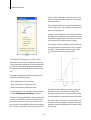
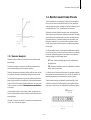
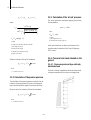
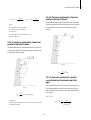
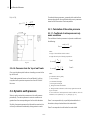
20 Soil Retention Elements 3.2.3. Calculation of the ‘at rest’ pressure p h = γ ⋅ z ⋅ λh ; pv = γ ⋅ z ⋅ λ v The ‘at rest’ pressure is resolved by applying Jaky’s theory. It is calculated as: where: λ h= sin2 ( α + ϕ ) sin ( ϕ + δ ) · sin ( ϕ − β ) sin2α · 1 + sin (α − δ ) · sin (α + β ) 2 prest = γ ⋅ z ⋅ Krest = where: Krest = 1− sin ϕ z: depth γ: unit weight of the soil ϕ: internal friction angle of the soil λ v = λh ⋅ cot g (α − δ) z: depth α: angle of the wall face with the horizontal In the case where there is a slope or embankment, the complementary formulation of the Corps of Engineers, 1961, is used. γ: unit weight of the soil δ: wall-soil friction angle ϕ: internal friction angle of the soil β: angle of the slope 3.2.4. Pressure from loads situated on the ground When the cohesion of the soil is considered: ph = γ ⋅ z ⋅ λh − 2 ⋅ c ⋅ λ h ⋅ cos δ 3.2.4.1. Pressures produced by a uniformly distributed load where: Coulomb’s method is applied and the horizontal and vertical pressures produced by a uniform surcharge equal: c = cohesion of the soil 3.2.2. Calculation of the passive pressure The calculation of the passive pressure is similar to the calculation of the active pressure. But one must change the sign of the internal friction angle in the previous formulas. Moreover, when the cohesion of the soil is considered: ph = γ ⋅ z ⋅ λh + 2 ⋅ c ⋅ λh ⋅ cos δ where: c = cohesion of the soil Fig. 2.1 CYPE