1
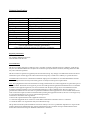
Technical Specifications
Frequency
902 to 928 MHz
Transmitter Output Power
1mW to 1W (+30 dDm)
Range
*60miles
Modulation
Spread Spectrum GFSK, 120 kBs – 170 kBs
Spreading method
Frequency hopping
Occupied Bandwidth
230 kHz
System gain
140 dB
Error Detection
32 Bit CRC, resend on error
Forward error correction
Golay, retransmit on uncorrectable error
Data Encryption
Substitution, dynamic key
Max Link Throughput
115 Kbaud standard speed
Data Interface
RS-232/RS485
Operating Modes
Point-to-Point, Point-to-Multipoint, Repeater
* Line of sight distance with unity gain antenna
** Throughput measured assuming 75% frequency availability
Regulatory Information
FCC Identifier KNY21161341911919
DOC Identifier 2329 102 336A
FCC Notification
This device complies with part 15 of the FCC rules. Operation is subject to the following two conditions: 1) This device
may not cause harmful interference and 2) this device must accept any interference received, including interference that
may cause undesired operation.
This device must be operated as supplied by The Oceanscience Group. Any changes or modifications made to the device
without the express written approval of The Oceanscience Group may void the user's authority to operate the device.
CAUTION: The transceiver has a maximum transmitted output power of 955mW. It is recommended that the transmit
antenna be kept at least 23 cm away from nearby persons to satisfy FCC RF exposure requirements.
Note: This equipment has been tested and found to comply with the limits for a Class B digital device, pursuant to part 15
of the FCC Rules. These limits are designed to provide reasonable protection against harmful interference in a residential
installation. This equipment generates, uses and can radiate radio frequency energy and, if not installed and used in
accordance with the instructions, may cause harmful interference to radio communications. However, there is no
guarantee that interference will not occur in a particular installation. If this equipment does cause harmful interference to
radio or television reception, which can be determined by turning the equipment off and on, the user is encouraged to try
to correct the interference by one or more of the following measures:
• Reorient or relocate the receiving antenna.
• Increase the separation between the equipment and receiver.
• Connect the equipment into an outlet on a circuit different from that to which the receiver is connected.
• Consult the dealer or an experienced radio/TV technician for help.
This product is licensed by The United States. Diversion contrary to U.S. law is prohibited. Shipment or re-export of this
product outside of The United States may require authorization by the U.S. Bureau of Export Administration. Please
contact The Oceanscience Group for additional information or assistance.
12