1
Timing and Power Analysis Compilation
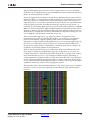
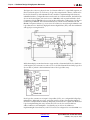
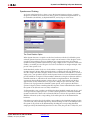
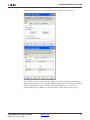
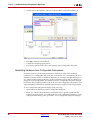
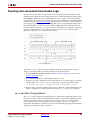
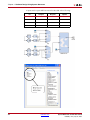
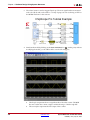
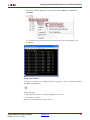
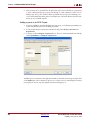
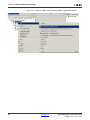
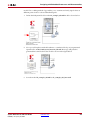
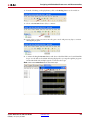
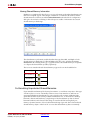
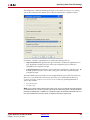
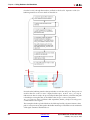
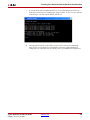
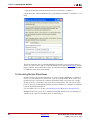
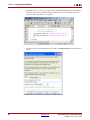
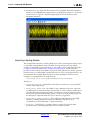
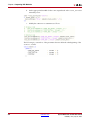
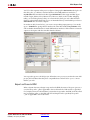
about every net and logic delay, clock skew, and clock uncertainty. The box at the bottom
left of this display shows the path name of the timing report.
Improving Failing Paths
"Now I have information about my failing paths; but what do I do now?" you may ask
yourself. This is the trick for which there is no simple answer, and this is where you may
need to delve into the lower-level aspects of FPGA design.
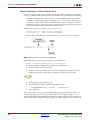
In general, steps that may be taken to meet timing are, in this order:
1.
Change the source design. Just about any timing problem can be solved by changing
the source design and this is the easiest way to speed up the circuit. Unfortunately, this
is often the last step taken by designers, who often look for a quick solution such as
using a faster part. The source design may be changed in several ways:
a.
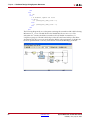
Pipelining. This is the surest way to improve speed, but may also be tricky.
Adding pipelining registers increases latency. For designs with feedback, this may
require great care since portions of the design may require pipeline rebalancing.
See the later example for more details on pipelining.
b.
Parallelization. This is probably the second most-important improvement you can
make. Do you have a FIR filter that won't operate at the correct speed? You can use
two FIR filters in parallel, each operating at half-rate, and interleave the outputs.
This is the classic speed/area tradeoff.
c.
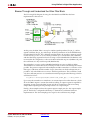
Retiming. This involves taking existing registers and moving them to different
points within the combinational logic to rob from Peter to pay Paul, so to speak.
This works if, to stretch the maxim, Paul is bereft of slack, while Peter has a surfeit.
Some synthesis tools can perform a degree of retiming automatically.
d. Replication. Replication of registers or buffers increases the amount of logic but
reduces the fanout on the replicated objects. This decreases the capacitance of the
net and reduces net delay. The replicated registers may also be floorplanned to
place them closer to the logic groups they drive. Replication is often performed
automatically by the tools and manual replication is not a common practice in a
high-level design environment like System Generator.
e.
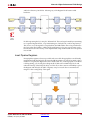
Shannon Expansion. This method involves replicating the faster logic in a critical
path in order to remove dependencies on slower logic. This is sometimes done
automatically by the synthesizer.
System Generator for DSP User Guide
UG640 (v 14.2) July 25, 2012
www.xilinx.com
415