1
!
INSTALLATION PLANNING
!
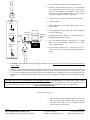
READ ME FIRST - Detailed Mechanical & Electrical Planning Saves Installation Hours!
FloScan systems are not difficult to install. Installing one requires only basic electrical & mechanical skills. With forethought and
planning, your system will be installed with few problems. Todd Walker, Yacht Electric Co., (954) 325-9091 regularly installs
FloScan Twin Diesel Systems in 16 to 20 hours. Difficult installations take him about 24. Vessel owners installing a FloScan
Twin Diesel System for the first time may require an additional 4 to 10 hours.
I. Installation Preparation:
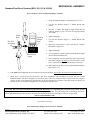
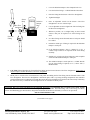
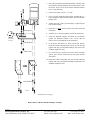
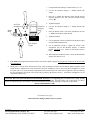
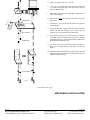
Review the pre-installation booklet and mechanical installation instructions, then survey your vessel. Determine where the
Sensor(s), Pulsation Damper(s), (If used) Switches and Instruments are to be mounted. Place them at their approximate locations.
Measure fuel line lengths between system components, (Primary Filter, Sensor(s), Damper(s), Engine, and Fuel Tank. Determine
fitting sizes and type of fittings needed for each plumbing connection, (JIC, SAE, NPT, NPTF, or Hose Barb).
FloScan Series K High Flow, Diesel system components have 1”, and ½” Female NPT ports.
FloScan Series K Standard Flow, Diesel, system components have ¼” Female NPT ports.
FloScan Gasoline High Flow, system components have ½” Female NPT ports.
FloScan Gasoline Standard Flow, system components have ¼” Female NPT ports.
Gasoline Fuel Systems: USCG requires Type A-1 Fuel Hose to be installed between the fuel tank and the engines’ fuel inlet
connection. Type B-1 may be used if certain safety requirements are met, (33 CFR, Subpart J, 183.558). 33 CFR Subpart J,
183.532 require hose clamps to be made from a corrosion resistant material. To meet American Boat & Yacht Council, (ABYC)
standards, the clamps must be made from a corrosion resistant metal, (ABYC, H-24.11.1).
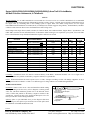
Diesel Fuel Systems: Fuel hose and fittings comprise approximately 1/3 of the total installation cost. At $60/hr, labor costs for a
twin engine High Flow system installation will run approximately $960 to $1200. A-1 Fabric Braid hose & fittings will cost
approximately $600. A-1 Steel Braid hose & fittings would cost approximately $1700. Using wire braid reinforced fuel hose
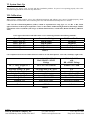
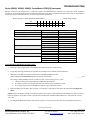
increases twin engine installation costs by $700 to $1000. It pays to use Fabric Braided Hose, (Refer to Table II). Both
Type A-1 fabric braided and wire braided hose meet exactly the same regulatory requirements, (USCG & ABYC) but fabric braid
installation costs are far less. For more information contact Ed Sanford, FloScan’s Technical Service Manager at extension 302.
Fabric Braid A-1 fuel hose generally use hose barb fittings. These come in a wide range of Hose Barb to Male NPT, JIC, SAE, &
NPTF sizes and combinations. Example: 12 HB X 16 MNPT, (3/4” Hose Barb by 1” Male NPT).
Steel Braid, Aeroquip type A-1 fuel hose have reusable hose end fittings. Aeroquip type hose ends come in a wide variety of
types and sizes, (JIC, SAE, NPT, & NPTF).
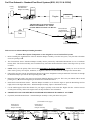
Review the electrical installation instructions. Open and survey your vessels wire ways. Determine if it would be easier to run a
3-conductor cable from each sensor to the instrument, or install a junction box, (J-Box) with terminal strip in the engine room.
The J-Box requires a 4-conductor cable from it to the instrument, and a 3-conductor cable from each sensor. Measure cable
lengths from sensor(s) to J-Box, (If used) to Instrument. Tachometers require a separate 2-conductor cable. If there’s an existing
tachometer, its signal wires can be used.
Tools required are paper, pencil, and measuring tape. This should take no longer than 1-2 hours for both Diesel & Gasoline
systems.
II. Mechanical Installation:
Install or mount the Sensor/Pulsation Damper assemblies, or Sensors, Instruments and Switches, (Reset, MPG, Port/Starboard,
Synch).
Tools required are a drill motor, bits, hole saw, tape measure, straight edge, scribe/punch, half-round file, pliers, and combination
wrenches. This should take 1 hour for Gasoline and single Diesel systems, no more than 2 for twin Diesels.
5/14/2007
FloScan Instrument Company, Inc.
3016 NE Blakeley Street, Seattle, WA 98105
4001-386-00I
Tel: (206) 524-6625
Email: [email protected]
Fax: (206) 523-4961
Http://www.floscan.com