1
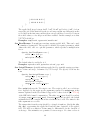
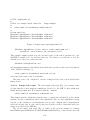
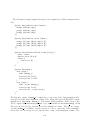
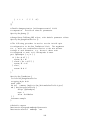
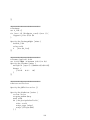
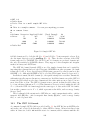
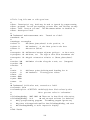
tclsh oommf.tcl avf2ppm [standard options] [-config file] [-f] \
[-filter program] [-format <P3|P6|B24>] [-ipat pattern] \
[-opatexp regexp] [-opatsub sub] [-v level] [infile ...]
where
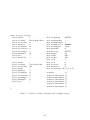
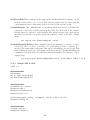
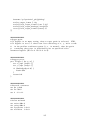
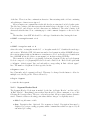
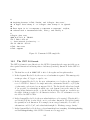
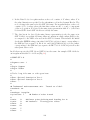
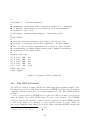
-config file User configuration file that specifies image display parameters. This file is
discussed in detail below.
-f Force overwriting of existing (output) files. By default, if avf2ppm tries to create a
file, say foo.ppm, that already exists, it generates instead a new name of the form
foo.ppm-000, or foo.ppm-001, . . . , or foo.ppm-999, that doesn’t exist and writes
to that instead. The -f flag disallows alternate filename generation, and overwrites
foo.ppm instead.
-filter program Post-processing application to run on each avf2ppm output file. May be
a pipeline of several programs.
-format <P3|P6|B24> Specify the output image file format. Currently supported formats are the true color Portable Pixmap (PPM) formats P3 (ASCII text) and P6
(binary), and the uncompressed Windows BMP 24 bits-per-pixel format. The default
is P6.
-ipat pattern Specify input files using a pattern with “glob-style” wildcards. Mostly useful
in DOS.
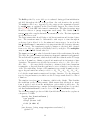
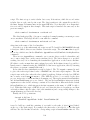
-opatexp regexp Specify the “regular expression” applied to input filenames to determine
portion to be replaced in generation of output filenames. The default regular expression
is: (\.[^.]?[^.]?[^.]?$|$)
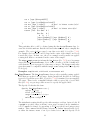
-opatsub sub The string with which to replace the portion of input filenames matched by
the -opatexp regexp during output filename generation. The default is .ppm for type
P3 and P6 file output, .bmp for B24 file output.
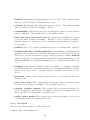
-v level Verbosity (informational message) level, with 0 generating only error messages,
and larger numbers generating additional information. The level value is an integer,
defaulting to 1.
infile . . . List of input files to process.
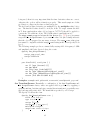
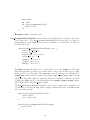
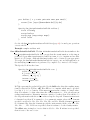
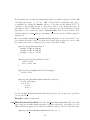
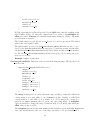
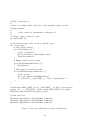
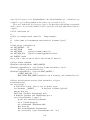
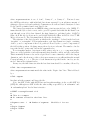
The file specification options require some explanation. Input files may be specified either
by an explicit list (infile ...), or by giving a wildcard pattern, e.g., -ipat *.omf, which is
expanded in the usual way by avf2ppm (using the Tcl command glob). Unix shells (sh, csh,
etc.) automatically expand wildcards before handing control over to the invoked application,
so the -ipat option is not needed (although it is useful in case of a “command-line too long”
161