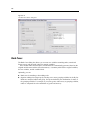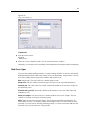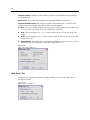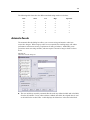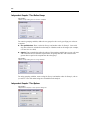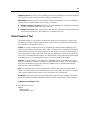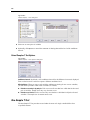
1
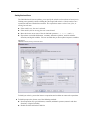
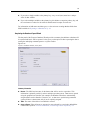
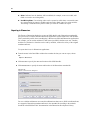
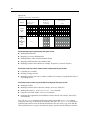
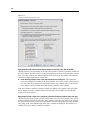
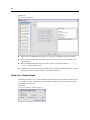
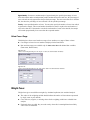
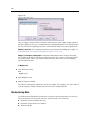
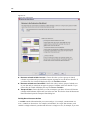
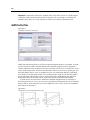
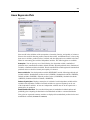
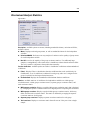
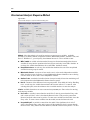
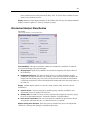
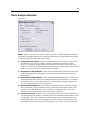
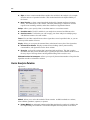
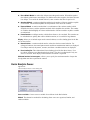
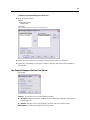
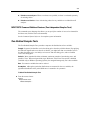
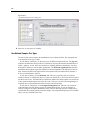
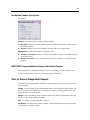
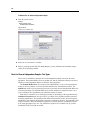
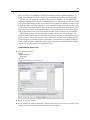
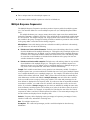
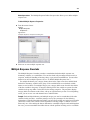
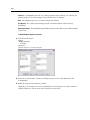
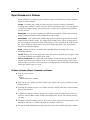
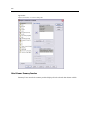
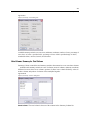
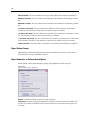
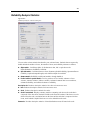
Chapter 39 Reliability Analysis Reliability analysis allows you to study the properties of measurement scales and the items that compose the scales. The Reliability Analysis procedure calculates a number of commonly used measures of scale reliability and also provides information about the relationships between individual items in the scale. Intraclass correlation coefficients can be used to compute inter-rater reliability estimates. Example. Does my questionnaire measure customer satisfaction in a useful way? Using reliability analysis, you can determine the extent to which the items in your questionnaire are related to each other, you can get an overall index of the repeatability or internal consistency of the scale as a whole, and you can identify problem items that should be excluded from the scale. Statistics. Descriptives for each variable and for the scale, summary statistics across items, inter-item correlations and covariances, reliability estimates, ANOVA table, intraclass correlation coefficients, Hotelling’s T2, and Tukey’s test of additivity. Models. The following models of reliability are available: Alpha (Cronbach). This model is a model of internal consistency, based on the average inter-item correlation. Split-half. This model splits the scale into two parts and examines the correlation between the parts. Guttman. This model computes Guttman’s lower bounds for true reliability. Parallel. This model assumes that all items have equal variances and equal error variances across replications. Strict parallel. This model makes the assumptions of the Parallel model and also assumes equal means across items. Data. Data can be dichotomous, ordinal, or interval, but the data should be coded numerically. Assumptions. Observations should be independent, and errors should be uncorrelated between items. Each pair of items should have a bivariate normal distribution. Scales should be additive, so that each item is linearly related to the total score. Related procedures. If you want to explore the dimensionality of your scale items (to see whether more than one construct is needed to account for the pattern of item scores), use factor analysis or multidimensional scaling. To identify homogeneous groups of variables, use hierarchical cluster analysis to cluster variables. 419