1
4 How to Build a Model
y
0
0
1
1
z
0
1
0
1
K1 1 y + K2 1 z
0
1.3
1.2
2.5
6
dx (K1 1 y + K2 1 z)
0
1
1
1
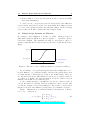
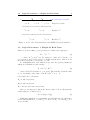
If we set K1 = 0.7 and K2 = 0.8, we get an AND:
y
0
0
1
1
z
0
1
0
1
K1 1 y + K2 1 z
0
0.7
0.8
1.5
dx (K1 1 y + K2 1 z)
0
0
0
1
If we set K1 = 1.2 and K2 = 1.9, we get a new relation:
y
0
0
1
1
z
0
1
0
1
K1 1 y + K2 1 z
0
1.2
1.9
3.1
dx (K1 1 y + K2 1 z)
0
1
1
1
In the KLM, the logical parameters are called K-values.
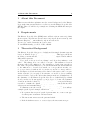
The next section explaines step by step how to make use of these theoretical ideas to create a model with concepts, define the influences between
them and examine their interplay—with the help of the KLM.
4
How to Build a Model
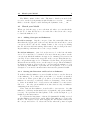
In this section we develop a model3 with the Kinetic Logic Modeler (KLM).
Before you start, you need to have an idea of your model, at least in your
head or in text form.Here is, again, our very simple psychological example:
1. If a patient has impaired psychological health, he or she seeks psychotherapeutic treatment: an intervention.
2. The intervention increases the patients health.
3. If the health increases to a certain degree, the intervention stops.
4. If the health is good enough, the patient is able to stay in a healthy
state (it is sustainable).
3
You can load the complete model we develop here by clicking “Load tutorial model”
in the help menu of the KLM.