1
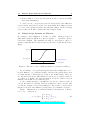
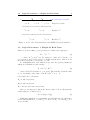
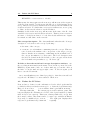
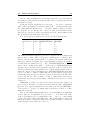
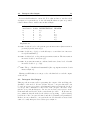
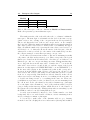
3.1 Kinetic Logic Systems are Discrete 3 4. If the health is good enough, the patient is able to stay in a healthy state (it is sustainable). So, there are two concepts (intervention and health), some influences between them, and ideas about the level from which these influences start to become active (printed in italic and still quite fuzzy). In the following sections, these ideas will be transformed into tangible terms. 3.1 Kinetic Logic Systems are Discrete In contrast to other simulation tools, like e.g. Stella1 , which are based on differential equations, KLM is a discrete system: concepts have discrete levels (few, usually). The assumption is that a concept has no effect beneath a certain threshold v and its effect levels off above that threshold (see Figure 1). y ef f ect no ef f ect x=0 v x=1 x, continuous x, discrete Figure 1: The effect of the continuous variable x on another variable y In our example, some psychotherapeutic intervention might have no noticeable influence on a patient’s health; only after the patient has gotten a certain amount of intervention does his or her health change. Here, we are only interested in the differentiation between has an influence and has no influence on health: all other information about the relation between influence and health we lose without regret. So the continuous nature of an influence is reduced to discrete levels. A concept has therefore as many levels as it influences other concepts, plus one. In the example, intervention influences only health, so intervention has the levels 0 (doesn’t influence health) and 1 (does influence health). Figure 2 illustrates how a continuous variable x is turned into a discrete one, x, by the function dx : 0 if x ≤ v1 , 1 if v2 < x ≤ v2 , x = dx (x) = (1) 2 if v2 < x. 1 http://www.iseesystems.com/softwares/Education/StellaSoftware.aspx