1
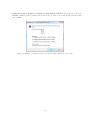
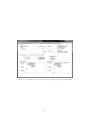
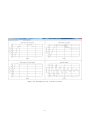
Controller Reduction Plots tab; the nominal system’s graphics are always shows so that the user can
compare this with different reduced order controller
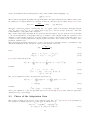
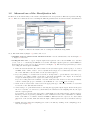
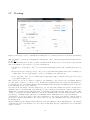
• Compute T by - two possibilities are provided for calculating the polynomial T of the RST controller (for
the case of digital PID controller, the T will be left unchanged T (q −1 ) = R(q −1 )):
– All CL poles - P/B*(1) - T (z −1 ) is a polynomial with adjusted static gain containing all closed loop
poles;
– Gain P(1)/B(1) - T (z −1 ) is a constant with an appropriate value so that the static gain of the closed
loop system is equal to one;
• Perturbation parameters - the user has the possibility to check the reduced order controller on a step
reference (magnitude 1) and with a step disturbance; the time of appearence and amplitude of the perturbation can be chosen by the user; the effect on the closed loop system with nominal/reduced controller
can be viewed in the Plots window, Controller Reduction Plots tab;
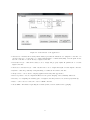
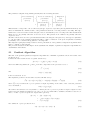
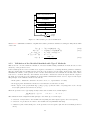
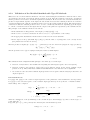
• Theoretical image of the two systems with nominal and reduced order controllers; this image is in accordance with the algorithm used for estimation;
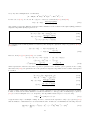
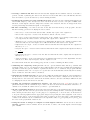
• Compute Digital PID - this button can be used as an alternative to Start; it will compute two digital PID
controllers using the filtered versions of the CLIM algorithms (excitation on controller respectively plant
input); the controllers are of second order with integrator; the T (q −1 ) polynomial is equal to R(q −1 ) and
−1
)
M (q
the reference modes is absent ( B
AM (q −1 ) = 1) so that the graphics will show the actual performances if
implemented on a PID control structure;
• Save selected controllers - this will save the selected controller(s) to a single Matlab version 6 file (in the
future, there will be also the possibility to save in NX-RST format).
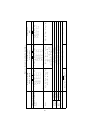
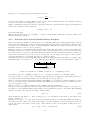
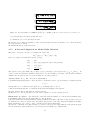
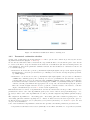
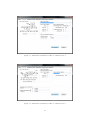
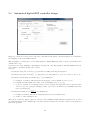
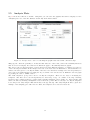
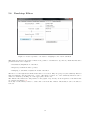
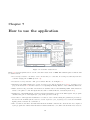
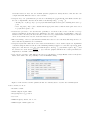
Figure 7.2: Model and controller parameters that are currently used to describe the nominal system
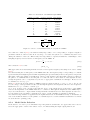
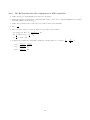
It is recomended to chose:
• Tolerance: 0.001;
• Initial adaptation gain: 1000;
• Forgetting factor (λ1 ): 0.95-1;
• λ0 : 0.5-1;
• PRBS frequency divider, div: 1 or 2;
• PRBS length of shift register: 11.
61