1
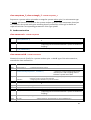
return
spin
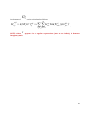
- rotated micromatrix element
7.3 Module obs.py
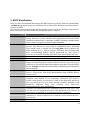
This module contains facilities to call the knitting kernel and compute observables
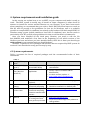
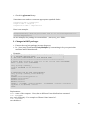
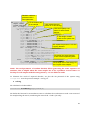
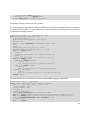
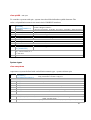
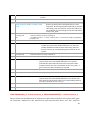
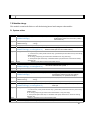
D. System solver
For a given system, calculates the
conductance matrix for the scalar (1-dim)
micromatrices;
F:
conductance_matrix(systemetotal system,
COMPLEX Energy)
*args
systemetotal system
COMPLEX Energy
return
Float[]
F:
knitonly(systemetotal system,
COMPLEX Energy, int savinglevel=-1)
*args
savinglevel -
return
tricot
F:
knitANDsew(systemetotal system,
COMPLEX Energy, int savinglevel=-1)
*args
return
savinglevel -
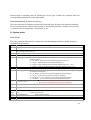
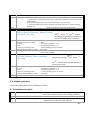
F:
conductance_matrix_S(systemetotal_S system, For a given system calculates the
conductance matrix for the 2x2 (2-dim)
COMPLEX Energy)
- an infinite system with leads
- energy
-matrix of the size fNres x fNres. fNres is a number of leads in the system
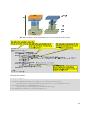
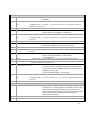
Executes a knitting algorithm and calculates transport
between leads (but not local observables)
level of saving
-1 - exact version, saves full GF at each step – guarantees precision but memory consuming;
(default value)
0- no saving; useful only for transmission calculations or very (knit only)
n - Saves full GF after each steps. n should be order of M, where M is a maximum sewing
interface size.
pointer to the data structure with solved system
tricot
-
Executes a knitting and sewing algorithm: calculates
local observables of the system
pointer to the data structure with solved system
micromatrices, i.e. systems with spin;
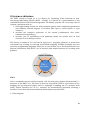
*args
Systemetotal_S system
COMPLEX Energy
return
float[]
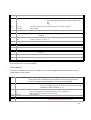
F:
knitonly_S(systemetotal_S system,
COMPLEX Energy, int savinglevel=-1)
*args
savinglevel -
return
F:
-
- an infinite system with leads(and with spin)
- energy
matrix of the size fNres x fNres. fNres is a number of leads in the system.
Implements knitonly (see above) for systems
with spin
level of saving
-1 - exact version, saves full GF at each step – guarantees precision but memory consuming;
(default value)
0- no saving; useful only for transmission calculations or very (knit only)
n - Saves full GF after each steps. n should be order of M, where M is a maximum sewing
interface size.
pointer to the data structure with solved system
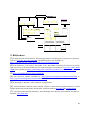
knitANDsew_S(systemtotal_S system,
Implements knitANDsew (see above) for
65