1
RAIDWatch User’s Manual
IMPORTANT!
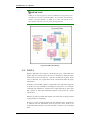
RAID (0+1) will not appear in the list of RAID levels supported by the
controller. If you wish to perform RAID 1, the controller will determine
whether to perform RAID 1 or RAID (0+1). This will depend on the
drive number that has been selected for the logical drive.
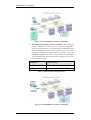
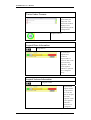
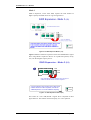
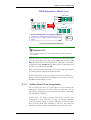
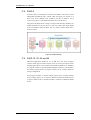
Figure C-4: RAID 1(0+1) Storage
C.6. RAID 3
RAID 3 implements block striping with dedicated parity. This RAID level
breaks data into logical blocks, the size of a disk block, and then stripes
these blocks across several drives. One drive is dedicated to parity. In the
event a disk fails, the original data can be reconstructed from the parity
information.
In RAID 3, the total disk capacity is equivalent to the sum of the capacities
of all drives in the combination, excluding the parity drive. For example,
combining four 1GB drives would create a single logical drive with a total
disk capacity of 3GB. This combination appears to the system as a single
logical drive.
RAID 3 provides increased data transfer rates when data is being accessed
in large chunks or sequentially.
However, in write operations that do not span multiple drives, performance
is reduced since the information stored in the parity drive needs to be
recalculated and rewritten every time new data is written to any of the data
disks.
App-16
RAID Levels