1
Chapter 7
LQG Synthesis
Output Weight Editing
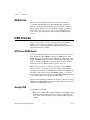
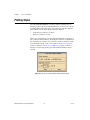
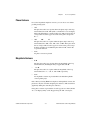
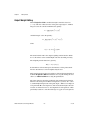
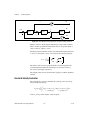
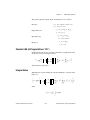
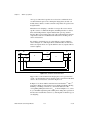
When Weight Zero Edit is enabled, the LQG controller is based on
ỹ = Wy, which is a filtered version of the plant output signal y. Without
integral action, the controller minimizes the quantity:
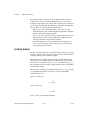
2
2
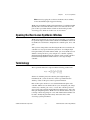
J = lim E ( ρu ( t ) + y ( t ) )
t→∞
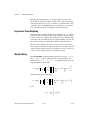
and with integral action, the quantity:
2
2
2
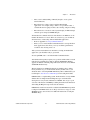
J = lim E ( ρu ( t ) + y ( t ) + z ( t ) )
t→∞
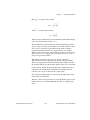
where
t
∫
z ( t ) = ( 1 ⁄ T int ) ỹ ( τ ) dτ
0
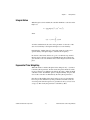
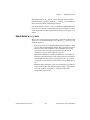
The transfer function W is the output weighting transfer function. When
W = 1, this reduces to the standard LQG controller described previously.
The weighting transfer function is given by:
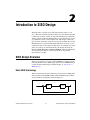
W ( s ) = nw ( s ) ⁄ np ( s )
Its denominator is fixed and equal to the numerator of the plant transfer
function. Its numerator can be manipulated by the user.
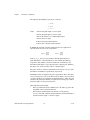
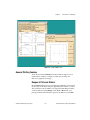
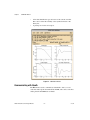
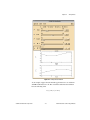
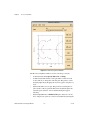
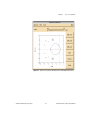
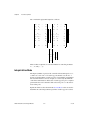
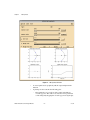
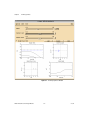
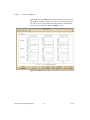
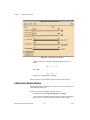
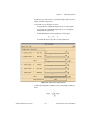
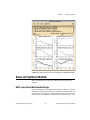
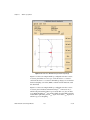
The lower left plot shows the poles and zeros of the weight transfer function
W. When Weight Zero Edit is enabled, the user can grab and drag the zeros
shown, or Add/Delete/Edit zeros using the push buttons.
The lower right plot shows the magnitude of the weight transfer function.
When it is flat and equal to 0 dB for all frequencies, you have W = 1, that
is, standard LQG design based on the plant output y. When, for example, W
is larger than 0 dB at low frequencies, this means that the LQG controller
is based on a filtered version of y that emphasizes low frequencies, which
presumably results in a controller with larger loop gain at low frequencies.
Xmath Interactive Control Design Module
7-6
ni.com