1
Designing a Relational Database
5.
The next step is to organize the objects into entities. You’ve already done some of the work simply by listing the objects. For example, the DVDs for rent group of objects can be left together as
you have them, although you can simplify the category name to “DVDs.” The Transactions/
orders group of entities also provides you with a natural category. You probably want to separate the customers and employees into separate categories and specify that an attribute be created for each part of the name. You should separate employees and customers into two entities
so that you can easily distinguish between the two. In addition, this approach allows you to
treat each category as a separate entity, which could be a factor in securing the database.
Another reason for separating employees from customers is that, if this were actually a database that
would be implemented in a production environment, there would probably be more attributes for each
entity. For example, you would probably want to know the customers’ home addresses and phone numbers, or you might want to include your employees’ social security numbers. For the purposes of demonstrating how to model a database, the information you’ve included here should be enough.
6.
The last objects you should categorize are those in the Movie participants group. This group is
a little different from the others because you’re working with a list of participant types, and for
each of those types, you must include the full names of the participants. One way to approach
this would be to create an entity for each participant type. Because different people can participate in different ways in one or more movies, though, you could be creating a situation in which
your database includes a great deal of redundant data. Another approach would be to create one
entity that includes the different parts of each participant’s name and to include an attribute that
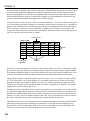
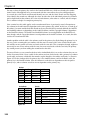
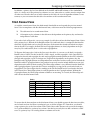
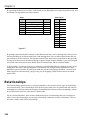
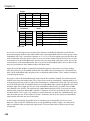
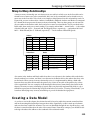
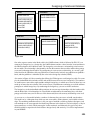
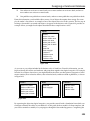
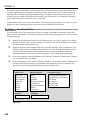
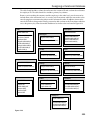
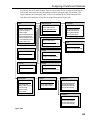
identifies the role that the participant plays. Figure 4-17 demonstrates how this would work.
DVDs for rent
DVD name
Number of disks
Year released
Movie type
Studio
Rating
Format
Status
Customers
Customer first name
Customer middle name
Customer last name
Participants
Participant first name
Participant middle name
Participant last name
Role
Transactions/orders
Customer who rented DVD
Employee who ran transaction
DVD rented
Date rented
Date due back
Date returned
Employees
Employee first name
Employee middle name
Employee last name
Figure 4-17
Notice that only one entity exists for participants and that it includes the name attributes and a
role attribute. Now a participant’s name needs to be listed only once in the database.
129