1
Designing a Relational Database
Data Normalization
One of the concepts most important to a relational database is that of normalized data. Normalized data is
organized into a structure that preserves the integrity of the data while minimizing redundant data. The
goal of all normalized data is to prevent lost data and inconsistent data, while minimizing redundant data.
A normalized database is one whose tables are structured according to the rules of normalization. These
rules — referred to as normal forms — specify how to organize data so that it is considered normalized.
When Codd first introduced the relational model, he included three normal forms. Since then, more normal forms have been introduced, but the first three still remain the most critical to the relational model.
The degree to which a database is considered normalized depends on which normal forms can be applied.
For example, some database designs aim for only the second normal form; however, some databases strive
to achieve conformance to the fourth or fifth normal form. There is often a trade-off between strict adherence to the normal forms and system performance. Often, the more normalized the data, the more taxing
it can be on a system. As a result, a database design must strike a balance between a fully normalized
database and system performance. In most situations, the first three normal forms provide that balance.
First Normal Form
Of all the normal forms, the first is the most important. It provides the foundation on which all other
normal forms are built and represents the core characteristics of any table. To be in compliance with the
first normal form, a table must meet the following requirements:
❑
Each column in a row must be atomic. In other words, the column can contain only one value
for any given row.
❑
Each row in a table must contain the same number of columns. Given that each column can contain only one value, this means that each row must contain the same number of values.
❑
All rows in a table must be different. Although rows might include the same values, each row,
when taken as a whole, must be unique in the table.
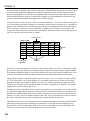
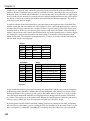
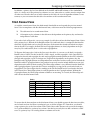
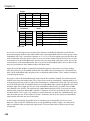
Take a look at an example to help illustrate these requirements. Figure 4-2 contains a table that violates
the first normal form. For example, the fifth row contains two values in the BookTitle column: Postcards
and The Shipping News. Although a value can consist of more than one word, as in The Shipping News,
only one value can exist in a column. As a result, the BookTitle column for that row is not atomic because
it contains two values. In addition, the row as a whole contains more values than the other rows in the
table, which also violates the first normal form.
AuthorBook
AuthFN AuthMN
Hunter S.
Rainer Maria
Rainer Maria
John
Kennedy
Annie
NULL
Nelson NULL
AuthLN
Thompson
Rilke
Rilke
Toole
Proulx
Algren
BookTitle
Hell's Angels
Letters to a Young Poet
Letters to a Young Poet
A Confederacy of Dunces
Postcards, The Shipping News
Nonconformity
Figure 4-2
111