1
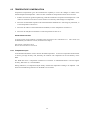
6.5 TEMPERATURE COMPENSATION
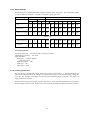
Temperature compensation gives the instrument the capability to correct for changes in volume of the
measured liquid with temperature. There are three methods of compensation which can be selected.
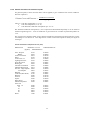
1. Volume correction for general liquids using a thermal coefficient of expansion with temperature. This
method is useful for correction to a base volume over relatively small changes in temperature.
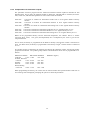
2. Correction for Petroleum Liquids to US and International standards for a wide range of petroleums, to
a base temperature of 60°F/15°C.
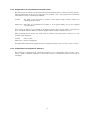
3. Correction for LPG to US and International standards, to a base temperature of 60°F/15°C.
4. Correction for Anhydrous Ammonia to a base temperature of 60°F/15°C.
South African Version
A special version of the software is available with correction to 20°C instead of 15°C. This version can
be identified by the software version (see Section 4.4 Step 2).
SAx.xxx for correction to 20°C
Srx.xxx for correction to 15°C/60°F
6.5.1 Temperature Input
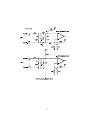
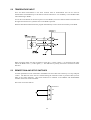
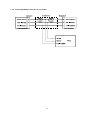
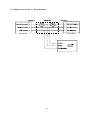
A PT100 Platinum RTD is used to measure the fluid temperature. A four wire temperature measurement
is used to give high accuracy and, internally, the software will compensate for the non-linearity of the
RTD.
The RTD must have a temperature coefficient of resistance of 0.00385ohm/ohm/°C and the highest
accuracy, DIN Class A, is recommended.
During calibration, a "temperature adjust facility" enables the temperature reading to be adjusted. This
allows for manufacturing tolerances on the RTD to be corrected.
34