1
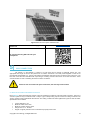
1| INTRODUCTION A new RENOGY Off-Grid Solar Kit will provide you with a clean, silent, and sustainable way of ensuring that batteries are fully charged and capable of providing a continuous supply of electricity. Each kit comes equipped with a high quality solar panel that features highly efficient silicon solar cells. If you have purchased a RENOGY Off-Grid Solar Kit, a PWM Solar Charge Controller is also included in the package. This controller will serve as a connector between the solar panel and the batteries. The solar charge controller will ensure that the battery is charged with the appropriate amount of solar power as per the battery manufacturer’s recommendations. The solar charge controller ‘charging states’ are optimized to meet the requirements of most standard lead acid batteries as well as flooded batteries. The RENOGY Off-Grid Solar Kit also includes a mounting system comprised of sturdy aluminum Z-Brackets as well as the nuts and bolts required to flat mount a solar panel onto a roof or any other flat surface. If you wish to optimize your panel’s collection of sunlight by tilting the panel to a different inclination, an adjustable tilt-mount may be purchased separately. This manual will provide you with instructions on how to assemble the various components of a RENOGY Off-Grid Solar Kit. Please refer to the separate Renogy Solar Charge Controller Manual for detailed information about the installation, operation, and programming of the solar charge controller. Please read the manual carefully before installing or operating the solar kit to prevent personal injury or damage to the components. If you have any concerns about the suitability of the kit for your application, or doubts about any of the instructions in this manual, please contact RENOGY Support at 1-800-330-8678. 2| GENERAL SAFETY Please read the instruction manual carefully before attempting to carry out any installation or wiring. Contact Technical support for any questions concerning the installation. Warning! 2.1 Installation and wiring compliance Installation and wiring must comply with the local and National Electrical Codes and must be done by a certified electrician. Please follow these four steps: 1. 2. 3. 4. Disconnect all power sources before carrying out the installation. Make sure the correct polarity is observed when making connections between the solar panel, charge controller, and battery. Damage due to reverse polarity connection is not covered by warranty. Make sure all wire connections are secured; loose connections may cause sparks. Wear appropriate clothing and safety gear including protective eyewear when performing any electrical installation. 2.2 Preventing fire and explosion hazards Working with electronic/electrical equipment may produce arcs or sparks. Thus, such equipment should not be used in areas where there are flammable materials or gases requiring ignition protected equipment. These areas may include spaces containing gasoline-powered machinery, fuel tanks, and battery compartments. 2.3 Precautions when working with batteries Batteries contain very corrosive diluted sulfuric acid as electrolyte. Precautions should be taken to prevent contact with skin, eyes, or clothing. Batteries generate hydrogen and oxygen during charging, resulting in the evolution of an explosive gas mixture. Care should be taken to ventilate the battery area and follow the battery manufacturer’s recommendations. Never smoke or allow a spark or flame near the batteries. Use caution to reduce the risk of dropping a metal tool on the battery. It could spark or short circuit the battery or other electrical parts and could cause an explosion. Remove metal items such as rings, bracelets, and watches when working with batteries. The batteries can produce a short circuit current high enough to weld a ring or similar object to the metal, causing a severe burn. If you need to remove a battery, always remove the ground terminal from the battery first. Make sure that all the accessories are off so that you do not cause a spark. Only use properly insulated tools when making battery connections. Copyright © 2014 Renogy. All Rights Reserved. 2