1
2K7_MV2_NW&Test_Intro.qxd
L-com
®
08/14/07
12:02 PM
Page 187
Networking and Other Equipment
CONNECTIVITY
PRODUCTS
Basic Ethernet Theory
1
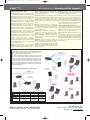
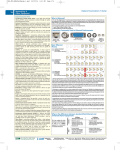
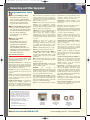
SIMPLE ETHERNET NETWORK:
- One collision domain
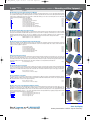
■ Ethernet operational theory is quite easy to understand and a simple analogy is helpful to
HALLWAY
2
OFFICE CUBICLES
visualize the basics. Imagine a long hallway lined with offices. The hallway represents the
physical network, the offices represent the attached stations. When an occupant wishes to
speak to another occupant they would lean into the hallway, listen to make sure no one else is
engaging in a conversation, then speak out addressing the desired recipient. All other
occupants hear the conversation but ignore it knowing it is not directed to them.
■ In essence, this analogy describes the medium access method standardized under IEEE802.3
known as Carrier Sense Multiple Access with Collision Detection (CSMA/CD). Carrier Sense is
analogous to the ability to listen to all conversations (network traffic). Multiple Access is the
ability for multiple users to access the medium while data is transmitted.
CONGESTED ETHERNET NETWORK:
- One collision domain
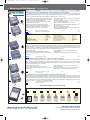
■ Returning to our analogy, what if two or more occupants decide to speak at the same time?
Naturally the overlapping voices would become garbled and indistinguishable. With Ethernet
this is known as a collision. In the CSMA/CD method, CD stands for Collision Detection. If a
collision is detected by a transmitting station(s) the rule states:stop transmitting immediately,
transmit a jamming signal to inform all other stations to stop, then wait a random period
(binary exponential backoff) and re-transmit.
■ Unfortunately, as the quantity of stations increases so does the amount of collisions. This
causes the average access time to increase proportionally.This is referred to in the industry as
network congestion.
3
SWITCHED ETHERNET NETWORK:
- Two collision domains
■ Fortunately, there are several ways to alleviate network congestion. One way is that the entire
WALL WITH DOOR
network can be upgraded to Fast Ethernet (100Mbps) which represents a 10 fold increase in
transmission speed. This, however requires upgrading of all components and can be rather
expensive. Another approach is to add an Ethernet Switch.
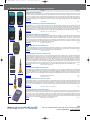
■ In this analogy,the long hallway represents the network.Adding a two port switch is analogous
to dividing the hallway into two shorter hallways separated by a door. This creates two
segments (collision domains) where messages that are directed for occupants within the same
area are not allowed to pass through the door. Only when a message is directed to another
segment does the door open allowing the message to pass.
■ An Ethernet switch reduces collisions by creating multiple collision domains.This,in most cases,
is the most economical approach. A switch can be added to any network without the need to
upgrade existing equipment.
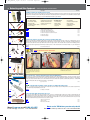
What is the difference between standard/fast Ethernet and switched/shared equipment?
This chart explains the basic advantages
and disadvantages to using 10 or 100Mbps
equipment in a shared (hubs) or switched
environment.
10Mbps Standard Ethernet
100Mbps Fast Ethernet
Switched Topology
(Switches)
• Medium speed
• Segment bandwidth between
power users and low volume users
• Economical
• Highest speed
• Segment high bandwidth links
between power users
• Most expensive
Shared Topology
(Hubs)
• Lowest speed
• Good for workgroups using e-mail,
small file transfer and printing
• Most economical
• Medium/high speed
• Good for all around
high bandwidth applications
• More expensive
What our customers are saying. . .
“Thank you very much!! I just happened to pick up and read through your catalog that was here in our shop. You are selling and explaining products that reinforce
exactly what we are learning in our CSNA (computer systems network administration) course. I am interested in learning more about your company and your
products, also the technical tips in the Q and A are helpful. Thanks again.” - Jim G.
187