1
Glossary
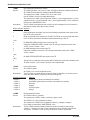
ISDN (Integrated Services Digital Network): A replacement for the POTS system, providing digital
voice and data services. ISDN can provide simultaneous voice and data calls to different locations.
ISDN TA: ISDN Terminal Adapter, also referred to as an ISDN Modem. A digital device used to
connect to, and transmit data over, an ISDN digital telephone line.
ITU (International Telecommunications Union): Governing body for the many worldwide
telecommunications standards, including those for modems and ISDN.
IWF (Inter-working function): An essential part of any GSM network which handles interconnection
between the GSM network and fixed networks such as POTS or ISDN.
M
Modem (MOdulator/DEModulator): A device allowing computers to communicate over POTS lines.
N
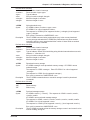
National Roaming: Following the establishment of the GSM Alliance, affiliated network operators
can offer their subscribers nationwide roaming services through the United States and Canada. The
alliance provides for seamless roaming of both voice and data services. Apart from the 7 founder
members of the GSM Alliance, other GSM network operators in North America have shown support
for the Alliance, and will be invited to join the Alliance during 1998. Another benefit of the Alliance, is
the implementation of “611” as a customer support number. This allows users can gain support
regardless of the network they are using, or their location.
Non-transparent data: A method of transmitting data over a network where the network can identify
the data being sent, and can control the data session. In a GSM network the RLP protocol for error
correction is implemented for a non-transparent data session.
P
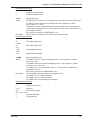
Packet Mode: A method of transferring data between two devices without the need to establish a
direct connection.
PC Card (previously PCMCIA): A device for connecting peripheral devices to a mobile computer.
Also the standard for such devices.
PCS (Personal Communications Services): A range of standards for digital wireless
communications operating in the 1850-1990 MHz frequency range. Services included high quality
digital voice, data, fax and two-way messaging services.
PDU (Protocol Data Unit): A coded and packetized unit of the SMS containing the message, receiver
address, and all parameters needed by the GSM network. The coding and packetizing can be done
in different ways as specified in GSM 03.38 and GSM 03.40. The MultiMobile SoftGSM user
application for sending SMS can packetize these PDUs in either 7-bit or 8-bit format (GSM 03.38).
POTS: The “Plain old Telephone System.”
R
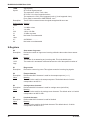
Roaming: the ability for a subscriber to make and receive calls outside their home network. This is
one of the key differences between the first generation analog cellular networks and second
generation digital cellular networks such as GSM. To enable roaming, the network operator must
establish and implement a roaming agreement. Today some GSM network operators have in excess
of 60 international roaming agreements, spanning GSM 900, 1800 and 1900 networks. This allows
network operators to provide their customers with A worldwide service 5 unmatched by any other
cellular technology. When users are roaming either nationally or internationally, all their call and
service charges are billed to their home network. (Note: always check with your service provider to
ensure that they have the relevant roaming agreements. Many network operators will charge a
premium for roaming services. Also, consult your network operator for advice on roaming call
charges.)
MTSGSM
69