1
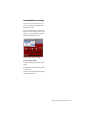
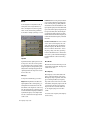
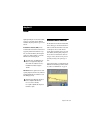
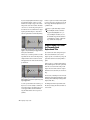
Like the Compressor, the Limiter is activated
when the signal exceeds the user-selected
threshold. The Limiter then compresses any signal above the selected threshold down to the
threshold limit that you have set.
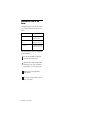
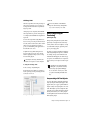
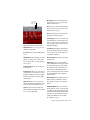
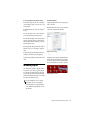
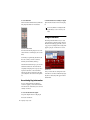
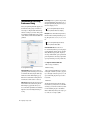
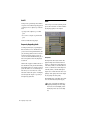
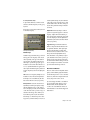
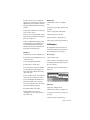
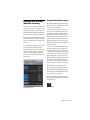
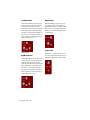
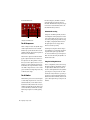
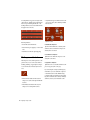
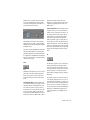
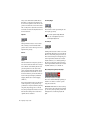
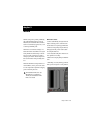
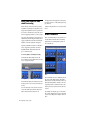
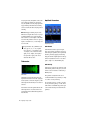
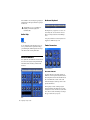
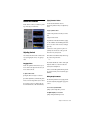
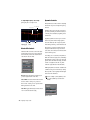
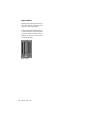
2 Click the Limiter icon.
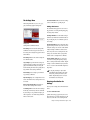
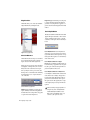
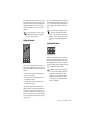
Side-Chain Processing
Compressor
Limiter
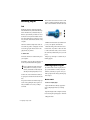
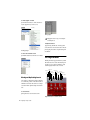
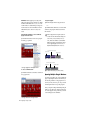
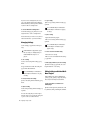
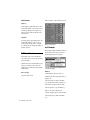
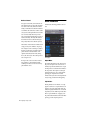
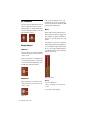
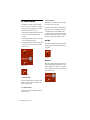
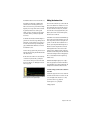
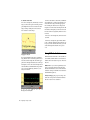
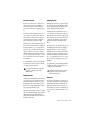
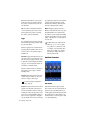
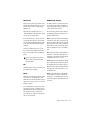
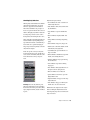
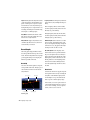
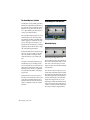
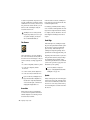
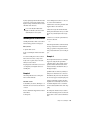
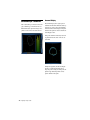
Compressor and Limiter icons
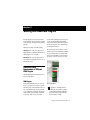
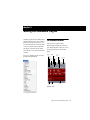
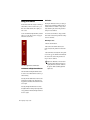
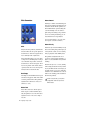
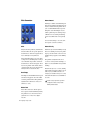
The D3 Compressor
The D3 compressor reduces the dynamic range
of audio signals that exceed a user-selectable
threshold by a specific amount. This is accomplished by reducing output levels as input levels
increase above the threshold.
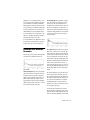
The amount of output level reduction that D3
applies as input levels increase is referred to as
the compression ratio. This parameter is adjustable. If you set the compression ratio to 2:1, for
example, for each 2 dB that the signal exceeds
the threshold, the output will increase only by
1 dB. With a compression ratio of 4:1 for example, an 8 dB increase in input will produce only
a 2 dB increase in output.
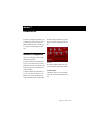
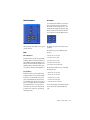
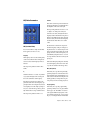
The D3 Limiter
The D3 limiter operates as a fast-attack compressor with a high compression ratio. It doesn’t attack instantaneously or look ahead in order to
attack ahead of time, but instead uses a very fast,
1-millisecond attack time. As such, the D3 is not
a “brick wall” limiter, but limits the overall dynamic range of signals in a sonically-pleasing
way.
56
Digidesign Plug-Ins Guide
Compressors and limiters generally use the detected amplitude of the input signal as a control
source. Other signals can also be used as a control source by using a key input. With de-essing,
for example, a frequency-modified version of
the input signal is used as a trigger. This is
known as side-chain processing.
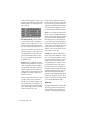
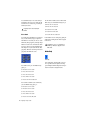
Side-chain processing allows the D3 compression or limiting to be controlled by another independent audio signal—typically another
Pro Tools track. In this way you can compress or
limit one track’s audio using the dynamics of a
different track’s audio.
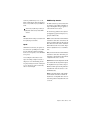
Using the D3 Plug-In in Stereo
In stereo configurations, all D3 controls except
the Input Level affect both channels of the stereo signal. The D3’s RMS detector (which derives the control signal that drives the dynamics
processing) uses a composite of the two channels. Because of this, when stereo processing occurs, there is no image shift when signal levels
differ between the two channels, since the composite control signal drives processing for both
channels.