1
Contents
1.
2.
3.
4.
5
6.
7a.
7b.
8.
9.
10.
11.
12.
13.
14.
15.
16.
17.
18.
19.
Installation Requirements .......................................... Page 2
General Information .................................................... Page 2
Data Tables .................................................................... Page 5
Siting the Appliance .................................................... Page 8
Flue Terminal Position ................................................ Page 8
Air Supply ...................................................................... Page 8
Sealed System .............................................................. Page 9
Open Vent System ...................................................... Page 10
Domestic Hot Water Supply ...................................... Page 11
Gas Supply .................................................................. Page 11
Electrical........................................................................ Page 12
Installing the Appliance ............................................ Page 14
Commissioning the Appliance .................................. Page 30
Instructions to the User ............................................ Page 32
Inspection and Service .............................................. Page 32
Replacement of Parts ................................................ Page 33
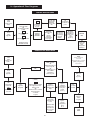
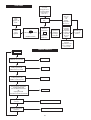
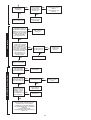
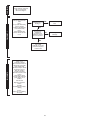
Operational Flow Diagrams ...................................... Page 46
Fault Finding ................................................................ Page 48
Component Parts List ................................................ Page 54
Conversion Instructions ............................................ Page 55
1. Installation Requirements
2. General Information
1.1 Gas Safety (Installation and Use) Regulations 1998: All gas
appliances must be installed by a competent person in
accordance with the above regulations. Failure to install
appliances correctly could lead to prosecution.
1.2 The manufacturers notes must not be taken, in any way, as
overriding statutory obligations.
1.3 The compliance with a British Standard does not, of itself,
confer immunity from legal obligations. In particular the
installation of this appliance must be in accordance with the
relevant requirements of the following: Gas Safety (Installation
and Use) Regulations 1998, current IEE Wiring Regulations, local
Building Regulations, Building Standards (Scotland)
(Consolidation), byelaws of the local Water Company and Health
and Safety Document No. 635 (Electricity at Work Regulations
1989). It should be in accordance with the relevant
recommendations of the following British Standards:
BS 6798: Specification for Installation of gas fired hot water
boilers of rated input not exceeding 60 kW (Gross)
BS 5449: Central Heating for Domestic Premises
BS 5546: Installation of gas hot water supplies for domestic purposes.
BS 5440:1: Flues and Ventilation for gas appliances of rated input
not exceeding 60kW (Gross): Flues.
BS 5440:2: Flues and ventilation for gas appliances of rated input
not exceeding 60kW (Gross): Air Supply.
BS 6891: Installation of low pressure gas pipework installations
up to 28mm (R1).
BS 6700: Domestic Water Supply in Buildings.
BS 7593: Water Treatment in domestic heating systems.
1.4 To ensure that the installation will perform to the highest
standards, the system and components should conform to any
other relevant British Standards in addition to those mentioned
in the instructions.
1.5 In accordance with the requirements of COSSH the appliance
does not contain any substances which are harmful to health.
1.6 Product Liability regulations indicate that, in certain
circumstances, the installer can be held responsible, not only for
mistakes on his part but also for damage resulting from the use of
faulty materials. We advise that, to avoid any risk, only quality
approved branded fittings are used.
1.7 LPG Installation. The appliance shall not be installed in a room
or internal space below ground level when it is intended for use
with LPG. This does not preclude the installation into rooms which
are basements with respect to one side of the building but open to
the ground on the opposite side.
1.8 The advice and instructions given in this document covers, as
far as possible, the foreseeable situations which may arise. Contact
The Worcester Technical Department, Telephone: 08705 266241,
for advice on specific installations.
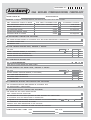
The Benchmark initiative is the new code of practice to
encourage the correct installation, commissioning and servicing of
domestic central heating boilers and system equipment.
The 'checklist' is a vital document that must be completed by
the installer at the time of installation. It confirms that the
boiler has been installed and commissioned according to the
manufacturers instructions.
Without the completion of the checklist, manufacturers may refuse
to respond to a call-out from a householder, who will be advised
that he or she must call back the installer, who has not fulfilled his
obligations to record the information required by the initiative.
It is important that:
The services and the system are properly flushed as specified.
The User is clearly instructed on the correct operation of the
appliance.
The benefits of regular servicing are explained - to maintain the
efficiency and extend the life of the appliance.
2.1. GENERAL INFORMATION
2.1.1 The appliance is set to provide the maximum output of
24kW to the domestic hot water and to the central heating .
2.1.2. The domestic water section of the appliance is suitable for
mains water pressures of up to 10bar.
2.1.3. Conversion kits are available to convert the appliance
from Natural Gas to Propane operation and vice versa.
2.2 ELECTRICAL SUPPLY
Mains supply: 230V ~ 50 Hz. 140Watts.
External fuse: 3A. Internal fuses: T 2A (F1), and T 1A (F2).
2.3 GAS SUPPLY.
Check the data plate (located on the inner cover of the appliance)
to ensure the appliance has been set up for the correct gas
supply. The appliance can be set up for either of the following
gases: Natural Gas (G20) or Propane (G31). A conversion kit is
available to change the appliance from one gas to the other.
The boiler requires a gas flow of 2.9 m3/h of natural gas (G20) or
1.09 m3/h of LPG (G31).
The meter governor or regulator should deliver a dynamic
pressure of 20mbar for natural gas or 37mbar for propane at the
appliance, which is about 18.5mb or 35.5 mbar at gas valve inlet
pressure test point.
The complete installation, including the gas meter (G20), must be
tested for soundness and purged. Refer to BS 6891.
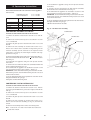
2.4 PACKING.The appliance and flue components are packed in
separate cartons.
2.5 INSTALLATION.
The appliance is suitable for indoor installation only.
The appliance is supplied for connection to a sealed system but
is suitable for use with an open vent system.
Any specified ventilation openings made into a wall or
2