1
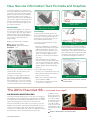
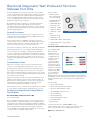
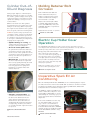
Rear Brake Noise on First Apply Corvette Tire Chatter The Corvette always has been built to perform. Part of the ride and handling equation is the high-performance tires available on recent Corvettes. The 2014 Corvette is equipped with standard P245/40ZR18 front and P285/35ZR19 rear performance summer-only tires and the Z51 Performance Package includes P245/35ZR19 front and P285/30ZR20 rear Michelin Pilot Super Sport ZP summer-only tires. These tires may have a chatter noise during low speed turns. On some 2013 Encore AWD and Trax AWD (Canada only) models, after the vehicle is first started, a rear brake noise may occur during the first time the brakes are applied when backing up. The noise also may occur the first time the brakes are applied with the vehicle in Drive. The vehicle may have been sitting only a few hours or overnight. The tread design of the Goodyear F1 tires on the 2011-2013 Corvette Grand Sport and Z06 models also is more susceptible to tire chatter or hop than the tread design on previous F1 tires. Tire chatter noise, caused by the large amount of tire scrubbing across the pavement, occurs most often during low speed, tight turns (in all directions) when the tires are cool, usually after an extensive ambient soak of the vehicle. The chatter typically diminishes when the tires warm up, but may increase on wet pavement. This is a normal characteristic of the high-performance tires. It’s important not to confuse a tire chatter condition with a possible rear differential chatter noise. A vehicle soak of at least eight hours during cool ambient temperatures is required prior to evaluation on a clean, dry asphalt or concrete road surface. There should be sufficient space for two to three full vehicle turns at idle speed. Limit the evaluation to no more than four full vehicle circles. To evaluate the noise condition: 1. With the engine running and the vehicle at rest, turn the steering wheel until full steering lock is achieved. 2. Shift into gear. The noise should be heard once the vehicle has made one to two circles. 3. With the vehicle moving in a tight circle and the noise present, move the steering wheel in 1/4 turn increments away from the full lock position. A maximum of 1/2 to 3/4 turn should be sufficient to determine the source of the noise. 4. Place a hand at the 6 o’clock position as a reference indicating full lock. Move the steering wheel to the 3 or 9 o’clock position and hold it for two to three seconds. Repeat if necessary for a maximum of four complete vehicle circles. If the noise is caused by front tire hop, it will reduce in severity or cease during the turning sequence as soon as the steering wheel is turned. A 1/4 steering turn will usually dramatically reduce front tire chatter. If the noise is caused by rear differential chatter, it will not be reduced in severity when turning the steering wheel, but may be reduced in frequency. If the differential is the cause of the noise, refer to Rear Drive Axle in the appropriate Service Information. For additional information, refer to Bulletin #09-04-20-001D and to the May 2010 Emerging Issues seminar, course number 10210.05. Rear upper caliper mounting bolt To eliminate the nosie, install a dampener (P/N 13343688) and bolt (P/N 13343686) in place of the rear upper caliper mounting bolts. Refer to the appropriate Service Information (the Brakes section under Rear Disc Brake Pads Replacement) for bolt removal instructions and the proper torque specification. Thanks to Matthew Zajechowski Power Liftgate Inoperative with Key Off The power liftgate may be inoperative on some 20072014 Escalade models, Suburban, Tahoe and Yukon models when using any of the switches or the Remote Keyless Entry transmitter with the ignition in the OFF position. If the ignition is in the Accessory or the ON position, the liftgate will operate correctly. To correct this condition, check for power on the Accessory Wake Up Data Line going to the ECM and the TCM. With the key in the Accessory position, check for battery voltage on circuit 5985 going to pin 18 (2007 and 20102014 model years) or to pin 31 (2008-2009 model years) of connector 1 to the ECM and Pin 11 (RPO MT1 transmission) or Pin 9 (RPO MYC transmission) to the TCM. If no voltage is present with the key in the accessory position, check for a wiring or pin fit concern. Thanks to Scott Fibranz Thanks to Jeremy Richardson and Art Spong 6 December 2013