1
System Tasks
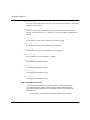
The tstamp_cond argument conditions the data_event for the setup check and
the clk_event for the hold check. This alternate method of conditioning
precludes specifying conditions in the clk_event and data_event arguments.
The tcheck_cond argument conditions the data_event for the hold check and
the clk_event for the setup check. This alternate method of conditioning
precludes specifying conditions in the clk_event and data_event arguments.
The delayed_clk argument is a net that is continuously assigned the value of
the net specified in the clk_event. The delay is non-zero if the setup_limit is
negative, zero otherwise.
The delayed_data argument is a net that is continuously assigned the value of
the net specified in the data_event. The delay is non-zero if the hold_limit is
negative, zero otherwise.
The delayed_clk and delayed_data arguments are provided to ease the
modeling of devices that may have negative timing constraints. The model’s
logic should reference the delayed_clk and delayed_data nets in place of the
normal clk and data nets. This ensures that the correct data is latched in the
presence of negative constraints. The simulator automatically calculates the
delays for delayed_clk and delayed_data such that the correct data is latched
as long as a timing constraint has not been violated.
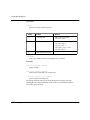
$recovery(reference event, data_event, removal_limit, recovery_limit,
[notifier], [tstamp_cond], [tcheck_cond], [delayed_reference],
[delayed_data])
The $recovery system task normally takes a recovery_limit as the third
argument and an optional notifier as the fourth argument. By specifying a
limit for both the third and fourth arguments, the $recovery timing check is
transformed into a combination removal and recovery timing check similar to
the $recrem timing check. The only difference is that the removal_limit and
recovery_limit are swapped.
5-76 Verilog Simulation
ModelSim Xilinx User’s Manual