1
28
RASTER GRAPHICS FOR INTERACTIVE PROGRAMMING ENVIRONMENTS
functions given above (e.g., ADIsFont, ADIsPrintMode). When a character arrives, it is displayed at
the current (x,y) position of the region to which it is destined. Its baseline is aligned with the
current y position, and its left edge is aligned with the x position. After the character is displayed,
the current x position is advanced to x + width, where width is the width of the character. This
process is repeated for all characters received.
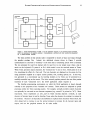
There are two different methods for transmitting characters to Chat for display: over the
teletype connection and over the graphics connection. Any characters transmitted over the graphics
connection will be displayed in the current region as identified by ADIsRegion. Characters
transmitted over the teletype connection will be displayed in a region specified by ADIsITYRegion
(see below). Note that the two transmission methods are asynchronous: if both teletype and
graphics traffic is directed to the same region, the characters may become intermixed on the screen.
Using the teletype connection. The standard 110 facilities of Interlisp and Tenex are used to output
characters on the teletype connection. Whenever terminal input is received (e.g., by READ),
characters may be "echoed," and therefore appear as output characters on the teletype connection as
well.
The functions for controlling terminal 110 in Interlisp are documented in the language manual.
The Interlisp system performs a number of formatting operations (e.g., insertion of carriage-return
and line-feed when lines exceed a certain length) that will affect the characters output to the
terminal.
Any Tenex ,program may generate terminal output. In particular, if Interlisp starts an inferior
executive, the characters typed out by programs running in that executive (and echoed characters)
are ordinary terminal output, and will be processed like characters typed to the terminal by the
Interlisp job. Thus the terminal activity of the inferior fork can be confined to a given region of
the screen, which can scroll as new text arrives, etc.
Tenex also performs formatting operations on characters destined for terminal output For
example, it may convert control characters into two-character sequences (tG, for example) so that
they become visible. Much of the formatting can be controlled by appropriate system calls.
ADIS requires one special character code (currently 3, control C) for communication with Chat
over the teletype connection. ADISInit informs Tenex that this character is to be passed on
unmolested. User programs should not alter this setting and should not attempt to type the
character over the teletype connection.
ADIsITYRegion(n)
(Flush)
Sets the "teletype region" to n. All characters transmitted from MAXC over the normal
teletype connection will be displayed in the specified region; ADISInit does
ADIsITYRegion(O). Because this is a region like any other, parameters such as margin,
font, limits, can all be set by ADISXXX functions. ADIS functions that modify teletype
region parameters are synchronized with the teletype connection so that the appearance of
the teletype region can be carefully controlled.