1
CHAPTER 6. FUTURE WORK
on purpose fill the database and hence the hard disk with junk data by running millions
of wrong or faked algorithms.
Registering a Module via the Web Front End If a module were to be registered
via the web front end of the testbed, the web server would have to change its user
ID to the ID of the user that wants to register the module, because the web server
normally does not have write access to the user directories. The apache web server has a
mechanism to do this with the suEXEC wrapper. For more information about suexec see
the online documentation ’Apache suexec Support’ on the HTTP server project’s Web
site at http://httpd.apache.org/docs/suexec.html [76]. This also requires authentication
of the user himself, so that any modifications of the user directories can only be done
by the user itself. This extension proposal is closely related to the two previous ones.
Parameter Subrange Checking When generating a module definition file automatically, currently, only the type information and some restricted intervals in case of number
are translated into regular expressions in order to check any user input setting parameters based upon the information given by a module in the form of its command line
interface definition output. The reason is that the definition of arbitrary intervals of the
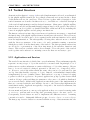
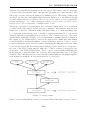
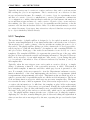
form #1 a, b#2 with a, b ∈ REAL ∪ {∞}, #1 ∈ { ( , [ }, #2 ∈ { ) , ] } in terms of a regular
expression is not easy and may produce huge regular expressions. This caveat could be
detoured by checking parameter values set by the user through PHP directly instead of
a textual check by means of regular expression checking. The current makeshift is to
provide two external Perl [65, 66] programs that automatically produce an appropriate
regular expression which then can be used for checking user input setting parameter
values (see section 4.2 on page 181 for how to integrate its own regular expressions for
subrange checking into module definition files). The Perl programs for regular expression generation can be found in directory DOC_DIR/scripts/utility. The files are named
gen subrange a b.pl and gen subrange a.pl. The former can be used to specify intervals
of type (a, b), (a, b], [a, b), or [a, b] with a and b being real numbers. The latter can be
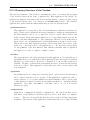
used to specify half-open intervals of the form {b ∈ REAL | b#a} with # ∈ {<, ≤, >, ≥}
and a ∈ REAL. The usage of the programs is explained by calling the programs without
any parameters. Note that the output regular expression is in Perl notation and that
the programs come without any warranty: They have not been tested extensively.
Calculation of the Computation Time of an Experiment In principle, the maximum
computation time of an experiment can be computed by the testbed. This computation
time could then be presented to the user when an experiment is created, to give the
user an impression of the temporal scale of the experiment. Since all information about
the number of tries and the maximum computation time for a try are known for each
module, the theoretical net runtime could be computed.
274