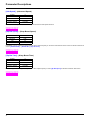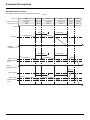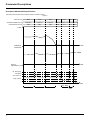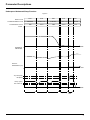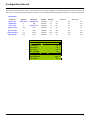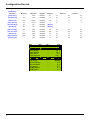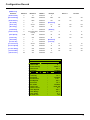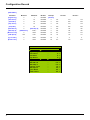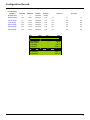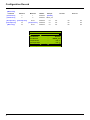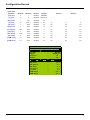
Download Parameter Descriptions

Transcript
Water Solution Program Features Overview
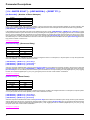
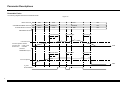
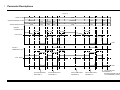
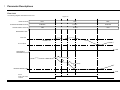
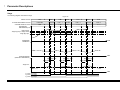
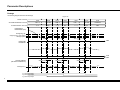
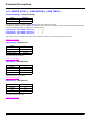
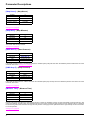
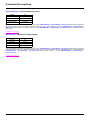
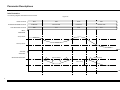
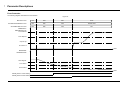
External Pump Control - decreasing demand (destaging)(see page 55)
The Variable speed pump will respond to a decrease in demand by initially decreasing speed. If the demand is too low for the number of
pumps running, the Variable speed pump will stop an External pump.
A low demand condition can be detected by either:
•
•
•
•
•
•
Low Variable pump speed
Low Variable pump speed + delay
Decreasing (or negative) system error (over pressure)
Decreasing system error + delay
Low Variable pump speed and decreasing system error
Low Variable pump speed and decreasing system error + delay
This allows to set up the response mode to suit the system requirements.
In some cases, a decreasing demand condition may be required to turn the Variable speed pump off while one or more External Speed
pumps are still running. Due to the flexibility of the Water Solution system, it is possible to configure the Variable speed pump to turn off
due to the No Demand permissives while the External pumps continue to run.
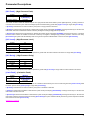
No Demand Shutdown
During a period of decreasing demand, the control algorithm will turn off the External pumps and the Variable speed pump will decrease.
When a No Demand condition is detected, the Variable speed pump will automatically turn off and the pump system will remain in the state.
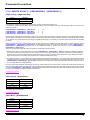
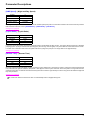
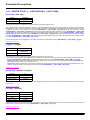
A no demand condition can be detected by any combination of :
•
•
•
•
•
Low Variable pump speed
Low Variable speed pump current
Low flow rate (flow meter)
Low flow rate (flow switch)
Advanced sleep detection
There is an adjustable delay after a No Demand condition has been detected, before the Variable speed pump automatically turns off and
the pump system enters the state.
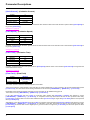
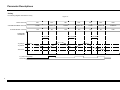
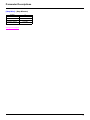
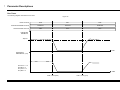
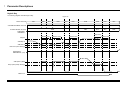
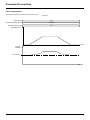
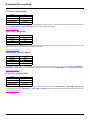
PID Bypass Speeds (see page 52 and page 56)
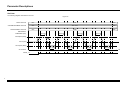
During pump switching, better performance may be achieved if the PID is bypassed, rather than relying on the PID response alone to adjust
the Variable speed pump to accommodate for the increased or decreased flow capacity.
There are 2 bypass speeds available.
1 Stage Bypass - When the Water Solution requests an External pump to start, the Stage Bypass Speed is used to decrease the Variable
speed pump to accommodate for the increased flow capacity of the additional pump.
2 Destage Bypass - When the Water Solution requests an External pump to stop, the Destage Bypass Speed is used to increase the
Variable speed pump to accommodate for the decreased flow capacity.
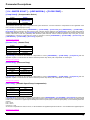
The Water Solution's status will display [BYP] (BYP) while any of the Bypass speeds are active.
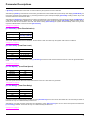
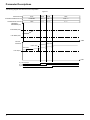
Setpoint Ramp (see page 24)
On initial starting or after a period of no demand, the feedback pressure may be below the setpoint pressure. To avoid the effects of the
resultant feedback error on the PID, the Setpoint Ramp algorithm overrides the pressure setpoint and applies a derived setpoint to the PID
controller. The derived setpoint commences at the present feedback pressure (resulting in no error being applied to the PID controller) and
ramps up to the desired setpoint. The rate at which the setpoint ramp occurs is adjustable.
The setpoint ramp is considered complete if the system error reduces to 0, (system error = setpoint - feedback) ie the system has
successfully started and the feedback pressure has risen to the setpoint pressure.
The Water Solution’s status screen will indicate [SET RAMP] (RAMP) during a Setpoint ramp.
Pulse Flow Meter Input
The Water Solution will accept direct connection from a pulse emitter type flow meter. This pulse signal is directly converted into a flow rate
within the Water Solution software.
The Water Solution will also accept a flow signal via the analogue inputs if required.
13