1
8130 RTU Software Blocks
Output Registers
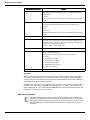
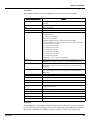
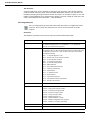
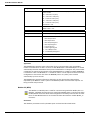
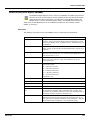
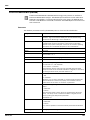
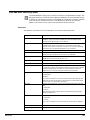
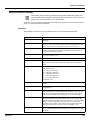
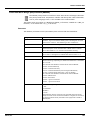
Output Registers are used to control operation of Analog and Digital outputs. The Digital Output
(DO) is used to effect a state change on an output channel.
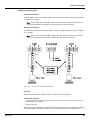
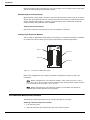
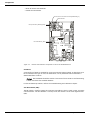
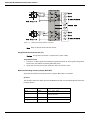
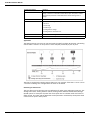
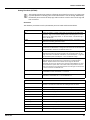
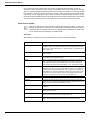
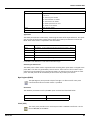
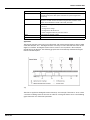
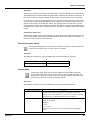
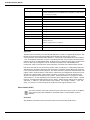
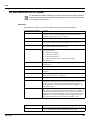
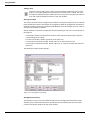
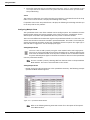
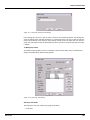
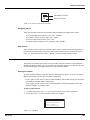
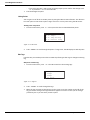
In ViewRTU, the DO point is represented by the symbol:
Figure 6-2:
DO Symbol
Modbus Communications
The 8130 RTU is capable of communicating with Modbus compatible devices. It is possible to
communicate with both Modbus Masters and Slave devices. The 8130 RTU is flexible, allowing
communications with devices that strictly comply with the Modicon Modbus protocol, as well as
devices with more advanced Modbus implementations such as Honeywell’s APM-SIO.
There are two protocol handlers available with the 8130 RTU. The Modbus Master protocol
handler performs scanning of Modbus slave devices. The Modbus Master may reside on the
8130 RTU Motherboard (COM 0, COM 1 or COM 2), or it may run on the Model 8203 Dual RS485 Interface Module. The Modbus Slave protocol handler responds to read and write requests
from a Modbus master system. It is available only on the 8130 RTU Motherboard. A detailed
description of the Modbus Master and Modbus Slave protocol handlers follows.
Modbus Master
When connecting to slave devices using the 8130 RTU Motherboard (COM 0, COM 1 or COM 2),
the Modbus Master protocol handler is enabled by setting the Protocol parameter of a COM point
to Modbus Master. For the Model 8203 Dual RS-485 Interface, the Modbus Master is
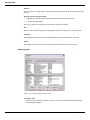
automatically enabled. An MSCAN point is automatically created to provide user access to the
operation of the protocol handler. The Modbus Master protocol handler uses Modbus Integer
Register Software Blocks (MIREG) and Modbus Floating Point Register points (MFPREG) to scan
data from Modbus slave devices. Each MIREG and MFPREG point is responsible for
communicating to a slave device. For each slave device being scanned, there must be a
corresponding MIREG or MFPREG point. Multiple points may be used to scan a single device.
The user specifies data addresses and block sizes for requesting data from slave devices. The
MIREG and MFPREG points are processed sequentially and data is requested from the slave
device.
In addition to the generic MIREG and MFPREG Software Blocks, there are Software Blocks that are
customized for Modbus communications to specific devices. These include the MBMFT, MBTX
and RTG Software Blocks.
Modbus Slave
The Modbus Slave protocol handler is enabled by setting the Protocol parameter of a COM point
to Modbus Slave. The Modbus Slave protocol handler responds to requests from Modbus
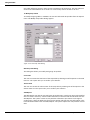
masters. A MODGW point is automatically created to provide user access to the operation of the
protocol handler. The MODGW point also provides dynamic information about the
communications requests from the Modbus master.
44
Installation and Operations Manual