1
EMBL CMCI ImageJ Basic Course
1.3 Filtering
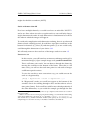
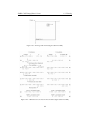
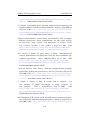
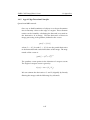
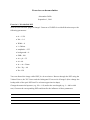
output(1, 1)
= (0 × 1 + 0 × 1 + 0 × 1+
0 × 1 + 0 × 1 + 0 × 1+
10 × 1 + 10 × 1 + 10 × 1)/9
= 30/9
=3
The sum of multiplication is divided by 9, which is the sum of all elements
in the kernel. This is to normalize the convolution, so that the output value
will not to be too large compared to the original. We then shift the kernel
one step in x-direction, and apply the kernel for calculating (2, 1) position.
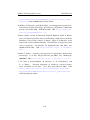
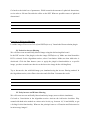
output(2, 1)
= (0 × 1 + 0 × 1 + 0 × 1+
10 × 1 + 10 × 1 + 10 × 1+
0 × 1 + 0 × 1 + 0 × 1)/9
= 30/9
=3
You might have now understood that the "smooth" operation is actually
averaging the values in the surrounding. Applying the kernel through the
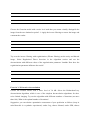
image, the new image will be:
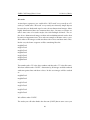
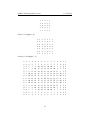
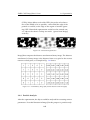
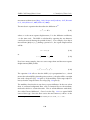
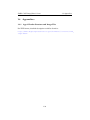
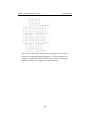
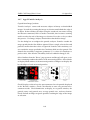
0 2 2 2 0
0 3 3 3 0
0 3 3 3 0
0 3 3 3 0
0 2 2 2 0
The vertical line is then now broader and darker – the smoothing effect.
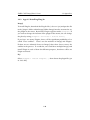
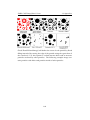
Note that the pixels in the first and the 5th rows were calculated with zero
padding so that values are 2 rather than 3. This is the boundary effect
unavoidable with any filtering by convolution. We could attenuate this
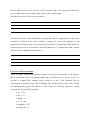
effect if we do padding by duplicating neighboring pixels. Then the result
of convolution then becomes
68