1
Apnea Positive Pressure Long-term Efficacy Study (APPLES)
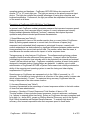
Guidelines for Blood Pressure Readings
•
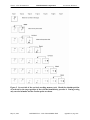
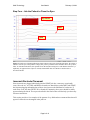
All readings are made to the nearest even digit, rounding up.
•
Any reading which appears to fall exactly between markings on the column should be read to
the next higher marking i.e., 2, 4, 6, 8 or 0.
•
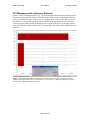
All readings are made at the top of the meniscus, or rounded surface of the mercury column.
•
When the pressure is released quickly from a high level, a vacuum is formed above the
mercury and the meniscus is distorted. Allow a few moments for it to reappear before
reading the manometer.
•
If sounds are heard immediately after the cuff is inflated, start the procedure over, including
the 30 second rest period (5 seconds vertical).
•
Keep stethoscope in ears during the entire time the two readings are being taken.
Criteria for Systolic and Diastolic Blood Pressure
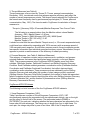
To correctly identify the 1st-phase (systolic) and 5th-phase (diastolic) Korotkoff values, listen
carefully via the stethoscope while reading and interpreting the mercury column.
•
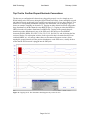
The systolic value is the pressure level where the first of two or more sounds are heard in
appropriate rhythm.
•
The diastolic value can be identified as the pressure level where the last of these rhythmic
sounds is heard.
•
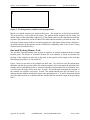
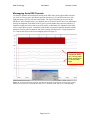
The mercury should be made to drop at 2 mm Hg per second, from the maximum
pressure until 10 mm Hg below that of the last regular sound heard. The control of the
deflation rate is essential for accurate readings and depends on handling of the bulb and
its control valve.
NOTE: A single sound heard in isolation (i.e., not in rhythmic sequence) before the first
of the rhythmic sounds (systolic) or following the last of the rhythmic sounds (diastolic)
does not alter the interpretation of the blood pressure.
Rev. 1/04
page 4 of 6