1
are explored. This problem is exacerbated for interrupt-driven
software because the conditions required to achieve worst case
scenarios involve specific timing relationships between the
occurrence of different hardware interrupts [24], [36].
In this paper, we introduce S IM S TACK, an automatic testing framework meant to uncover WCSUs that is informed
by the path information obtained from static analysis (SA).
Specifically, S IM S TACK first utilizes existing static analysis
tools to compute program paths and interrupt interleavings that
potentially lead to WCSUs. S IM S TACK then uses a weighted
genetic algorithm (GA) for test case generation to find inputs
and interrupt arrival points that favor these paths and interleavings. In the case of infeasible paths or interleavings reported
by the SA, S IM S TACK drives the GA towards different paths
that produce a larger stack size. S IM S TACK runs on top
of a full system simulator, which allows for control over,
and observability of the interrupt mechanism. To evaluate
S IM S TACK, we compare its results with static analysis and
those of random test case generation. We also compare against
a GA alone. Our results show that S IM S TACK is more effective
for estimating WCSU than other testing approaches, increasing
the WCSU over random by as much as 161%. It compares
favorably with static analysis, and is also efficient, identifying
WCSUs in significantly less testing time compared to a GA
without the static analysis. The contributions of this work are:
1) A testing approach, S IM S TACK, for finding WCSUs
in interrupt driven software that is informed by, and
can assess, the the results of static analysis; and
2) An empirical study demonstrating the effectiveness
of S IM S TACK.
In the next section we provide some motivation and background on interrupt driven programs, WCSUs and genetic
algorithms. In Section III we present SimStack, followed by
a case study in Section IV. We then discuss some of our
interesting results (Section V) and follow this with related
work (Section VI), conclusions and future work (Section VII).
II.
M OTIVATION AND BACKGROUND
We begin by providing definitions and notations used in
this paper, and then present our motivating example, followed
by background on weighted multi-objective genetic algorithms.
ISR1
Stack
Several dynamic test case generation techniques have been
proposed. Regehr [27] uses a random approach and discusses a
preliminary genetic algorithm to direct the search for interrupt
schedules that cause the system to reach maximum stack size.
This algorithm only considers stack size (as we will see, this
is less effective than our combined approach) and does not
consider nested interrupts. Eslamimehr et al. [19] use concolic
testing to direct test input generation, while interrupts are
issued based on time intervals. In prior work, we utilized a
genetic algorithm for a similar embedded testing problem,
that of finding worst-case interrupt latencies [36]. There we
learned that a random approach may not be effective as a
genetic algorithm; random can greatly underestimate the real
worst-case time. It is also not as efficient as the genetic
algorithm, because it may require hundreds to thousands of
runs to uncover some extreme values, especially for programs
with complex structures and contain nested interrupts. Despite
suggestions of combining a static and dynamic approach [19],
[28], we do not know of work that has taken this path.
f1
ISR4
Heap
Data, BSS
Fig. 1: RAM layout for an Embedded System
A. Problem Definition
We denote an interrupt-driven program as
P = MainISR1 ISR2 . . . ISRN ,
where Main is the main program and ISR1 , ISR2 , . . .,
ISRN are interrupt service routines, and where subscripts
indicate interrupt numbers, with larger numbers denoting lower
priorities. Typically, P receives two types of incoming data:
command inputs as entered by users and sensor inputs such as
data received through specific devices (e.g., a UART port). An
interrupt schedule specifies a sequence of interrupts occurring
at specified program locations. In testing, the input data and
an interrupt schedule for P together form a test case for P . In
this work do not consider reentrant interrupts (interrupts that
can preempt themselves); these are uncommon and used only
in special situations [28]. We also assume that there is a finite
lower bound on the inter-arrival times of interrupts. This is a
reasonable assumption for embedded systems in practice [25].
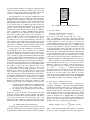
Figure 1 illustrates a typical RAM layout for an interruptdriven embedded system (the gray area reflects the stack).
Whenever a function or an ISR is called it will result in a
new stack frame. It shows a current program execution path
{f1 ->ISR1 ->...->ISR4 ->...}, where one function from
the main program and two ISRs are on the stack, with A->B
denoting the fact that B is called after the entry, but before
the exit of A. A stack overflow occurs when are too many
active functions in combination with running interrupts. The
stack can grow downward into the heap or into the DATA/BSS
sections which overwrites values and thus corrupts them.
B. Static Analysis of Maximum Stack Size
Static analysis for embedded systems is typically performed by constructing a control flow graph (CFG) and then
examining all possible execution flows accounting for instructions that allocate stack space. Specifically, the instructions of
interest include branches, calls, returns, loads, pushes, pops,
and loads from and stores to the stack pointer. It is common
for an embedded system to run ISRs with interrupts either
enabled or disabled [28], so multiple ISRs can accumulate.
Thus, the WCSU for an application is the maximum stack
depth of Main plus the sum of the maximum stack depths of
all ISRs. This can be computed using the formula:
n
WCSU = Depthmax (M ain) +
Depthmax (ISRi ),
i=1
where i is the interrupt number. This formula is conservative
because it counts for preemptions that may never happen. To