1
TABLE V: Object Program Characteristics
-
-
OS
875
-
-
1
-
HC
1,550
0.8
1
SS
2,088
-
0.8
(p)
-
1.2
1
(p)
-
0.004
(p)
-
SG
2,373
-
-
-
-
SPI
TM3C
-
I2C
TM1C
-
ADC
INT2
201
341
UT1
INT1
LD
UT0
NLoC
SD
TM1O
App.
Interrupt Source (frequency KHz)
In Decreasing Order of Priority
1
0.06
8
(p)
-
-
1.4
-
-
-
1.4
-
-
-
-
-
22
(p)
-
8
(p)
8
(p)
-
2
-
8
(p)
1.4
0.4
0.5
(p)
0.06
10
(p)
-
As objects of analysis we chose five embedded system applications. The first two SMALLDEMO (SD) and LARGEDEMO
(LD), are open source programs downloaded from GNU
Savannah [2], [3]. We configured the UART interrupt handler
in LARGEDEMO to make it preemptible; this allows us to study
diverse interrupt behaviors. SMALLDEMO controls an LED
with a PWM (Pulse Width Modulation) output. The PWM
value is changed when timer TM1 is triggered. LARGEDEMO
extends the basic idea of SMALLDEMO, but adds methods
to adjust the LED brightness. Its main function accepts an
operation mode (e.g., ADC, button, serial) and PWM values.
O SCILLOSCOPE (OS), is an application adapted from
the TinyOS distribution [4] which was extended as a lab
assignment in a graduate embedded systems course at the
University of Nebraska - Lincoln. It is a data-collection demo
that periodically samples the sensors and broadcasts a message
over the radio to a base station. We modified the default
O SCILLOSCOPE to let it fetch both temperature and humidity
values of a mote. We also let it use UART to transmit and
receive data. Its timer TM3 controls the sampling rate. Every
time the timer expires it signals a timer event and reads data
via the Read<uint16_t> interface. It then issues an SPI
interrupt that calls AMSend.send to forward the data to next
hop. The results are relayed to PC via serial port UT0.
H AND -M OTION C HESS (HC), is a student project developed in a microcontroller class at Cornell University [6]. It
simulates the physical (hand) motions involved in playing
chess without the need for a physical chess set. Its main
function performs actions based on the motion values of two
contact sensors that are used to detect the motion of players
(e.g., the position of the hand on the chess board). INT1 and
INT2 generate interrupts for the contact sensors. TM1 ensures
a constant sampling interval of ADC conversion, and TM3
ensures that the cursor’s position on the chess board is updated.
S URVEILLANCE S YSTEM (SS), is from a graduate-level
wireless sensor network project at the University of Nebraska
- Lincoln, It detects motion using MICAz and four CMOS
cameras to achieve 360°coverage. The outputs of the IR
sensors in the cameras are fed to ADC. TM1 ensures a constant
sampling interval of ADC conversion, and TM3 is used to
refresh the sensor status stored in the database. UT0 is used by
users to send commands and receive messages. SPI monitors
the radio for incoming data and sends it to the base station.
Last S NUGGLZ (SG, is from a graduate-level embedded
systems course project at the University of Nebraska - Lincoln.
It implements code for motion detection by a hovercraft,
and runs on microcontrollers with voltages 3.3V and 5V. Its
main function (on the 5V processor) accepts three inputs as
commands to control directions, and sends them to the 3.3V
processor through the I2C bus for processing. UT0 and UT1
are a pair of ZigBee radios used to receive and send data. I2C
sends commands from the 5V processor to the 3V processor.
TM0 controls periodic task scheduling.
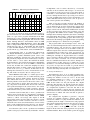
Table V lists these programs and shows the numbers of
lines of non-commented code they contain, and the interrupt
sources utilized by the programs with priorities ranging from
highest to lowest. The interrupt complexity (the number of interrupts, critical sections, and branches within critical sections)
of these programs ranges from lowest to highest across the
the programs. The numbers in the columns corresponding to
interrupts denote interrupt frequencies (the inverse of interrupt
inter-arrival time). The notation “-” indicates that an interrupt is
not utilized by the corresponding program. The notation “(p)”
indicates that the interrupt is preemptible for the corresponding
program; interrupts not so marked are not preemptible.
Our programs utilize various interrupt sources. INT1 and
INT2 are external interrupt interfaces that can be used to attach
non-built-in devices. TM1 and TM3 are compare timers that
trigger two interrupts when each of the timers reaches two
different compare values. TM0 is an overflow timer that triggers
an interrupt when it reaches its top value. UT0 and UT1 are
UART devices used to receive and send ASCII data through
UART ports; interrupts are triggered when data is available.
ADC is an analog-to-digital converter, and triggers an interrupt
when a new value is converted. I2C is a two-wire interface
that sets communications between two devices; interrupts are
generated based on their events.SPI is simple but a faster
alternative to I2C. The timer interrupts (TM1, TM3 and TM0)
are periodic interrupts that are issued at a periodic interval.
The other interrupts are non-periodic interrupts that can occur
any time after being issued by their associated devices.
A. Setting GA Parameters
We heuristically chose 32 as an initial population size,
and 16 as the population size in succeeding generations. The
resulting new number of new test cases is 16. We used
two weighting schemes for wb and wp . wb is is left at 1.0
for both versions, but the wp is set to either 0.01 or to
0.001. In the former case, the path objective has a higher
importance than the latter one. In both versions the objective
has a higher priority than the path objective. For selection,
we configured the algorithm to select the best half of the
population from which to generate the next generation; the
selected chromosomes are retained in the new generation. The
chromosomes are ranked, and evens and odds are paired, to
generate offspring.
We configured the algorithm to perform a one-point
crossover by randomly selecting a division point in the
chromosome. Smith et al. [30] conclude that mutation rates
considering both the length of chromosomes and population
size perform significantly better than those that do not. Thus,
√ as suggested by Haupt
we utilize a mutation rate of 1.75
λ l
et al. [21], where λ is the population size and l is the the
length of chromosome. Our object programs do not specify the
maximum WCSUs. Thus, iteration limits govern the stopping