1
relaying all data transmitted from other nodes. In Figure 10(b)
the average transmission delay is not changed when using
DataTruck for data gathering, this is because the DataTruck
picks up data from all nodes when it moving along the
trajectory regardless of the frequency of data sensing.
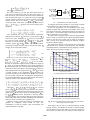
We use simulations to verify the performance of DataTruck
with dual antennas. Suppose a sensor network with 40 static
nodes evenly distributed in 100×100 meter square field. There
are 30 data rendezvous points on the trajectory of DataTruck
which means in these rendezvous points there is at least one
pair of compatible nodes can send data to DataTruck. We
suppose the communication range of nodes is 30 meter and
the data amount of each node send to DataTruck is 1M bytes.
We analyze the performance of DataTruck through adjusting
the moving speed of it and the transmitting rate of static
sensor nodes, which is showed in Figure 11. The performance
is the average of the results in 1000 simulations.
V.
ACKNOWLEDGMENTS
The work is partly supported by China NSF grants
(60721002, 60825205, 61073152), the Fundamental Research
Funds for the Central Universities and Hohai Science Fund
grant (2009424211).
REFERENCES
[1]
2500
[2]
single antenna
dual antennas
Average Total Time(s)
2000
[3]
1500
[4]
1000
[5]
500
[6]
0
0
20
40
60
80
100
Number of Sensor Nodes
120
140 150
[7]
(a) moving speed is 0.5m/s; transmitting rate is 90Kbps
[8]
3000
single antenna
dual antennas
Average Total Time(s)
2500
[9]
2000
[10]
1500
[11]
1000
[12]
500
0
0
20
40
60
80
100
Number of Sensor Nodes
120
140 150
[13]
(b) moving speed is 1m/s; transmitting rate is 50Kbps
[14]
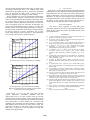
Fig. 11. The relationship between number of nodes and the
average total time of a data gathering
CONCLUSIONS
In this paper, we introduced the design and implementation
of DataTruck, a mobile sink node for data gathering which has
high performance. We have shown the software and hardware
design of DataTruck, and for the purpose of gathering data
efficiently, we design a smart antenna system on DataTruck.
Through experiments we can see that the mobile sink can save
the energy of the network, and with the dual antennas, it
reduces the average data transmission delay apparently.
From Figure 11 we can see that using dual antennas
systems outperform non-SDMA algorithm and the
improvement turns to be more evident when the network
becomes denser with more sensors. This is reasonable because
more sensors make data uploading time dominant and provide
more opportunities to utilize SDMA for concurrent data
uploading. Thus DataTruck with dual antennas is suitable for
data gathering when the density of sensor nodes is high. The
figure shows if there are 100 sensor nodes in the field, the
data delay is reduced 40% when the DataTruck using dual
antennas than single antenna.
2094
G. Tolle, J. Polastre, R. Szewczyk, D. Culler,et al. Amacroscope in the
redwoods. In ACM SenSys, pages51-63, 2005.
K. Mayer, K. Ellis, K. Taylor. Cattle health mon-itoring using wireless
sensor networks. In IASTEDCCN, 2004.
W. W. V. Srinivasan and K.-C. Chua. Trade-offs between mobility and
density for coverage in wireless sensor networks. In MobiCom, 2007.
G. Wang, G. Cao, and T. L. Porta, “Movement-assisted sensor
deployment.” in 23rd Annual IEEE Conference on Computer
Communications (INFOCOM), pp. 2469–2479, 2004.
S. Chellappan, W. Gu, X. Bai, D. Xuan, B. Ma, and K. Zhang,
“Deploying wireless sensor networks under limited mobility
constraints,” IEEE Transactions on Mobile Computing, vol. 6, no. 10,
2007.
Guoliang Xing, Tian Wang, Weijia Jia, and Minming Li, “Rendezvous
design algorithms for wireless sensor networks with a mobile base
station,”In MobiHoc, 2008.
K. Dantu, M. Rahimi, H. Shah, S. Babel, A. Dhariwal, and G. S.
Sukhatme. Robomote: enabling mobility in sensor networks. In IPSN,
2005.
D. Lymberopoulos and A. Savvides. Xyz: a motion-enabled, power
aware sensor node platform for distributed sensor network applications.
In IPSN, 2005.
S. R. Gandham, M. Dawande, R. Prakash, and S. Venkatesan, “Energy
efficient schemes for wireless sensor networks with multiple mobile
base stations,” In Globecom, 2003.
Liu wei, Li li, Zhang jin. Smart An tenna Design Ba sed on MUS IC and
LMS Algorithms. Electronic Sci.& Tech./Jan.15, 2009.
Wu Renbiao, Kang Xiao, Zhong Lunlong, Hu Tieqiao. Design and
Realization of Smart Antenna Based on DSP+FPGA. Journal of Civil
Aviation University of China. Vol.27,No.1, February 2009.
Miao Zhao, Ming Ma and Yuanyuan Yang. Mobile Data Gathering with
Space-Division Multiple Access in Wireless Sensor Networks. in 27rd
Annual IEEE Conference on Computer Communications (INFOCOM),
2008.
User’s manual of S3C2440A. TEXAS INSTRUMENTS, Samsung
Electronics. http://www.samsung.com/Products/Semiconductor/.
Intel
mote
(iMote).
http://www.intel.com/research/exploratory/motes.htm