1
Using the microStar
Now that you’ve properly calibrated the microStar, you are ready to begin making measurements.
Ultimately, you will want to compare the results of these measurements to an expected value and if the
values don’t agree to within your accepted level of uncertainty, you will likely want to understand the
reasons for this. In order to do this, you must first understand the potential sources for this disagreement.
1) Uncertainty in the calibration curve
a. Calibration of the delivered dose
b. Uncertainty in the sensitivity of an individual dosimeter (Reproducibility)
c. Uncertainty in the analytical process
d. Proper experimental setup
2) Uncertainty in the measurement
a. Uncertainty in the sensitivity of an individual dosimeter (Reproducibility)
b. Uncertainty in the analytical process
c. Proper experimental setup
3) Proper emulation of the measurement in the Treatment Planning System (TPS) (or viceversa)
Calibration of the Delivered Dose
This is something that is easily measurable using an ion chamber and is standard practice for all radiation
therapy clinics. This is typically < 0.5% and is required to not only make accurate measurements, but to
also ensure proper treatment delivery.
Uncertainty in the Sensitivity of an Individual Dosimeter (Reproducibility)
Each of Landauer’s dosimeters (i.e. nanoDots) comes with a labeled sensitivity which is also represented
in the Dosimeter Component Index (DCI) file. In effect, this value is a batch sensitivity similar to that
used for Thermoluminescent Dosimeters (TLD’s). In practice, each dosimeter has a slightly different
sensitivity depending upon the amount of dosimetry material (Al2O3:C) in it. This difference is
manifested as a different response (between two dosimeters) when exposed to the same field. In radiation
therapy, this is typically referred to as the reproducibility of the device. Landauer’s standard
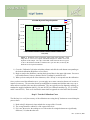
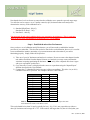
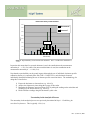
manufacturing process ensures that this is minimized and is shown below in Figure 6.
Landauer can also “screen” dosimeters to ensure that they are all similar (as with TLD’s). In this case, a
batch of dosimeters is exposed to 500 mRem of Cs-137 gamma radiation and analyzed twice. Only those
dosimeters which read within +/- 2% of the desired value are released. This ensures that the actual
sensitivity is within +/- 2% of the labeled value approximately 95% of the time. A measurement of the
reproducibility of a batch of screened dosimeters is shown in Figure 6.
Rev. 2, June 10, 2009