1
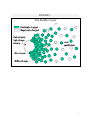
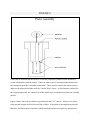
therefore, the outer charged layer is positive), then according to convention the electrical current
is traveling from the lower to the upper electrode.
It should be clear that the STREAMING CURRENT VALUE is dependent on the fluid
direction and velocity. (Of course, the fluid velocity is dependent upon the size of the annulus.)
The resulting signal is an alternating current, which can be separated easily from constant
background effects. The magnitude of the charge density determines the magnitude of the
streaming current at any point, and thus determines the amplitude (peak height) of the alternating
current signal.
2.3 SIGNAL PROCESSING
The processing of this alternating current is the other important aspect of a CCA. The current
generated in the sensor is on the order or 10-12 microamps, which is extremely low, and a
sensitive amplifier must be used. In order to measure the signal, the amplifier must be low
impedance because, in its absence, the circuit would be completed by conductance back through
the liquid. Essentially, the amplifier must have a lower conductance than the sample in order to
complete the circuit and measure the current.
Hence, conductivity above 3,000 μS will begin
to dampen the signal and may eventually render the SCV useless.
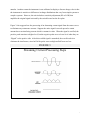
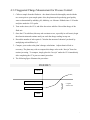
Figure 3 shows the stages involved in processing the streaming current signal. As indicated, the
current generated at the sensor is directly proportional to the piston velocity, provided that the
particle characteristics are not changing over this time frame. The circuitry must change this
signal into a constant, readable value that is proportional to the amplitude (height) of the original
sensor output. This is accomplished by rectifying the entire signal. The signal is simply
changed to a positive value whenever it is negative. Finally, the signal is filtered, or “timesmoothed,” to give a continuous and consistent reading.
The value of this “streaming current” is in relative units. The instrument is not calibrated to
be numerically equal to the actual current or charge density that exists in the sensor, primarily
because the calibration would be sensitive to small differences in the physical dimension of the
CCA 3100
11