1
SECTION 1
INTRODUCTION
SECTION 2
REGISTRATION
SECTION 3
TRANSFERS
SECTION 4
PERFORMANCE
SECTION 5
BREEDER INFO
SECTION 6
BLOOD TYPING
BY-LAWS
SECTION 7
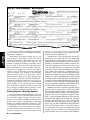
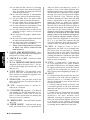
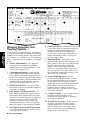
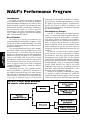
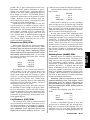
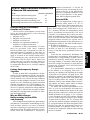
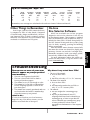
Fig. D-1: Cow Inventory – Birth Report
Each of these items are defined in more detail
later in this section of the Members Manual,
beginning on page D-4.
Immediately following calving season, the
Cow Inventory - Birth Report forms, with recorded birth information, should be sent into the
NALF office for processing of birth data. For the
purpose of timely information exchange, breeders are asked to drive in the fast lane and report
birth information as soon as possible after calving season is completed. If you do not want to
register calves at this time, you must check the
“Do Not Register” box located in the far righthand column of the Cow Inventory - Birth
Report. Keep in mind, if you don’t plan to register the calves, NALF still wants all available performance information and will record it for a
$2.50 fee per head or $5.00 for non-members,
which applies to the registration costs. Calves
that die within 72 hours of birth are processed
free of charge. Complete data reporting is essential for calculation of reliable genetic values.
Calving Report - Weaning Update
The Limousin information highway travels in
two directions, both to and from Limousin breeders and NALF. Upon receipt of the birth data,
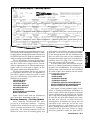
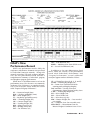
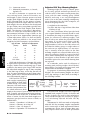
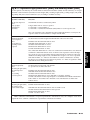
NALF will record all the pedigree and birth information, and return a Calving Report - Weaning
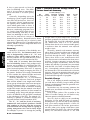
Update, see example included on page D-3. This
is actually the same vehicle as the Cow Inventory - Birth Report, but with the previously submitted calving information included. If you have
chosen to register the calves following calving
D-2 – Performance
season, you will also receive a “Performance
Record” for each animal (see description of Performance Record on page D-11).
Information on the calving report should be
checked for errors and then used for submitting
weaning data to NALF. Make corrections to errors
and return with the weaning data. Note: if the error
pertains to an animal that is already recorded, also
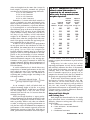
return the registration certificate at that time. Typically, following calving, cow-calf pairs are eventually sorted into one or more breeding pastures where
they remain until collection of weaning data. By
definition, each of these breeding pasture groups
becomes a contemporary group. By noting the pairs
which are in various breeding groups and the range
in calf age within each group, plans can be made as
to when to collect weaning information. These notes
can then be used to designate management practices from calving to weaning (WEAN GROUP AND
FOSTER/CREEP, see detailed discussion, page D-7).
Remember, if there is a 90-day age range among
calves in any one group, there is only one possible
day to collect weaning weights, such that all calves
are within age limits. In order for calf weaning information to be used for calculation of genetic values
(EPDs - Expected Progeny Differences), all calves in a
group must be weighed on the same day, when the
youngest calf in the group is at least 160 days old
and the oldest calf in the group is no more than 250
days of age. DO NOT WEIGH AND MEASURE EACH
CALF ON THE EXACT DAY IT IS 205 DAYS OLD as
you will end up with a series of contemporary groups
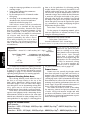
comprised of one animal. The date-calculation
wheel included with your original NALF Member’s