1
SECTION 1
INTRODUCTION
SECTION 2
REGISTRATION
SECTION 3
TRANSFERS
SECTION 4
PERFORMANCE
SECTION 5
BREEDER INFO
SECTION 6
BLOOD TYPING
BY-LAWS
SECTION 7
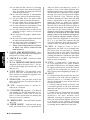
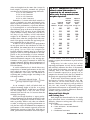
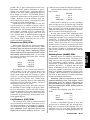
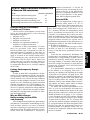
Fig D-15: Heritability estimates
for current Limousin genetic
evaluations.
Trait
Birth Weight
Weaning Weight
Yearling Weight
Milking Ability
Scrotal Circumference
Heritability
.42
.23
.20
.19
.41
“raw materials”, the raw data must be adjusted
and weighted before it has maximum predictive
value and is in the form of an EPD.
In one sentence, an EPD summarizes all of the
performance information reported, which has
been adjusted for environmental effects, weighted
by the heritability of the trait and relationships to
other traits, and attached to the pedigree information for all animals and their mates over time.
Accurate and comprehensive inputs including
data, adjustments, heritabilities and mathematical
formulas, result in accurate and reliable EPDs,
which are the most accurate predictors of genetic
merit that we have in the beef industry. Keep in
mind, EPDs measure genetic differences between
animals and do not predict absolute performance.
Preparing the Data
As previously mentioned, depending upon the
trait, NALF and the UG adjust performance
records for the effects of age and/or the age of an
animal’s dam and other environmental effects. In
addition to other data edits which are performed,
this is the first step to calculating EPDs. Once
records are adjusted, the degree to which each
animal’s performance differs from the average
performance of all animals in its contemporary
group is calculated for each respective EPD trait.
Records Weighted for the
Heritability of the Trait
As mentioned previously, when computing
EPDs, performance data is weighted according to
the heritability of the trait. Actually, an animal’s
deviation from the average of the contemporary
group is weighted by the heritability of the trait.
Heritability estimates are values which range
from 0 to 1, and quantify the degree to which
like begets like for any given trait. The higher the
heritability, the higher the resemblance among
relatives and the higher the degree to which
genes influence expression of the trait. Table D15 provides the heritability estimates used for
birth, weaning and yearling weight, milking
ability and scrotal circumference.
D-26 – Performance
Statistical Models
In addition to adjustments and weighting
performance for the heritabilities of the traits,
different multiple trait statistical models are used
for calculation of EPD and accuracy values.
EPDs for weaning, yearling and milk are calculated using a multiple trait model. In simplified
terms, this means that weaning information is
used to help more accurately estimate EPDs for
yearling weight. This is possible because research
tells us that some of the same genes which influence weaning weight also influence yearling
weight. Milk is included in the model to separate
out the maternal effects on weaning weight.
The genetic evaluation for birth weight also
utilizes a multiple trait model. Simply stated, this
means that both birth and weaning weight information contributes to birth weight EPDs. The primary advantage to this approach is that birth
weight EPDs for young, non-parent animals
should be more reliable because growth information is contributing to the estimate.
A separate multiple trait model is used to calculate scrotal circumference EPDs. The model
includes scrotal circumference as well as direct
and maternal weaning weight. Weaning weight
was included in the model to help account for
selection which occurs at weaning and provide
information on a correlated trait to increase the
accuracy of scrotal circumference EPDs.
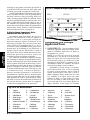
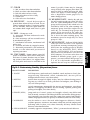
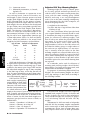
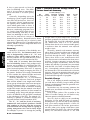
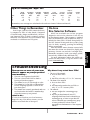
Multiple trait models utilize the genetic correlations between traits. Table D-16 lists the
correlations used to calculate EPDs for Limousin cattle. Genetic correlations range from –1 to
+1, and quantify the degree to which genes
influencing one trait also affect another trait.
Generally, the genetic correlations used in the
Limousin EPD analysis indicate that some of
the genes which positively influence growth,
also cause higher birth weights and larger scrotal circumferences.
Direct/Maternal Relationship
Set to Zero
Milk EPDs are calculated using a zero relationship between weaning weight and milking
ability. This means that NALF is assuming that
different sets of genes independently control
weaning growth and milk production. Using a
zero relationship in the calculation procedures
means that milk EPDs will be based strictly on
pedigree information until weaning weights of
calves from daughters pass through the evaluation at the University of Georgia.