1
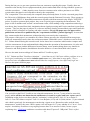
On anemometers tested by a pulse, the time "T" should be measured, as explained in the manual (The time
"τ" which is the time of the first positive pulse depends on the DC offset, amplitude and rise time of the test
signal, even if it is always a square wave...). However, those 2 researchers probably don't read manuals... or
papers written by other researchers...They think that they already know everything...
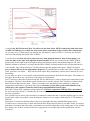
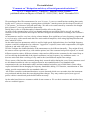
This is the actual picture from the manual.
As all of you may already know, our anemometers are using a short pulse for testing the response of the
anemometer (and not a square wave). Adjustment by a pulse is not like adjustment by a square wave. It does
not behave like the thumb rules in P. Freymuth paper from 1977. If the adjustment is done using a short
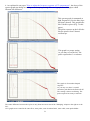
pulse, the response curve must have 2-3 overshoots and not only 1 overshoot as recommended by P.
Freymuth for a square wave test. A detailed discussion of this subject can be found in another paper named
"How to adjust the frequency response of a CT anemometer" which explains this issue in details with
graphic examples. P.C. Valente adjusted his anemometer according to rules recommended for a square wave
test. It appears that he did not even read the manual to see that the test signal is a short pulse (…and not a
"square wave" as he wrote in his paper) or saw the graphic example of the recommended shape of the
pulse response in our operation manual.
As you may probably know, the damping factor of the pulse response (as well as the shape of the high
frequency decay of the spectra curve) are influenced by the type of wire and prongs thickness of course, but
they are most influenced by the setting of the damping trimpot , Overheat Ratio and the cable
compensation circuit/cable length.
2. P. C. Valente claims that they found "problems in the in-built signal conditioning". Later, on this paper,
he explains what problems did he find: " …but depends on the amplifier gain " – i.e. the bandwidth depends
on the gain of the amplifier. On his anemometer it was modified per customer's request to have a low
bandwidth.
P.C. Valente did not buy the AN-1005 system from us. He inherited it from a student named Daryl Hurst, a
previous PHD student which bought the system 7 years before Valente started his work (on 2004).
Dr. Hurst told us that they would like to work at very low frequencies and they wanted to get very good
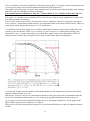
Signal to Noise ratio). As we all understand, there is a physical trade-off between a wide bandwidth to a
good signal to noise ratio (in any analog system – not only in anemometers).
3